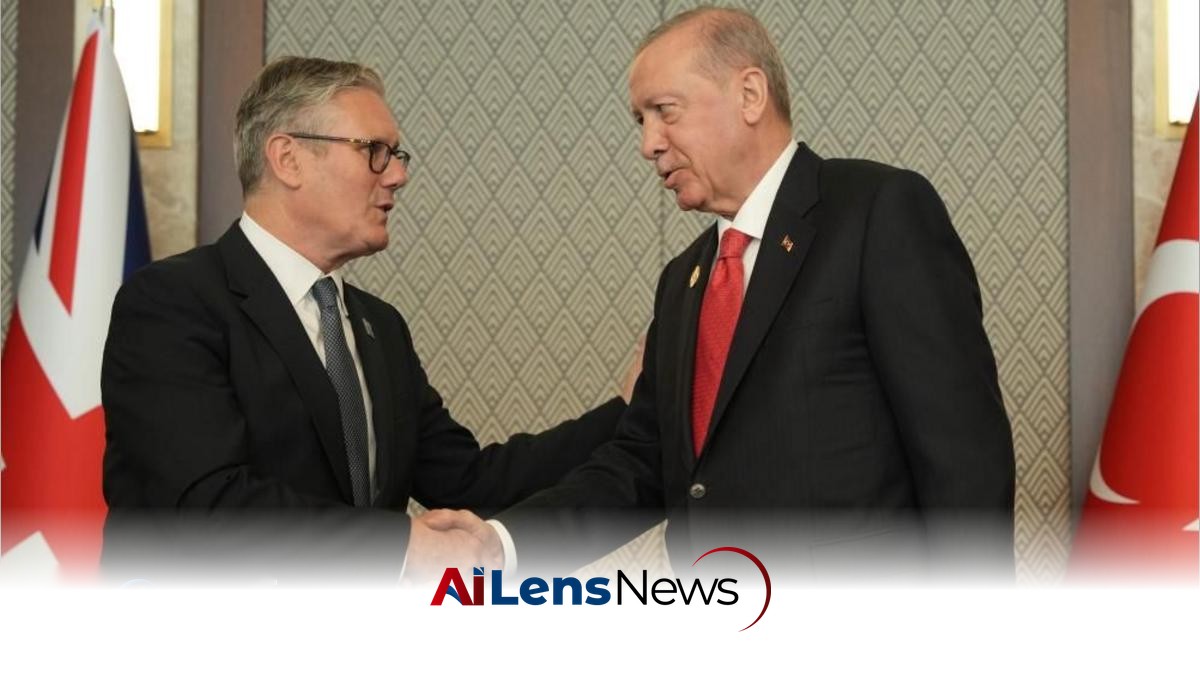


Sir Keir Starmer received a personalized revolver from Turkish President Erdogan during the NATO summit, which remains in Turkey due to UK import laws.
New Delhi, India Jul 9, 2026 ALN: Sir Keir Starmer was given a personalised revolver with live ammunition as a gift by Turkish President Recep Tayyip Erdogan during the NATO summit.
The firearm, engraved with the prime minister's name, was one of a series of similar gifts presented to the leader of each country who attended the event in Ankara. This gesture is not uncommon in diplomatic circles, where gifts symbolize goodwill and foster relationships between nations. However, the nature of this particular gift has raised eyebrows and sparked discussions about the implications of gifting firearms in international diplomacy.
Gifts exchanged between heads of state often reflect cultural traditions, historical ties, and the political climate at the time of the meeting. In many cultures, presenting gifts is a way to build rapport and strengthen alliances. However, when the gift in question is a firearm, the implications can be far-reaching and complex. Firearms carry connotations of power, security, and military capability, which can complicate diplomatic relations, especially in a world grappling with issues of arms control and proliferation.
Sir Keir's revolver has not been brought back to the UK and remains with British officials in Turkey. It is expected to be decommissioned before it is returned, meaning it will no longer be capable of firing live ammunition. The decision to decommission the weapon is significant as it underscores the UK’s strict regulations regarding firearms, particularly concerning the importation of live weapons. In the UK, it is illegal to import a live firearm, which explains why the revolver will not be returning with Sir Keir. This decision aligns with the UK’s commitment to maintaining stringent controls over firearms, a stance that is rooted in public safety and the prevention of gun violence.
President Erdogan waived export controls on the gift, which is a notable diplomatic maneuver. Such actions can be seen as a gesture of trust and friendship, yet they also raise questions regarding the responsibilities that come with such gifts, especially when they involve weapons. The Turkish government has a history of engaging in arms trade and military alliances, and this gift can be interpreted as part of a broader strategy to strengthen ties with NATO allies. However, it also reflects the complexities and sensitivities surrounding arms and military cooperation. The decision to present a weapon as a gift could be viewed as a statement of Turkey’s military capabilities and its role within NATO, especially amidst ongoing discussions about defense spending and military readiness among member states.
Downing Street has not released a picture of the revolver, which might have helped clarify the nature of the gift and its significance. The lack of imagery could be seen as a way to mitigate any potential backlash or controversy that may arise from the public’s perception of a political leader receiving a weapon, even if it is ceremonial in nature. The absence of visual documentation also raises questions about transparency in governmental dealings and the communication strategies employed by political leaders to manage public perception.
At the summit, Sir Keir signed a defence agreement with Erdogan which will pave the way for closer intelligence sharing between the countries. This agreement is particularly pertinent given the current geopolitical climate, where intelligence sharing can be crucial for national security. The agreement signifies a commitment to collaborate on defense matters, especially in light of ongoing conflicts and tensions in regions such as Ukraine and the Middle East. The enhancement of intelligence sharing is seen as a vital tool for both nations to address common security threats, including terrorism, cyber warfare, and regional instability.
Speaking after the summit, Sir Keir expressed his belief that the alliance was stronger and more united following the gathering. "This has been a good summit. We achieved what we wanted to achieve, which is unity. So important we have that, particularly with the conflicts going on in Ukraine and the conflicts in Iran," he added. His comments highlight the importance of NATO as a collective security arrangement in an era marked by rising global tensions and the need for coordinated responses to threats. The unity among NATO allies is increasingly crucial as the organization faces challenges from both state and non-state actors.
The NATO summit itself is a critical platform for leaders to discuss security challenges and forge agreements that can enhance military cooperation among member states. The discussions often revolve around shared concerns such as terrorism, cybersecurity, and territorial disputes, with a focus on enhancing collective defense capabilities. This particular summit in Ankara was no exception, as it aimed to address the evolving security landscape in Europe and beyond. The geopolitical context surrounding the summit included not only the ongoing war in Ukraine but also the multifaceted issues in the Middle East, including tensions with Iran, which have implications for NATO's strategic posture and operational planning.
The context of the summit is essential to understand the dynamics at play. NATO has been facing increasing challenges, particularly with the resurgence of aggressive military posturing from nations like Russia and the rising influence of non-state actors in conflict zones. The situation in Ukraine, where tensions have escalated due to Russia’s actions, has made unity among NATO allies more critical than ever. The alliance has been called upon to adapt its strategies and enhance its deterrence capabilities in response to these evolving threats, making the agreements reached at the summit particularly significant.
Furthermore, the conflicts in Iran, which involve various geopolitical interests, have added another layer of complexity to the discussions among NATO members. The need for a cohesive strategy to address these challenges is paramount, and agreements like the one signed by Sir Keir and Erdogan are steps toward achieving that goal. The implications of such agreements extend beyond immediate security concerns, as they can influence broader regional dynamics and the relationships between NATO and other global powers.
It will be Sir Keir's last major international event, after he announced his resignation last month. His departure from the political scene marks the end of an era for his party and raises questions about the future leadership and direction of the Labour Party. The implications of his resignation and the subsequent leadership transition will be closely monitored, especially in the context of the upcoming elections and the party's stance on international relations and defense policy. The Labour Party’s approach to NATO and defense will likely evolve as new leadership emerges, potentially influencing the UK’s role within the alliance and its responses to global security challenges.
In summary, the gift of a revolver from President Erdogan to Sir Keir Starmer during the NATO summit is emblematic of the intricate and often contentious nature of international diplomacy. While it serves as a token of goodwill, it also brings to the forefront important discussions about arms control, the responsibilities of leaders in receiving such gifts, and the broader implications for international security cooperation. As the political landscape evolves, the actions taken during this summit will likely have lasting effects on the relationships between NATO allies and their collective approach to global security challenges. The ramifications of this event will extend beyond immediate diplomatic relations, influencing public perception of political leaders and their dealings with military powers.
To learn more about the latest developments in Politics, stay updated with our exclusive reports and analyses on AiLensNews.

