

US President Donald Trump claims a significant agreement for the disarmament of Hamas and other armed groups in Gaza, marking a pivotal step in his peace initiative.
Singapore, Singapore Jul 31, 2026 ALN: US President Donald Trump announced on July 30 that his so-called “Board of Peace” has reached an agreement for the complete disarmament of Palestinian Hamas militants and other armed groups in Gaza. This announcement comes amid a long history of conflict in the region, particularly between Israel and various Palestinian factions, including Hamas, which has governed the Gaza Strip since 2007. The ongoing hostilities have roots that trace back to the mid-20th century, with a series of wars and uprisings, known as Intifadas, marking the tumultuous history of the Israeli-Palestinian conflict.
In a post on the social media platform Truth Social, Trump described the agreement as a “major milestone in the implementation of the Trump 20-Point Plan” aimed at ending Israel’s ongoing conflict in Gaza. The Trump 20-Point Plan, which was unveiled in 2020, sought to lay out a framework for peace in the region, focusing on economic incentives, security arrangements, and territorial considerations. However, it has faced criticism for perceived biases favoring Israeli interests over Palestinian rights, leading many to question its viability as a genuine path to peace. The plan's emphasis on economic development has been viewed by some as insufficient to address the political dimensions of the conflict.
According to Trump, the deal will be executed in phases, with Israeli forces withdrawing as the disarmament process unfolds. This phased approach reflects a strategy that aims to build trust between the involved parties, although the feasibility of such a plan has been questioned by experts familiar with the complexities of the region. The Israeli-Palestinian conflict is characterized by deep-seated mistrust, and previous attempts at phased withdrawals have often been marred by violence and broken promises. An International Stabilisation Force is to collaborate with a newly established Palestinian police force to ensure security in the enclave, which has been plagued by violence and instability. The role of this force will be critical, as it will need to navigate the precarious security landscape while ensuring compliance with the disarmament terms.
Trump expressed gratitude to mediators Egypt, Qatar, and Turkey for their roles in facilitating the agreement. These countries have historically played significant roles in mediating between Israel and Hamas, often acting as intermediaries in ceasefire negotiations and humanitarian efforts. Egypt, in particular, has been pivotal due to its geographical proximity and its longstanding relationship with both Israel and Palestinian factions. The involvement of these nations underscores the regional dimensions of the conflict, as neighboring countries possess vested interests in achieving stability in Gaza to prevent spillover effects that could destabilize their own borders.
“This agreement is a critical step towards Gaza finally being governed by a new Palestinian government that will work closely with the Board of Peace to help the Palestinian people,” Trump stated. “At the same time, Israel will have the security it deserves,” he added. The notion of a new Palestinian government raises questions about the political landscape in the West Bank and Gaza, where divisions between the Palestinian Authority, led by Mahmoud Abbas, and Hamas have historically complicated governance and peace efforts. The potential for a unified Palestinian front is fraught with challenges, as internal political rivalries and differing visions for statehood continue to hinder progress.
Earlier that day, sources indicated that discussions between mediators and Hamas leaders in Cairo regarding the implementation of a US-brokered Gaza peace plan had made notable progress. However, an Israeli official remarked that the proposed terms were not satisfactory. This discrepancy highlights the ongoing tensions and differing perspectives on what constitutes a fair and lasting peace agreement. Israeli officials have often expressed concerns regarding security guarantees and the potential for Hamas to retain its military capabilities even under a disarmament agreement. The fear of a resurgence of violence remains a significant barrier to trust-building between the parties.
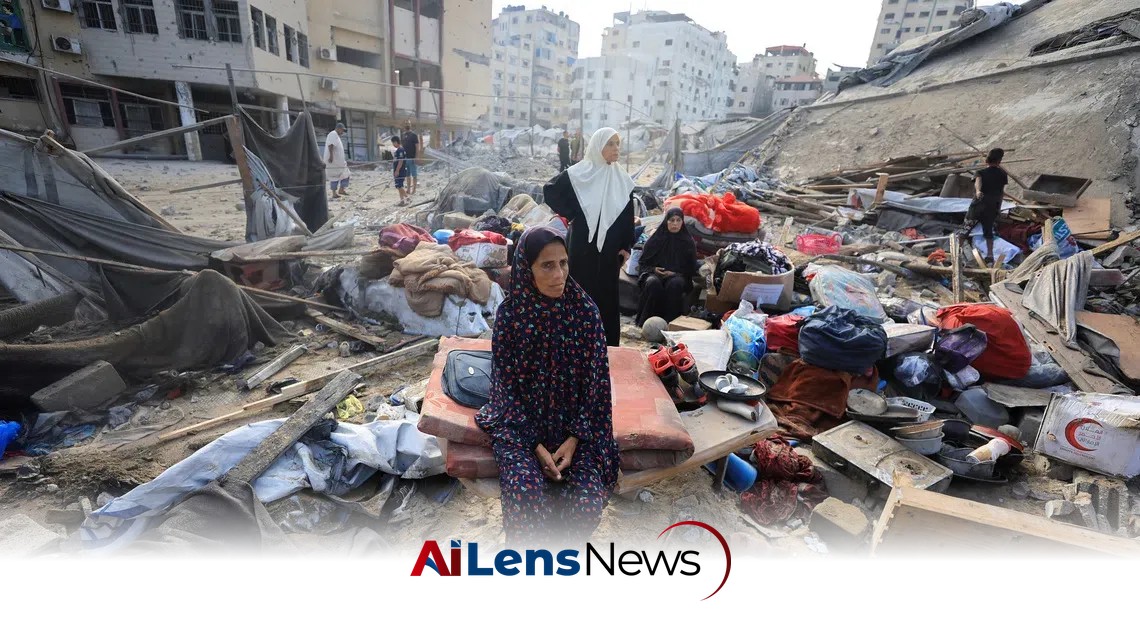
On the same day, Israeli airstrikes reportedly killed at least six Palestinians in Gaza, including two children, according to medical sources. These strikes represent the ongoing cycle of violence that has characterized the Israeli-Palestinian conflict for decades. The loss of civilian life, particularly among children, exacerbates the humanitarian crisis in Gaza and fuels further animosity toward Israel, complicating peace efforts. Such incidents often lead to retaliatory actions from armed groups in Gaza, perpetuating a cycle of violence that undermines diplomatic efforts.
The situation in Gaza has been dire, with a blockade imposed by Israel and Egypt leading to significant economic hardships for its residents. The humanitarian conditions in the enclave have deteriorated over the years, with limited access to clean water, electricity, and medical supplies. The announcement of a potential disarmament deal could offer a glimmer of hope for improvement, but skepticism remains high due to the historical context of failed agreements and ongoing violence. The population in Gaza has endured multiple conflicts, leading to widespread trauma and disillusionment regarding the prospects for peace.
As reactions to Trump's announcement unfold, various stakeholders, including human rights organizations and international governments, will likely scrutinize the implications of the agreement. The effectiveness of the proposed International Stabilisation Force and the new Palestinian police force will be critical in determining the success of the disarmament process. Observers will also be watching closely to see how this agreement impacts the broader geopolitical dynamics in the Middle East, especially in light of the complex relationships between regional powers. The role of international actors, including the United States, in shaping the outcomes of this agreement will be pivotal.
Furthermore, the role of the United States in mediating peace in the region has been a subject of debate. Trump's administration has faced criticism for its approach, particularly regarding its perceived alignment with Israeli interests. Critics argue that such a stance undermines the credibility of the United States as a neutral mediator. The effectiveness of the Board of Peace and its ability to facilitate a genuine dialogue between Israelis and Palestinians remains to be seen. The historical context of US involvement in the peace process, often characterized by fluctuating levels of engagement and shifting policy priorities, adds complexity to the current situation.
In conclusion, while the announcement of a disarmament deal in Gaza may represent a significant step towards peace, the realities on the ground, including ongoing violence, political divisions, and humanitarian crises, pose substantial challenges. The coming weeks and months will be crucial in determining whether this agreement can lead to lasting stability and security for both Israelis and Palestinians. The outcomes of this initiative will likely have far-reaching implications not only for the immediate parties involved but also for the broader Middle Eastern geopolitical landscape, potentially influencing future peace efforts and regional alliances.
To learn more about the latest developments in Politics, stay updated with our exclusive reports and analyses on AiLensNews.

