

Typhoon Hinnamnor approaches South Korea, prompting flight cancellations and business suspensions as the country raises its alert level.
Singapore, Singapore Sep 5, 2022 ALN: Typhoon Hinnamnor neared South Korea on Monday (Sep 5), forcing flight cancellations, suspensions of some business operations, and closures of schools, as the country raised its typhoon-alert level to its highest.
Heavy rain and strong winds pounded the southern part of the country, with the typhoon traveling northward at a speed of 24 km/h. Hinnamnor is expected to make landfall southwest of the port city of Busan early on Tuesday, after reaching waters off Jeju Island later on Monday.
President Yoon Suk-yeol stated on Monday that he will be on emergency standby, a day after ordering authorities to put all efforts into minimizing damage from the typhoon, which has been classified as "very strong." This classification indicates that the storm possesses the potential for significant disruption and damage, prompting the government to take proactive measures to safeguard citizens and infrastructure.
"Very strong winds and heavy rains are expected across the country through to Tuesday due to the typhoon, with very high waves anticipated in the coastal region along with storm and tsunami," the Korea Meteorological Administration (KMA) said. The KMA is responsible for monitoring weather conditions and issuing warnings, and its forecasts are crucial for preparing the public and authorities for severe weather events.
According to KMA's forecast, Hinnamnor is headed northeast toward Sapporo, Japan, indicating that while South Korea is bracing for impact, neighboring countries are also on alert for the storm's path. The potential for cross-border weather effects underscores the interconnectedness of weather patterns in the region.
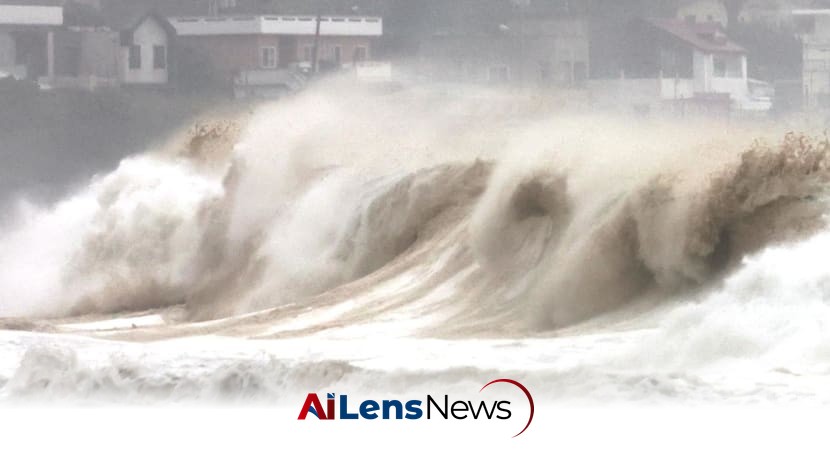
Waves brought by Typhoon Hinnamnor slammed into the coast on South Korea's resort island of Jeju on Sep 5, 2022, as the typhoon approaches the Korean Peninsula. Jeju Island, known for its tourism and natural beauty, often bears the brunt of typhoons due to its geographical location. The island's infrastructure and emergency services are frequently tested during such events, highlighting the importance of preparedness and rapid response.
South Korea classifies typhoons in four categories—normal, strong, very strong, and super strong—and Hinnamnor is expected to reach the country as a "very strong" typhoon, according to the KMA. Typhoons under that classification have wind speeds of up to 53 m per second (approximately 190 km/h or 118 mph), which can cause extensive damage to buildings, infrastructure, and the natural environment.
Warnings have been issued across southern cities, including Gwangju, Busan, Daegu, and Ulsan, following those in the southern island of Jeju. The Central Disaster and Safety Countermeasures Headquarters on Sunday upgraded its typhoon alert level to the highest in its four-tier system, marking the first time in five years that such a precaution has been necessary. This reflects the increasing severity of weather events in recent years, likely influenced by climate change and shifting weather patterns.
Busan city and its neighboring areas have received rain throughout the weekend, with more rain forecast across the wider country for Monday and Tuesday. The heavy rainfall poses risks of flooding, landslides, and other hazards, particularly in areas that may not be fully equipped to handle such sudden influxes of water.
No casualties have been reported so far, though more than 100 people have been evacuated, and at least 11 facilities have been damaged by floods. Evacuations are a critical component of disaster preparedness, aimed at ensuring the safety of residents in high-risk areas. The quick response of local authorities to evacuate vulnerable populations can significantly reduce the risk of injury or loss of life.
Steelmaker POSCO told Reuters it is considering suspending some of its production processes in the city of Pohang on Tuesday, while SK Innovation, owner of South Korea’s top refiner SK Energy, has requested carrier ships not to operate until the typhoon passes. Such operational halts are common during severe weather events, as companies prioritize the safety of their employees and the integrity of their facilities.
In response to local media reports regarding the planned halts of their operations, South Korean shipbuilders Korea Shipbuilding & Offshore Engineering, Daewoo Shipbuilding & Marine Engineering (DSME), and Samsung Heavy Industries stated that a decision on suspending operations will be made later on Monday. The maritime industry, particularly shipbuilding and shipping, is significantly affected by typhoons, as rough seas can pose risks to vessels and port operations.
Korean Air Lines and Asiana Airlines have canceled most of their Monday flights to Jeju Island, according to their websites, while budget airlines such as Air Seoul and Jin Air have also canceled some of their flights. Air travel disruptions during typhoons are not uncommon, as airlines prioritize passenger safety and adhere to regulations regarding flying in adverse weather conditions.
The implications of Typhoon Hinnamnor extend beyond immediate safety concerns. The economic impact of such storms can be profound, affecting various sectors including transportation, tourism, and manufacturing. Recovery efforts can take weeks or even months, depending on the extent of the damage. Additionally, the psychological toll on affected populations, particularly in areas that have experienced repeated severe weather events, can be significant.
As South Korea continues to confront the challenges posed by natural disasters, the government's response to Typhoon Hinnamnor will likely be scrutinized. Effective communication, timely evacuations, and efficient resource allocation are vital components of disaster management that can mitigate damage and save lives. The experience gained from this typhoon may inform future preparedness strategies and policies aimed at enhancing resilience against similar events in the future.
In conclusion, as Typhoon Hinnamnor approaches, South Korea remains on high alert, with extensive measures being implemented to protect citizens and minimize damage. The situation serves as a reminder of the increasing frequency and intensity of typhoons in the region, reinforcing the need for continued vigilance and preparedness in the face of natural disasters.
To learn more about the latest developments in Crime & Law, stay updated with our exclusive reports and analyses on AiLensNews.

