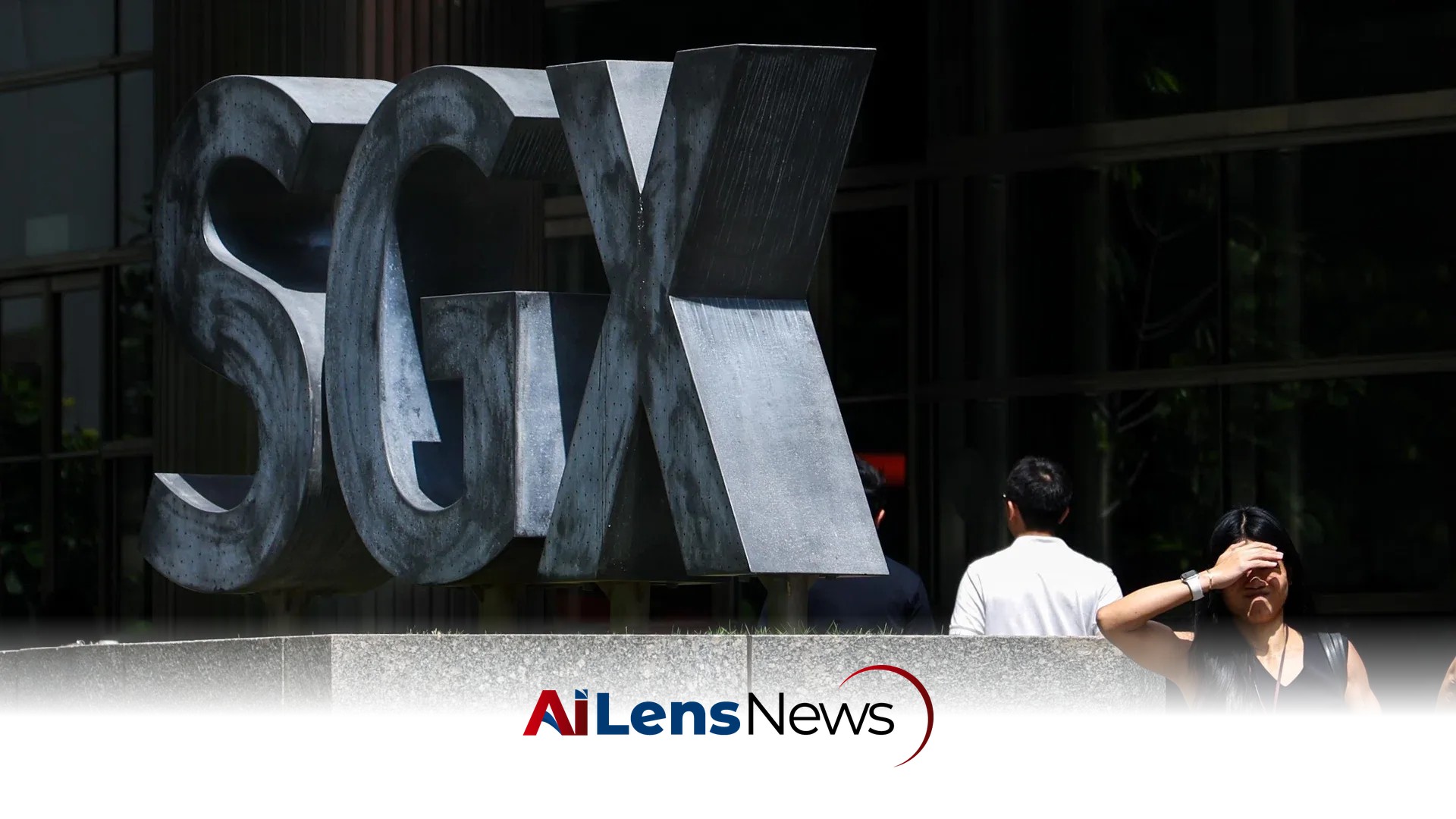


The Straits Times Index fell 0.4% amid varied regional market trends, with Hongkong Land leading the gainers.
Singapore, Singapore Jul 16, 2026 ALN: [SINGAPORE] Singapore stocks ended lower on Thursday (Jul 16) amid a mixed performance in regional markets. The benchmark Straits Times Index (STI) lost 0.4 per cent or 20.34 points to finish at 5,539.38, reflecting a cautious sentiment among investors as they navigated through various economic indicators and corporate earnings reports.
The decline in the STI is indicative of the broader trends affecting stock markets globally, where investors are increasingly focused on the sustainability of recent market rallies, particularly those driven by advancements in technology and artificial intelligence (AI). This cautious approach is particularly evident in the context of the ongoing discussions surrounding inflation, interest rates, and the potential impact of geopolitical tensions on global trade.
In recent months, the global economy has faced multiple challenges, including rising inflation rates, which have prompted central banks to consider tightening monetary policy. In Singapore, the Monetary Authority of Singapore (MAS) has been vigilant in its approach to managing inflation, which has implications for interest rates and, subsequently, stock market performance. Investors are closely monitoring these developments, as rising interest rates can lead to higher borrowing costs for consumers and businesses, potentially dampening economic growth.
On the local front, Hongkong Land led the gainers on Singapore’s blue-chip index, rising 1.9 per cent or US$0.14 to US$7.54. This increase can be attributed to positive sentiment surrounding the real estate sector, which has shown resilience despite broader economic uncertainties. The company’s performance may also reflect increased demand for commercial properties in key urban areas, as businesses adapt to post-pandemic realities. The resurgence of office occupancy rates and the gradual return to normalcy in business operations have provided a boost to the real estate market.
Conversely, the biggest decliner among STI constituents was UOB, which fell 3.2 per cent or S$1.45 to S$43.50. The banking sector, while generally robust, faces challenges from rising interest rates and potential regulatory changes that could impact profitability. The other two local banks ended mixed; OCBC rose 1.5 per cent or S$0.42 to S$28.78, while DBS finished 0.7 per cent or S$0.50 lower at S$72.48. This mixed performance among banks indicates varying investor confidence in their respective strategies and market positions. The financial sector's performance is often seen as a bellwether for the overall economy, and fluctuations in bank stocks can signal shifts in economic sentiment.
Within the iEdge Singapore Next 50 Index, Pan-United Corporation was the top gainer, rising 3.2 per cent or S$0.05 to S$1.59. This increase is significant as it highlights the potential for growth in sectors beyond the traditional blue-chip companies. In contrast, AEM was the index’s biggest decliner, falling 6.9 per cent or S$0.68 to S$9.17, reflecting investor concerns over the semiconductor industry, which has faced supply chain disruptions and fluctuating demand. The semiconductor sector, critical to the global technology supply chain, has been under pressure due to geopolitical tensions and the ongoing effects of the COVID-19 pandemic, which have led to production delays and increased costs.
Across the broader market, losers outnumbered gainers 301 to 279, after 1.1 billion securities worth S$2.3 billion changed hands. This disparity underscores a general trend of profit-taking and caution among investors, as they weigh the implications of recent earnings reports against a backdrop of economic uncertainty. The volume of trades indicates a significant level of activity, but the predominance of losses suggests that many investors are opting to lock in profits or minimize potential losses amid a volatile market environment.
Key regional indices were mixed, with Hong Kong’s Hang Seng Index gaining 1.3 per cent and the FTSE Bursa Malaysia KLCI advancing 0.5 per cent. These gains in Hong Kong and Malaysia may reflect localized economic recovery efforts and investor optimism in specific sectors such as technology and consumer goods. However, Japan’s Nikkei 225 fell 2.8 per cent and South Korea’s Kospi was down 6.4 per cent, indicating that not all markets are experiencing the same level of recovery or investor confidence. The divergence in performance among regional markets highlights the complexities of the current economic landscape, where localized factors can significantly influence market dynamics.
Stephen Innes, managing partner at SPI Asset Management, noted that Asia traded with a “more cautious pulse” on Thursday, as investors questioned whether even strong earnings could keep stretching the artificial intelligence rally higher. This sentiment reflects broader concerns about the sustainability of the AI-driven market rally, which has seen significant investment in technology stocks over recent months. Investors are increasingly aware that while AI presents substantial growth opportunities, it also comes with inherent risks, particularly as competition intensifies and market expectations evolve.
“Strong earnings now need to beat not only forecasts, but also crowded positioning, elevated valuations, higher yields and growing questions over the eventual return on AI spending,” he said. This statement encapsulates the challenge facing many investors: the need for companies to not only meet earnings expectations but to also demonstrate clear pathways to profitability in an increasingly competitive and rapidly evolving technological landscape. As AI technologies continue to develop and integrate into various sectors, investors are looking for evidence that these innovations will translate into tangible financial returns.
The “broader question”, he added, is “shifting from AI demand to AI returns”. This shift in focus underscores a critical juncture for investors who have heavily invested in AI-related stocks, as they begin to reassess the long-term value of these investments in light of changing market conditions. The transition from a focus on demand to returns signifies a maturation of the market, where investors are becoming more discerning and selective in their investment choices.
This comes as investors are increasingly asking “whether hyperscalers are building more capacity than they will eventually need, and whether the revenue generated by AI will justify the enormous capital spending already committed.” Such inquiries are crucial as they can significantly impact stock valuations and investor sentiment moving forward. The concerns regarding overcapacity and the potential for diminishing returns highlight the importance of strategic planning and market analysis for companies operating in the tech sector. Companies must navigate not only the technological landscape but also the financial implications of their investments in AI and other emerging technologies.
In conclusion, the mixed performance of Singapore stocks and regional markets reflects a complex interplay of factors, including investor sentiment, economic indicators, and sector-specific developments. As markets continue to navigate these dynamics, the focus will likely remain on corporate earnings and the broader implications of technological advancements in shaping future market trends. Investors are advised to remain vigilant and informed as they consider their investment strategies in this evolving landscape. The current market climate underscores the necessity for a nuanced understanding of both macroeconomic factors and sector-specific trends to make informed investment decisions. As the global economy continues to recover from the pandemic and adapt to new realities, the ability to anticipate shifts in investor sentiment and market conditions will be crucial for success.
To learn more about the latest developments in Economy, stay updated with our exclusive reports and analyses on AiLensNews.

