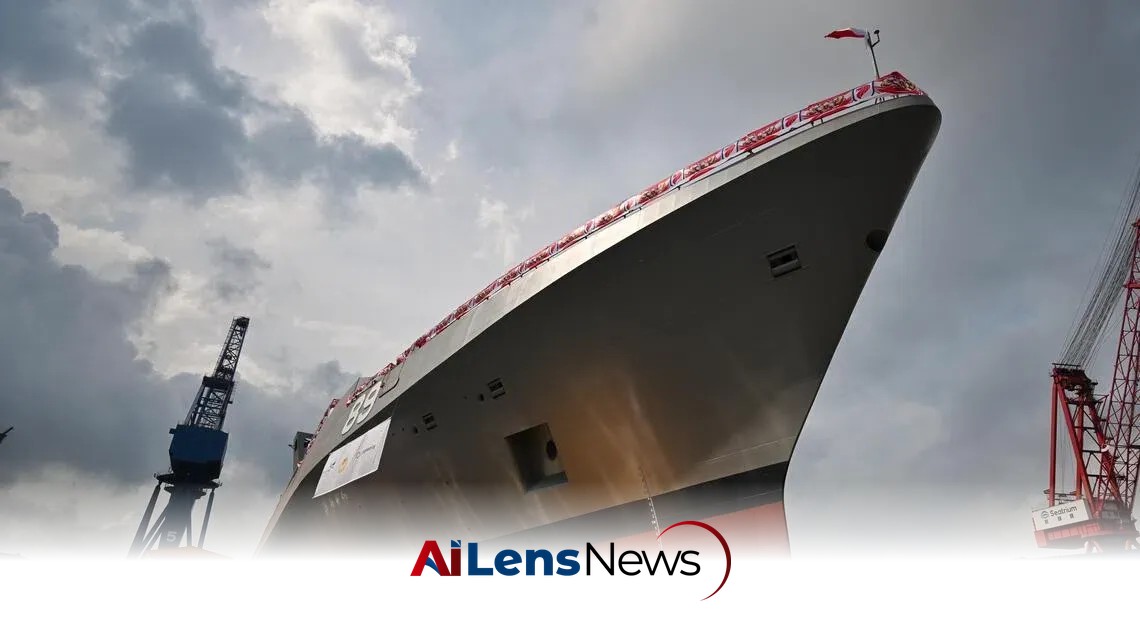


The Singapore Navy has launched its second multi-role combat vessel, Valour, enhancing maritime security and showcasing improved construction speed.
Singapore, Singapore Jul 23, 2026 ALN: The navy’s second multi-role combat vessel (MRCV), Valour, was launched on July 23, nine months after the first one was launched in October 2025. This significant step marks a critical advancement in the Republic of Singapore Navy's (RSN) modernization efforts, aimed at enhancing its capabilities in a rapidly evolving maritime security landscape.
Speaking during the launch at Benoi Shipyard, ST Engineering chief executive Vincent Chong highlighted the lessons learned from constructing the first vessel, Victory, and emphasized how these insights have been integrated into the development of future vessels. "We were able to build and launch MRCV Valour three months faster than MRCV Victory," said Chong, indicating a commitment to efficiency and innovation in naval shipbuilding.
Victory and Valour are part of a new class of warships designed to be highly configurable. These vessels are integrated with a range of unmanned systems, allowing them to conduct various mission types, including anti-surface warfare, anti-air warfare, and maritime security operations. The versatility of the MRCVs reflects a strategic shift in naval warfare, where adaptability and technological integration are paramount.
The new vessels will gradually replace the existing Victory-class missile corvettes, with deliveries expected to commence in 2028. The new MRCVs will retain the names of the six missile corvettes they are set to replace: Victory, Valour, Vigilance, Valiant, Vigour, and Vengeance. This continuity in nomenclature pays homage to the legacy and history of the RSN while ushering in a new era of maritime capabilities.
At the launch event, Coordinating Minister for National Security K. Shanmugam underscored the foresight of the Ministry of Defence in building up the navy over the decades, particularly in light of current international tensions. He pointed out that maritime trade routes are under intense stress, citing the situation in the Strait of Hormuz, which has been effectively closed due to ongoing conflicts in the region, particularly the Iran war. This situation highlights the importance of maintaining secure and open maritime approaches for national survival and economic stability.
“Electricity prices have gone up, petrol prices have gone up. It’s a fundamental national priority for us to keep our maritime approaches secure, open, and free. In fact, it’s a matter of survival,” emphasized Shanmugam, who also serves as Minister for Home Affairs. His comments reflect a broader concern among policymakers regarding the implications of global instability on national security and economic resilience.
Shanmugam further elaborated on the operational capabilities of the new warships, noting that they possess an operational range of approximately 7,000 nautical miles and can be deployed for extended periods exceeding 21 days. This endurance is crucial for conducting long-range missions and responding to crises that may arise far from Singapore's shores.
Additionally, steel was cut three months ago for the third and fourth vessels in the class, indicating that the RSN is not only focused on the immediate launch of Valour but is also actively progressing towards expanding its fleet. Shanmugam mentioned that all the warships have been or are being built in Singapore by ST Engineering, which has a long-standing history of constructing the majority of Singapore's naval ships. This local production capability is a testament to Singapore's investment in its defense industry and engineering expertise.
“We can design, we can build, we can sustain multiple advanced naval warships simultaneously,” stated Shanmugam, highlighting the strategic importance of having a robust domestic defense manufacturing sector. This capability not only enhances national security but also contributes to economic growth and job creation within the country.
Defence Science and Technology Agency senior programme manager Foo Ce Yang, 41, shared insights into the challenges faced during the project, particularly regarding the integration of various systems on the vessels. "When we install a mission module on board the vessel, we will need to check the physical dimensions, the power and the cooling footprint of the payload. We need to design the ship to accommodate those requirements. Power consumption is one of the key challenges when it comes to naval ship design," Foo explained. This complexity underscores the need for advanced engineering solutions and innovative design approaches in modern naval architecture.
Foo noted that the team of approximately 30 individuals learned valuable lessons from their experience with the first vessel, which informed their approach to constructing Valour. Continuous improvement and adaptation are vital components of the shipbuilding process, ensuring that each new vessel benefits from the technological advancements and operational insights gained from its predecessors.
Valour’s commanding officer will be Lieutenant-Colonel Timothy Low, 37, who has dedicated 19 years to the navy. Prior to his current role, he served as the commanding officer of the RSS Vigilance, one of the missile corvettes that will be replaced by the new MRCVs. Low's extensive experience in the navy equips him with a unique perspective on the operational capabilities and challenges that the new vessels will face.
Low shared that his inspiration to join the navy stemmed from a personal experience at the age of 15, when his father, a naval medical officer, was called to provide medical aid in the aftermath of the 2004 Boxing Day tsunami. This formative experience, coupled with attending navy open house events where he witnessed the camaraderie among servicemen, instilled in him a desire to serve. "As a commanding officer, my focus is on creating or carrying forward a pioneering spirit in the crew, a crew that cares for one another, that will push operational boundaries together, and will write the next chapter of RSN’s history," said Low. His leadership philosophy emphasizes teamwork, resilience, and a commitment to excellence, qualities that are essential for navigating the complexities of modern naval operations.
The launch of MRCV Valour represents more than just the addition of a new vessel to the RSN; it symbolizes Singapore's commitment to maintaining a formidable maritime defense posture in an increasingly uncertain geopolitical environment. As the RSN continues to evolve, the integration of advanced technologies and the cultivation of a skilled workforce will be crucial in ensuring that Singapore remains prepared to address emerging security challenges in the maritime domain.
In conclusion, the introduction of Valour and the subsequent MRCVs into the RSN fleet reinforces Singapore’s strategic emphasis on maritime security and operational readiness. The ongoing development of these vessels reflects a broader trend in naval warfare towards modernization and adaptability, ensuring that the RSN can effectively respond to both current and future challenges in an ever-changing global landscape.
To learn more about the latest developments in Defence & Armed Forces, stay updated with our exclusive reports and analyses on AiLensNews.

