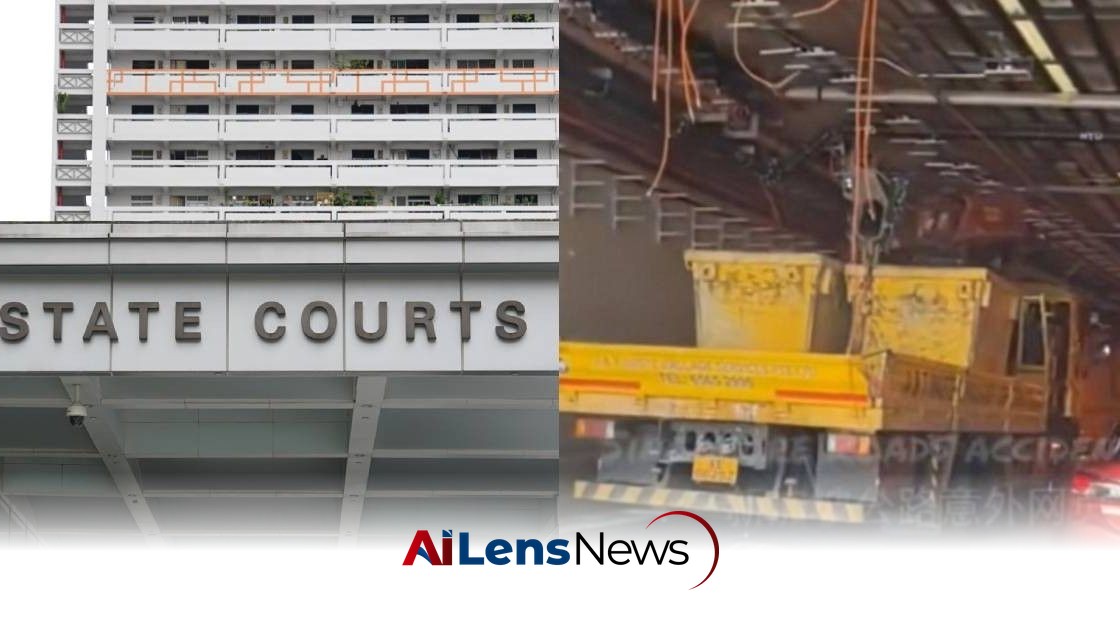


Lai Daohong received a 13-month jail sentence and a $1,000 fine for causing significant damage to the CTE tunnel, leading to a 10-hour road closure.
Singapore, Singapore Jul 15, 2026 ALN: A man who caused $1.4 million in damage to the Central Expressway (CTE) tunnel and triggered a 10-hour road closure in 2024 was sentenced to 13 months' jail and fined $1,000 on July 13. This incident highlights the significant consequences of negligence in operating heavy vehicles, particularly in urban environments where infrastructure is closely monitored and heavily utilized.
The case centers around Lai Daohong, a 56-year-old Chinese national, who, on November 8, 2024, drove his lorry into the CTE tunnel without realizing that the crane boom attached to his vehicle was raised. This oversight led to catastrophic damage to electrical and mechanical equipment situated on the tunnel ceiling, as outlined by the Land Transport Authority (LTA). The implications of this incident extended beyond mere property damage; it resulted in severe traffic disruptions and raised questions about road safety regulations and enforcement.
Following the collision, the slip road leading to the CTE tunnel was closed for 10 hours to facilitate the removal of debris and loose cables, resulting in significant traffic congestion in the area. The road remained closed for an additional four nights to complete necessary repairs, further exacerbating the inconvenience for commuters. This incident serves as a stark reminder of the ripple effect that a single act of negligence can have on urban traffic systems, affecting thousands of drivers and passengers.
Lai pleaded guilty to two charges: one for driving a heavy motor vehicle that collided with government property and another for operating a vehicle taller than 4.5 meters without the required police or auxiliary police escort. The implications of these charges are significant, particularly as they relate to the safety protocols that are designed to protect both infrastructure and the public. The court's decision to impose a 13-month prison sentence, along with a $1,000 fine, reflects the seriousness of the offenses committed.
During the court proceedings, it was revealed that Lai had departed from Nassim Hill at approximately 11:20 AM after attempting to unload the rear bin of his lorry. However, he abandoned this plan due to the narrowness of the location. This decision, coupled with his failure to ensure that the crane boom was properly retracted before moving, ultimately led to the disastrous incident. Deputy Public Prosecutor Valerie Lim emphasized the importance of conducting thorough checks before operating heavy machinery, particularly in urban areas where the risk of accidents can have far-reaching consequences.
As Lai drove along a route that included Nassim Road, Tanglin Road, Orchard Road, and Bideford Road, he eventually approached Cairnhill Road, which leads to the CTE tunnel entrance. At around 12:10 PM, the raised crane boom struck the leftmost height restriction bar of a message sign board just before the tunnel entrance. This collision was not the end of the incident; Lai continued to drive into the CTE tunnel, only stopping after the crane boom made contact with the tunnel ceiling. Remarkably, he had driven approximately 3.1 kilometers with the crane boom still raised, indicating a serious lapse in attention and awareness.
The aftermath of the collision was severe. According to Deputy Public Prosecutor Lim, the impact dislodged light fittings, fire suppression pipes, and other ceiling equipment within the tunnel. The damage was extensive, bringing down cables and scattering debris across the roadway, which posed additional hazards for other drivers. Such incidents underscore the critical need for rigorous safety measures and compliance with regulations governing the operation of heavy vehicles.
Adding to the gravity of the situation, it was revealed that Lai had previously committed similar offenses, which raises concerns about repeat offenders in the context of traffic safety. Under the Road Traffic Act, a repeat offender can face severe penalties, including a potential jail term of up to five years and fines reaching $10,000 for driving a heavy motor vehicle that collides with a building or structure. Furthermore, for operating a heavy vehicle exceeding 4.5 meters in height without the necessary police escort, the penalties can also include imprisonment for up to five years and fines of up to $5,000.
This case not only highlights the legal ramifications of negligence but also serves as a cautionary tale for other drivers, particularly those operating heavy vehicles. The responsibilities that come with such vehicles are significant, and the consequences of failing to adhere to safety protocols can be devastating, both for the operator and for the wider community. The incident has prompted discussions about the importance of driver education and the need for stricter enforcement of traffic regulations to prevent similar occurrences in the future.
In conclusion, the sentencing of Lai Daohong for his role in causing extensive damage to the CTE tunnel serves as a reminder of the critical importance of safety and vigilance when operating heavy machinery. The repercussions of his actions extend beyond personal punishment, affecting countless commuters and raising important questions about infrastructure safety and the enforcement of traffic laws. As cities continue to grow and evolve, ensuring the safety of public roadways remains a paramount concern for authorities and citizens alike.
The incident has also sparked a broader conversation about urban planning and infrastructure resilience, particularly in relation to how cities manage heavy vehicle traffic. Urban areas are often designed with specific height restrictions and traffic management systems to ensure safety and efficiency. However, as cities expand and more heavy vehicles enter urban environments, the potential for accidents increases. This incident serves as a wake-up call for city planners, transport authorities, and drivers alike to reassess current regulations and enforcement mechanisms.
Furthermore, the incident raises questions about the adequacy of current training programs for heavy vehicle operators. Ensuring that drivers are well-equipped to handle the complexities of urban driving, including understanding the limitations of their vehicles, can play a crucial role in preventing future accidents. Enhanced training programs that emphasize safety checks and situational awareness could be beneficial in reducing the likelihood of similar incidents.
In light of this event, there may be calls for increased monitoring of heavy vehicle operations within urban settings. This could include implementing more rigorous inspection protocols, increasing the presence of traffic enforcement officers in high-risk areas, and utilizing technology such as automated height detection systems to prevent oversized vehicles from entering restricted zones.
As the legal proceedings conclude, the implications of Lai's actions will continue to resonate throughout the community. The financial burden of repairs and the disruption caused by the road closure will likely be felt by many, highlighting the interconnectedness of urban infrastructure and the importance of responsible vehicle operation. The case serves as a reminder that the consequences of negligence extend beyond the individual, impacting the broader community and emphasizing the need for collective responsibility in maintaining road safety.
Ultimately, the incident involving Lai Daohong and the CTE tunnel underscores the critical need for ongoing dialogue about safety, regulation, and education in the realm of heavy vehicle operation. As cities evolve and the demands on their infrastructure increase, proactive measures must be taken to ensure that safety remains a top priority for all road users.
To learn more about the latest developments in Crime & Law, stay updated with our exclusive reports and analyses on AiLensNews.

