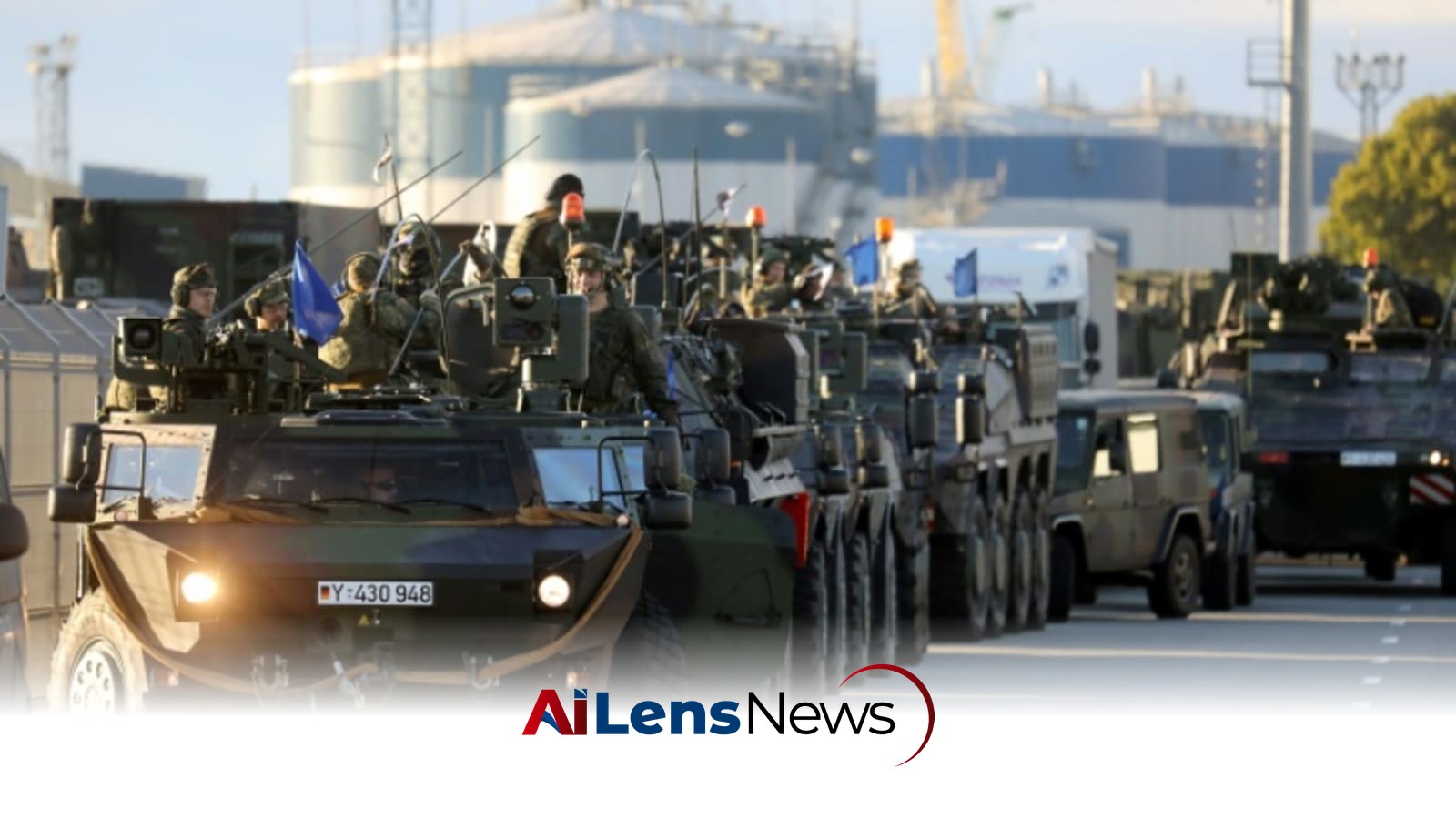


Germany has deployed around 100 soldiers to Lithuania as part of its commitment to NATO's eastern flank amid rising tensions with Russia.
Singapore, Singapore Sep 5, 2022 ALN: Around a hundred German soldiers arrived in Lithuania on Sunday (Sep 4), following Germany's pledge to bolster its presence on NATO's eastern flank in response to Russia's invasion of Ukraine. This move is part of a broader strategy by NATO to enhance its military readiness in the region, as tensions with Russia have escalated significantly since the onset of the Ukraine conflict.
The troops disembarked from the ferry in the port city of Klaipeda, marking a significant step in enhancing NATO's military readiness in the region. The arrival of these soldiers is not merely a logistical operation; it symbolizes the commitment of NATO member states to collective defense, a principle enshrined in Article 5 of the North Atlantic Treaty, which states that an armed attack against one member is considered an attack against all.
These soldiers will form the command unit of a new brigade, which typically consists of approximately 4,000 soldiers. "Our message to our allies here, on the eastern flank, is that we are committed to ensuring security," stated the brigade's commander, Christian Nawrat. This commitment is particularly crucial given the historical context of the Baltic states, which were once under Soviet control and now find themselves on the frontline of potential Russian aggression.
The command unit is set to remain permanently stationed in Lithuania, while additional combat units will join them for various exercises, according to Nawrat. The presence of a permanent command structure in Lithuania is intended to facilitate rapid response capabilities and ensure that NATO forces can effectively coordinate in the event of a crisis.
A senior German military official indicated that the first drills could commence as early as October, further solidifying Germany's commitment to NATO's eastern defenses. These drills will not only serve as a demonstration of military readiness but also as a reassurance to the Baltic states and other Eastern European countries that NATO stands united against potential threats.
Germany currently leads a NATO battle group in Lithuania, which already includes around 1,500 German soldiers. This existing presence is part of NATO's enhanced Forward Presence (eFP) initiative, which aims to deter aggression through a visible and credible military posture. The Baltic states of Estonia, Latvia, and Lithuania, all of which were once part of the Soviet Union and are now EU and NATO members, have expressed concerns about potential aggression from Russia, especially if it succeeds in Ukraine. The historical memory of Soviet occupation remains vivid in these countries, fueling their desire for robust security guarantees.
Since the onset of the conflict, these nations have requested an increase in NATO troop presence and the establishment of more robust brigades to replace existing units. The fear is that if Russia were to achieve its objectives in Ukraine, it might embolden further territorial ambitions in the Baltics. This scenario has prompted NATO to reassess its military strategies in Eastern Europe, leading to increased troop deployments and enhanced military exercises.
Chancellor Olaf Scholz announced in June that Germany was prepared to deploy additional troops to Lithuania, aiming for a robust combat brigade capable of both deterrence and defense against aggression. This announcement reflects a significant shift in Germany's defense posture, moving from a historically restrained military role to a more proactive stance in light of current geopolitical challenges.
NATO has been reinforcing its eastern flank in recent years, particularly after Russia's annexation of Crimea in 2014. In 2017, four multinational battle groups were deployed to the three Baltic states and Poland, marking a new phase in NATO's defense strategy aimed at deterring Russian aggression. These battle groups are made up of troops from various NATO member states, showcasing the alliance's collective defense principle and its commitment to mutual support.
In response to the Russian invasion that began in late February, NATO has decided to establish four new battle groups in Bulgaria, Hungary, Romania, and Slovakia, further enhancing its military posture in Eastern Europe. This expansion of NATO's presence is a clear message to Moscow that the alliance is united and prepared to defend its members against any potential threats.
The implications of Germany's troop deployment to Lithuania extend beyond military logistics; they also have significant political ramifications. The increased presence of NATO forces in the region is likely to exacerbate tensions with Russia, which has consistently viewed NATO's eastward expansion as a threat to its sphere of influence. Russian officials have warned that such military buildups could lead to a destabilizing arms race in Europe, increasing the risk of miscalculations and confrontations.
Furthermore, the deployment of German troops in Lithuania is also a test of NATO's unity and resolve. Member states must navigate the delicate balance between demonstrating strength in the face of aggression and avoiding actions that could provoke further escalation. As NATO continues to adapt to the changing security landscape, the alliance's ability to respond effectively to threats will be crucial in maintaining stability in Europe.
In conclusion, the arrival of German troops in Lithuania marks a pivotal moment in NATO's response to the evolving security challenges posed by Russia. As tensions continue to rise, the alliance's commitment to collective defense will be tested, and the actions taken in the coming months will have lasting implications for the security architecture of Europe. The situation remains fluid, and the international community will be closely monitoring developments in the region as NATO seeks to reinforce its eastern flank and ensure the safety of its member states.
To understand the broader context of NATO's military posture in Eastern Europe, it is essential to consider the historical relationship between Russia and its neighboring countries, particularly those that were once part of the Soviet Union. The dissolution of the USSR in 1991 led to a significant shift in the geopolitical landscape of Europe, with many former Soviet states seeking to align themselves with Western institutions like NATO and the European Union. This shift was driven by a desire for security and stability, as well as a rejection of the autocratic governance that characterized the Soviet era.
The Baltic states, in particular, have been vocal about their security concerns in the face of Russian military maneuvers and rhetoric. The annexation of Crimea and the ongoing conflict in Ukraine have heightened these fears, reinforcing the perception that Russia may seek to reassert its influence over its former territories. This has led to a growing consensus among NATO members that a robust military presence in Eastern Europe is necessary to deter potential aggression from Russia.
The strategic importance of Lithuania, Latvia, and Estonia cannot be overstated. These countries serve as a buffer between Russia and the rest of NATO, making their security critical to the alliance's overall defense strategy. The presence of NATO troops in these states is not only a deterrent to potential aggression but also a tangible demonstration of solidarity among member states, reinforcing the principle of collective defense.
In addition to military deployments, NATO has also engaged in various exercises and training programs in the region to enhance interoperability among member forces. These initiatives are designed to ensure that NATO troops can operate effectively together in the event of a crisis, further strengthening the alliance's deterrence posture.
As NATO continues to adapt to the evolving security landscape, the alliance faces the challenge of balancing deterrence with diplomacy. While military readiness is crucial, it is equally important to engage in dialogue with Russia to prevent misunderstandings and reduce the risk of escalation. The complexity of the situation requires a nuanced approach that considers both military and diplomatic avenues to ensure stability in Europe.
In summary, the deployment of German troops to Lithuania is a significant development in NATO's ongoing efforts to enhance its military posture in Eastern Europe. As the alliance grapples with the challenges posed by Russia, the commitment to collective defense remains paramount. The coming months will be critical as NATO navigates this complex security environment, aiming to deter aggression while maintaining open channels for dialogue and cooperation.
To learn more about the latest developments in World News & International Affairs, stay updated with our exclusive reports and analyses on AiLensNews.

