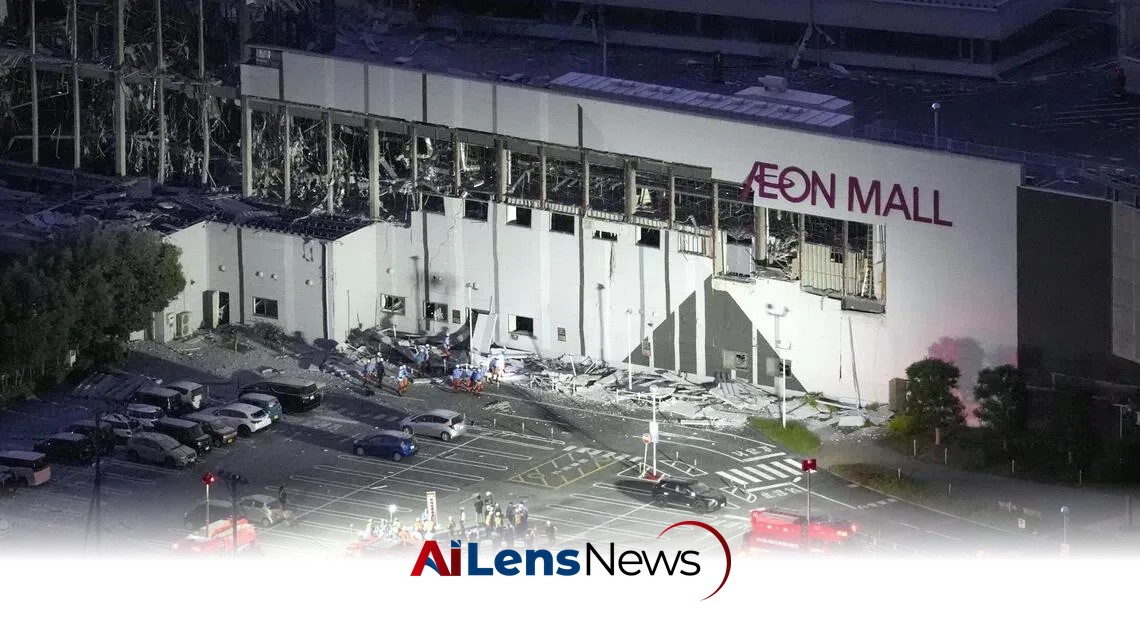


A powerful earthquake in Kumamoto, Japan, has resulted in five fatalities, including two at a shopping mall. The quake caused extensive damage and power outages.
Singapore, Singapore Jul 29, 2026 ALN: TOKYO - Five people died after a major earthquake in Japan, the Fire and Disaster Management Agency said on July 29. They included two individuals in a badly damaged shopping mall and three more elsewhere in the southwestern Kumamoto region hit by the 7.1-magnitude tremor on July 28. The earthquake struck late in the evening, causing significant damage and disruption in the area, which has been historically prone to seismic activity.
The quake also knocked out power to thousands of homes and ruptured roads across the region. The prefectural government reported that rescuers working at the scene overnight had taken eight people out of the Aeon Mall Kumamoto shopping centre, after an explosion tore through the mall following the quake. Eyewitness accounts described scenes of chaos as shoppers and employees attempted to evacuate the building amidst the destruction.
Of those eight, two women in their 20s were confirmed dead, while one other person was reported to be in cardiopulmonary arrest. The five others were injured, but officials said their condition was not life-threatening. Emergency fire rescue teams, police, and Self-Defence Force personnel were working together at the scene overnight, concentrating search operations on areas of the building where calls for help had been received. The collaborative efforts of various agencies underscored the urgency of the response to the crisis.
Speaking to reporters from her office in Tokyo on July 28, Japanese Prime Minister Sanae Takaichi said authorities were still assessing the full extent of the damage in the area, which was also devastated by a deadly quake a decade ago. This historical context highlights the vulnerability of the region, which has experienced significant seismic events in the past.
“We have already been informed that people have been injured. Power outages and fires have occurred in some areas, and there has also been damage to roads and bridges and the collapse of buildings,” Takaichi said. Her comments reflected the seriousness of the situation and the government's commitment to addressing the immediate needs of affected residents.
Around 300,000 people were instructed to go to evacuation centres, while aftershocks continued to rumble in the area on Japan’s southwestern island of Kyushu. The constant threat of aftershocks can exacerbate the fears and anxieties of residents already dealing with the trauma of the initial quake. Emergency services were stretched thin as they worked to ensure the safety of those displaced by the disaster.
One side of the mall, which houses around 200 stores, was torn away in the blast, exposing steel beams and strewing debris across a parking lot, footage showed. The explosion that followed the earthquake raised questions about the structural integrity of buildings in the area and the potential for gas leaks or other hazards. A spokesperson for mall operator Aeon said customers and employees were evacuated right after the initial quake, and the exact cause of the ensuing explosion was unclear. Authorities are investigating a possible gas explosion, broadcaster NTV reported, which could have been exacerbated by the seismic activity.
Kazuya Tsurunaga told TBS he was stunned by the blast while cleaning up dishes broken by the earthquake inside a pub about 300 metres from the Aeon mall. “It was a huge impact,” he said. “A large cloud of smoke billowed up, and because the wind happened to be blowing and the wind direction was towards the shop, the area around us was in a state like volcanic ash was falling.” His description captures the surreal and frightening experience of those caught in the immediate aftermath of the disaster.
Multiple people were also unaccounted for after a chimney collapsed at a Nippon Paper Industries factory, broadcaster NHK reported, while two hospitals were each reported to be treating more than 50 people, some in serious condition. Several passengers aboard high-speed trains at the time of the quake were also injured, operators said, highlighting the widespread impact of the earthquake on transportation and infrastructure.
Authorities were responding to multiple incidents where buildings had partially collapsed or had caught fire. One person died in a collapse in a town near the epicentre, TV Asahi reported. The swift response from emergency services was critical in preventing further loss of life and ensuring that those trapped were rescued as quickly as possible.
Some roads were also badly damaged, with large cracks splintering major highways, snarling traffic. Rail services were suspended and flights grounded, creating a logistical nightmare for residents and emergency responders alike. The disruption of transportation links can hinder both immediate rescue efforts and longer-term recovery plans.
TSMC, the world’s largest contract chipmaker, Sony, and Fujifilm evacuated workers from their plants following the quake. TSMC said in a statement late Tuesday that its site was unaffected and operations were gradually resuming. However, Tokyo Electron, a semiconductor equipment maker, said it was suspending operations at its two factories in Kumamoto through Wednesday, while Honda said it would also temporarily idle its motorcycle factory there. The implications of these temporary closures extend beyond the immediate area, potentially affecting supply chains and production schedules on a global scale.
The quake’s epicentre was about 20km south of Kumamoto City, central Kyushu’s largest city with a population of around 700,000. The proximity of the epicentre to a densely populated urban area raises concerns about the potential for widespread destruction and the challenge of emergency management in such scenarios.
Residents in the areas that felt the biggest tremors must be on alert for further strong quakes for about a week, as well as for the risk of landslides, an official for the Japan Meteorological Agency said. This ongoing threat can create an atmosphere of anxiety and uncertainty, as individuals and families grapple with the aftermath of the initial quake.
Located on the “Ring of Fire” of volcanoes and oceanic trenches partly encircling the Pacific Basin, Japan accounts for about 20 percent of the world’s earthquakes of magnitude 6.0 or more. This geographical reality necessitates stringent building codes and disaster preparedness measures, which have been a focus of Japanese policy since past seismic disasters.
Kyushu Electric Power said 48,000 homes had lost power as a result of the latest quake, while railway company JR Kyushu said that it had suspended services, including its high-speed bullet trains. Kumamoto Airport shut its runway, as airlines diverted and cancelled flights. The cascading effects of the earthquake on essential services underscore the importance of infrastructure resilience in disaster-prone regions.
There were no irregularities reported at the nuclear power stations in the area, Japan’s Nuclear Regulation Authority said. This information is crucial for public safety and reassurance, as nuclear facilities can pose significant risks in the event of seismic activity.
A massive earthquake in Kumamoto 10 years ago killed 275 people and injured a further 2,739, according to an official count, and damaged thousands of buildings including the walls of the city’s castle, a top tourist site. The memory of that disaster looms large in the minds of residents and officials alike, influencing current response strategies and community resilience efforts.
Authorities warned residents about the risk of heatstroke as temperatures were set to hit 34 degrees Celsius on July 29. The combination of natural disasters and extreme weather conditions can exacerbate the challenges faced by communities recovering from seismic events, highlighting the need for comprehensive disaster response plans that address a range of potential hazards.
To learn more about the latest developments in Crime & Law, stay updated with our exclusive reports and analyses on AiLensNews.

