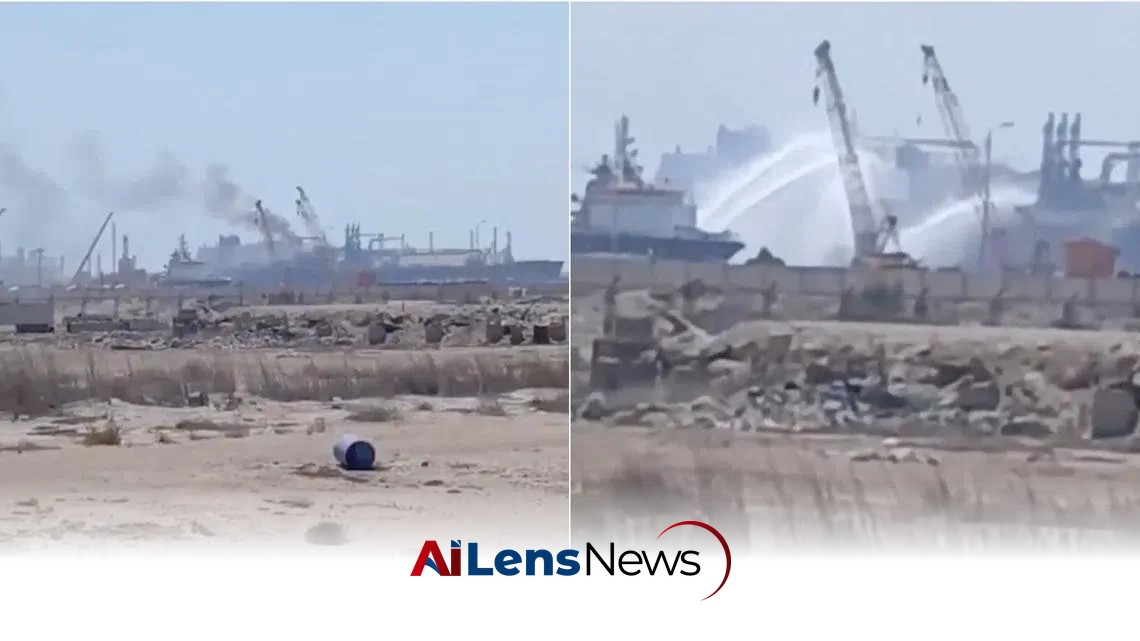


A drone strike on a US-owned tanker at Egypt's Damietta port heightens Middle East tensions, prompting US retaliation threats against Iran.
Singapore, Singapore Jul 30, 2026 ALN: LONDON/CAIRO/WASHINGTON - A drone hit a US-owned gas storage tanker at Egypt’s Mediterranean port of Damietta, British maritime security firm Ambrey reported on July 29. This incident marks a significant escalation in the ongoing Middle East conflict, with US President Donald Trump vowing to retaliate against Iran for an overnight attack.
The Egyptian petroleum ministry confirmed a fire at the port but did not mention a drone attack. The tanker, Energos Winter, was struck, causing a fire that spread to another vessel, according to three trading sources familiar with the incident. Fortunately, there were no casualties reported. The Energos Winter is part of a fleet that supplies gas to various markets, and the attack raises concerns about the security of maritime transport in a region that has already seen significant disruptions.
This drone strike comes amid heightened tensions, as Iran has been firing missiles at US forces in Jordan, prompting retaliatory strikes by the US and Saudi Arabia against Iran-backed groups in Iraq. Trump stated, “So it’s our turn,” indicating a firm stance against Iran. This statement reflects a broader strategy of the Trump administration, which has taken a hardline approach towards Iran, particularly following the US withdrawal from the Joint Comprehensive Plan of Action (JCPOA) in 2018. The drone attack on the tanker could be interpreted as a direct challenge to US interests in the region.
Oil prices surged following the attack, with Brent crude futures rising over 8%, pushing prices above $90 a barrel. This spike reverses a previous decline earlier in the week when Trump had unexpectedly halted US strikes. The fluctuation in oil prices is a critical indicator of market sentiment and geopolitical stability, as the Middle East is a key oil-producing region. Analysts warn that sustained tensions could lead to further increases in oil prices, which would have global economic implications, particularly for countries reliant on oil imports.
The recent drone strike and subsequent military actions have deepened the conflict in Iraq, exposing internal divisions. Iraqi leaders condemned the US-Saudi strikes, calling for respect for Iraq's sovereignty and urging all parties to avoid further escalation. The Iraqi government faces a significant challenge in maintaining its sovereignty while navigating the complex web of alliances and enmities in the region.
The Popular Mobilisation Forces, powerful Iran-backed paramilitary groups in Iraq, reported at least 20 members killed and 32 wounded in the US-Saudi strikes targeting their bases. These groups have played a significant role in the fight against ISIS but have also become a source of tension between the US and Iran. As tensions rise, Iraqi citizens have expressed their anger, chanting “Death to America!” during protests, reflecting a growing sentiment against foreign intervention.
Trump's administration has warned that resuming major combat operations against Iran carries risks, particularly concerning the limited stock of munitions available. The US military has fewer than 1,000 Patriot interceptor inventories and fewer than 250 THAAD interceptors, crucial air defense systems. This limitation raises questions about the US's ability to respond effectively to multiple threats simultaneously, especially in a region where missile technology is rapidly evolving.
Despite Iran denying its forces directed strikes from Iraqi territory, reports indicate that Iranian Revolutionary Guards advisers were killed in the strikes on Iraq. This revelation complicates the narrative around the conflict, as it suggests a direct Iranian involvement in the region's military dynamics, further straining US-Iran relations.
The strikes have highlighted a dangerous rift within Iraq, where the Shi’ite-led government attempts to balance military and diplomatic ties with both Tehran and Washington. Prime Minister Ali al-Zaidi urged all parties to avoid escalating tensions and keep Iraq out of regional conflicts. His government faces the daunting task of managing internal pressures from various factions that have differing views on foreign policy and military engagement.
The Iraqi presidency condemned the strikes as “an unacceptable attack” and called for a halt to armed group attacks against neighboring countries. The deep ties between Iran and Iraq are evident as hundreds of thousands of Iranian pilgrims travel to Iraq for annual religious observances. These cultural and religious connections complicate the political landscape, as many Iraqis view Iran as a vital ally against common threats, particularly from extremist groups.
As the situation evolves, the international community watches closely, with concerns that the conflict may spread further beyond its current borders. The potential for a wider regional conflict is a significant concern for global stability, particularly as other nations, including Russia and China, have vested interests in the region. The response from the international community will be critical in shaping the future dynamics of the Middle East, as diplomatic efforts may be necessary to de-escalate tensions.
In summary, the drone attack on the US-owned tanker in Damietta has heightened existing tensions between the US and Iran, with significant implications for regional stability and international oil markets. The response from the US, Iraq, and Iran will be closely monitored as the situation develops, with the potential for both military and diplomatic strategies to play a role in the coming days and weeks. The delicate balance of power in the Middle East continues to be tested as various actors navigate a complex and often volatile geopolitical landscape.
In the broader context, the drone attack reflects a pattern of increasing hostilities that have characterized US-Iran relations since the US exited the JCPOA. The deal, which was designed to limit Iran's nuclear capabilities in exchange for sanctions relief, has been a focal point of contention. Following the withdrawal, the US imposed a series of stringent sanctions on Iran, which has retaliated by ramping up its military activities in the region, including attacks on US assets and allies.
The maritime domain, particularly in the Persian Gulf and surrounding waters, has been a hotspot for confrontations, including attacks on oil tankers and shipping routes. These incidents have raised alarms about the safety of maritime trade, which is vital for global economic stability. The drone strike at Damietta serves as a reminder of the vulnerabilities that exist in these crucial shipping lanes and the potential for further escalation if diplomatic solutions are not pursued.
Moreover, the implications of this incident extend beyond immediate military responses. The potential for economic repercussions is significant; rising oil prices can lead to inflationary pressures worldwide, affecting consumers and businesses alike. Countries heavily reliant on oil imports may find their economies strained, prompting calls for alternative energy sources and policies aimed at reducing dependence on fossil fuels.
Furthermore, the reaction of regional players, including Saudi Arabia, Israel, and Turkey, cannot be overlooked. Each of these nations has its strategic interests in the region and may respond to perceived threats or shifts in power dynamics. Saudi Arabia, for example, has been particularly vocal against Iranian influence in Iraq and Syria, while Israel has conducted numerous strikes against Iranian targets in Syria, viewing Iran as a significant existential threat.
As the situation unfolds, the role of international organizations such as the United Nations may become increasingly important. Diplomatic channels must be utilized to prevent further military escalation and to seek a resolution that addresses the underlying issues driving the conflict. The involvement of global powers may also be necessary to mediate tensions and promote dialogue between the conflicting parties.
In conclusion, the drone attack on the US-owned tanker in Damietta is a significant event that underscores the fragility of peace in the Middle East. It highlights the interconnectedness of military, political, and economic factors in the region and illustrates the urgent need for a comprehensive approach to address the challenges posed by escalating tensions. The international community must engage proactively to foster stability and prevent a broader conflict that could have far-reaching consequences for global peace and security.
To learn more about the latest developments in Crime & Law, stay updated with our exclusive reports and analyses on AiLensNews.

