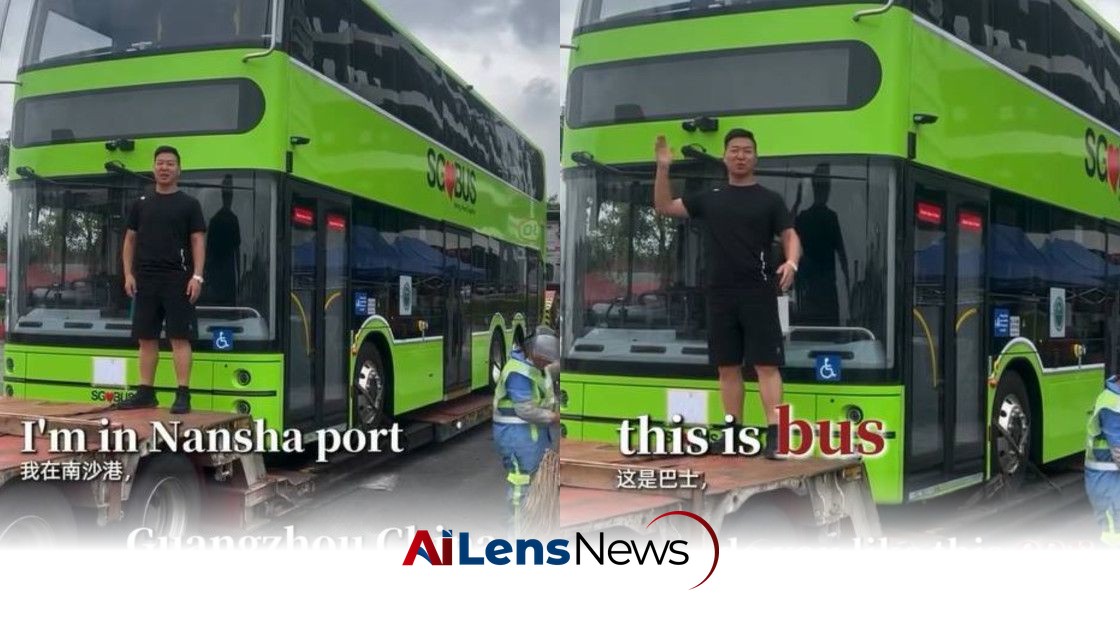


A Singaporean double-decker bus is up for sale by a Chinese salesman, sparking humor and curiosity among Singaporeans online.
Singapore, Singapore Jul 17, 2026 ALN: In a curious turn of events, a green double-decker bus, a familiar sight on the streets of Singapore, has drawn attention far from its home city. The bus made headlines after a China-based salesman, known on Instagram as Penghuiz59, or Peter, posted a video attempting to sell the vehicle from Nansha port in Guangzhou. This unusual marketing effort has not only amused locals but also sparked discussions about the logistics and feasibility of importing such a vehicle back to Singapore.
Singapore's public transportation system is renowned for its efficiency and reliability, with double-decker buses being a staple of the urban landscape. These buses are designed to accommodate a large number of passengers while navigating the dense city streets. The specific bus featured in Peter's post is adorned with the Singapore slogan "Moving Ahead Together," which further emphasizes its connection to the city-state. This slogan reflects Singapore's commitment to progress and community, resonating with the city’s ethos of collective advancement.
In his video, Peter enthusiastically presented the bus, stating, "This is bus. Do you like this car?" His broken and earnest demeanor contributed to the lighthearted nature of the post, which has since garnered significant attention, amassing over 150,000 views and more than 3,500 likes. The response from viewers has been overwhelmingly positive, with many users recognizing the bus's origin and playfully engaging with the content. One user humorously welcomed Peter to Singapore, while another inquired about the Certificate of Entitlement (COE), a necessary document for vehicle ownership in Singapore, which adds a layer of complexity to the potential sale.
The COE system is a critical aspect of Singapore's vehicle ownership regulations, designed to control the number of vehicles on the road and manage congestion. It requires prospective car owners to bid for a certificate that allows them to register a vehicle. This process has led to significant costs associated with owning a car in Singapore, making public transport options, such as buses, an attractive alternative for many residents. The COE system has been a subject of debate among citizens, with some advocating for reforms to make vehicle ownership more accessible, while others support it as a necessary measure for maintaining urban mobility and environmental standards.
Peter's post not only entertained viewers but also highlighted the ongoing developments in Singapore's public transport sector. The Land Transport Authority (LTA) of Singapore has been proactive in modernizing its fleet. In December of the previous year, the LTA announced the awarding of six contracts for the procurement of 660 new electric buses, which included 300 double-decker buses. This marked a significant milestone as it was the first large-scale purchase of electric double-decker buses in Singapore. These new buses are set to be progressively deployed from the end of 2026, replacing older diesel buses that are nearing the end of their operational lifespan. This transition reflects Singapore's broader ambitions to achieve a sustainable and environmentally friendly public transport system.
The shift towards electric buses is part of Singapore's broader initiative to enhance sustainability and reduce carbon emissions in public transport. With an increasing emphasis on green technology, the LTA's decision to invest in electric buses aligns with global trends towards environmental responsibility. The electric double-decker buses being procured include 150 units from ST Engineering Mobility Services, 50 from BYD, and 100 from Cycle & Carriage, showcasing a diverse approach to sourcing technology and innovation from multiple suppliers. This diversification not only fosters competition but also encourages technological advancements within the industry, ultimately benefiting consumers and the environment.
While the humorous nature of Peter's Instagram post has captured the imagination of many, it also raises questions about the logistics of such a transaction. Importing a bus back to Singapore would involve navigating a complex web of regulations, including compliance with local safety and emissions standards. The LTA has stringent requirements for vehicles operating on its roads, aimed at ensuring passenger safety and minimizing environmental impact. Additionally, potential buyers would need to consider the cost implications associated with the COE, which can fluctuate significantly based on demand and supply dynamics in the vehicle market. This unpredictability can deter potential buyers and complicate the feasibility of importing a bus from abroad.
Moreover, the interaction on social media reflects a growing interest in the evolution of public transport in Singapore. With the government's commitment to enhancing public transport infrastructure, the introduction of new electric buses is expected to improve the overall travel experience for residents. The integration of cleaner, more efficient buses is not only beneficial for the environment but also aligns with the government's goals of promoting public transport as a viable and attractive option for commuters. As Singapore continues to develop its public transport network, the emphasis on sustainability and innovation will likely shape future policies and initiatives.
The light-hearted banter in the comments section of Peter's post, including inquiries directed at the LTA regarding their interest in purchasing the bus, underscores the community's engagement with issues surrounding transportation. The public's interest in such a whimsical sales pitch serves as a reminder of the strong connection Singaporeans have with their public transport system, which is often viewed as an extension of their daily lives. Public transport is not merely a means of getting from point A to point B; it is an integral part of the urban experience, influencing social interactions and shaping the city's identity.
As the conversation surrounding Peter's post continues to unfold, it remains to be seen whether there will be any serious inquiries into the purchase of the bus. Regardless of the outcome, the incident serves as a humorous yet insightful reflection on the complexities of vehicle ownership in Singapore, the ongoing transformation of public transport, and the community's enthusiasm for innovation in this critical sector. The incident also highlights the role of social media in shaping public discourse, allowing for lighthearted exchanges that can lead to deeper discussions about important societal issues.
In conclusion, while Peter's attempt to sell a Singaporean double-decker bus from China may have started as a lighthearted endeavor, it has opened the door for broader discussions about transportation, sustainability, and the future of public transit in Singapore. As the city-state moves towards a greener future, the community's response to such initiatives will play a crucial role in shaping the evolution of its transportation landscape. The engagement sparked by this amusing episode highlights the importance of public participation in discussions about urban mobility and the collective responsibility to foster a sustainable environment for future generations.
To learn more about the latest developments in Local & Regional, stay updated with our exclusive reports and analyses on AiLensNews.

