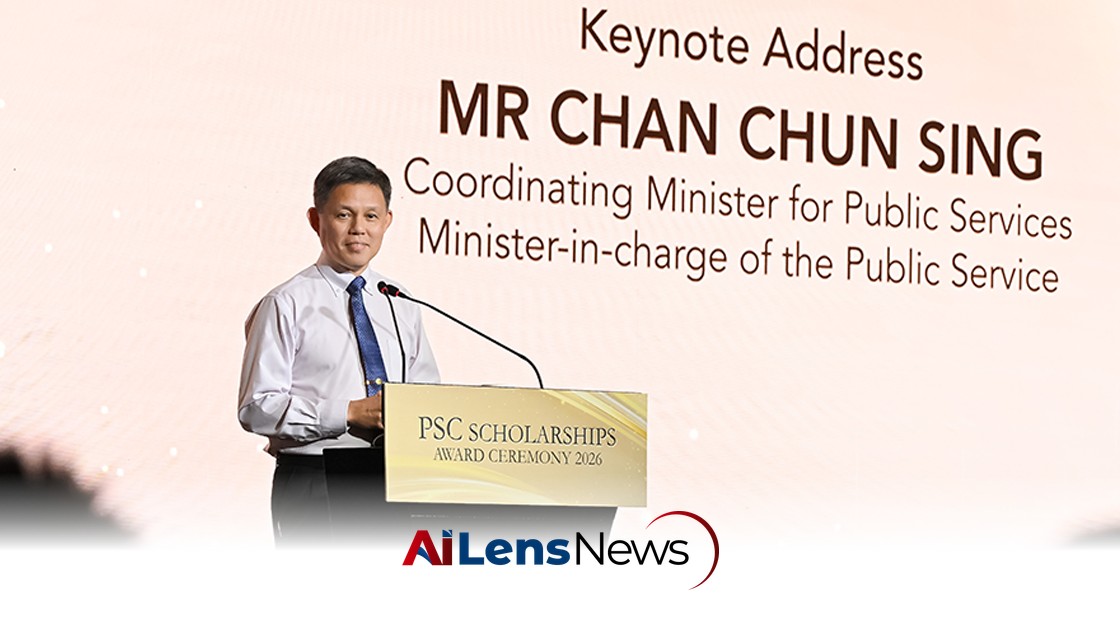


At the PSC scholarship awards ceremony, Chan Chun Sing emphasizes the importance of valuing every task and building relationships, regardless of rank.
Singapore, Singapore Jul 26, 2026 ALN: Chan Chun Sing, the Coordinating Minister for Public Services, recently addressed the recipients of the Public Service Commission (PSC) scholarships during an awards ceremony held at the Marina Bay Sands Expo and Convention Centre. This event, which took place on July 24, gathered 74 scholars who are poised to embark on their careers in public service. Chan's speech was rich with personal anecdotes and insights aimed at inspiring these young individuals to find deeper meaning in their future roles.
The Public Service Commission scholarships are awarded to outstanding students who demonstrate the potential to contribute significantly to Singapore's public service. These scholarships are not merely financial aid; they represent a commitment to nurturing future leaders who will play pivotal roles in the governance and administration of the country. The ceremony serves as a rite of passage for these scholars, marking the beginning of their journey in public service, a field characterized by its challenges and rewards.
Chan's approach to leadership and service is rooted in his own experiences, which he shared candidly with the audience. He emphasized the importance of taking pride in even the smallest tasks, such as disposing of rubbish, and highlighted the value of engaging with individuals at all levels, regardless of their rank or status. This message is particularly relevant in the context of public service, where collaboration and teamwork are essential for success. The ability to connect with people from diverse backgrounds and experiences can significantly enhance the effectiveness of public service initiatives.
One of the stories Chan recounted involved his time during a vacation while studying abroad. He reflected on his attachment to a military unit where he felt somewhat out of place due to his lack of training in the specific tasks at hand. Despite feeling "rather useless," Chan decided to volunteer for what he described as a "not particularly interesting task"—disposing of rubbish on a Saturday afternoon. This decision, he explained, stemmed from a desire to contribute in any way he could, even if it meant performing a task that others might consider menial. This anecdote serves as a powerful reminder that every role, no matter how seemingly insignificant, is vital to the overall mission and objectives of an organization.
Chan's experience of driving an army truck from the now-defunct Tanjong Gul Camp to Lorong Halus was not just about the physical act of throwing rubbish; it became a metaphor for his broader philosophy on public service. He noted that this job was often avoided by others due to fatigue, yet he chose to embrace it as an opportunity to learn and contribute. This lesson resonated with him later in his career when he encountered allegations of misappropriation within the Singapore Armed Forces (SAF). He recalled how his understanding of the significance of seemingly trivial tasks helped him identify the root of the problem. Chan's emphasis was clear: the true lesson was not about the potential for financial gain from such work, but rather the importance of finding meaning in every task, no matter how small.
In addition to his reflections on individual tasks, Chan shared insights on the importance of networking and building relationships. He recounted an experience from his time as a Colonel in the SAF when a senior officer from another armed force declined his meeting request. Instead of taking offense, Chan viewed this as an opportunity to engage with the officer's junior staff, who was a lieutenant and four ranks below him. He recognized that this interaction could lead to valuable connections, even if the initial meeting did not unfold as planned. This perspective underscores the idea that leadership is not solely about authority; it is also about fostering connections that can lead to collaboration and mutual support.
Years later, this junior officer reached out to Chan again, having advanced to a ministerial position in his own country. This encounter reinforced Chan's belief in the value of engaging with individuals at all levels, regardless of their current status. He urged the scholarship recipients to recognize the potential in every interaction, as these relationships could be instrumental in navigating future challenges. Chan's message was clear: valuing and building relationships with others is a cornerstone of effective leadership and service. In a rapidly changing world, the ability to connect and collaborate with others can be a decisive factor in achieving success in public service.
As Chan concluded his speech, he encouraged the scholars to envision a future where they could play pivotal roles in Singapore’s continued success. He spoke of the possibility of celebrating SG100 in 39 years, emphasizing that their contributions would be crucial in ensuring Singapore's resilience as an independent nation, especially in light of its lack of natural resources. This forward-looking vision is essential for fostering a sense of purpose among the scholars, motivating them to think about the long-term implications of their work and the legacy they wish to leave behind.
Chan expressed hope that this new generation would possess the same determination and commitment to public service that previous generations had demonstrated. His call to action was not just a reflection of his own aspirations but also a challenge to the young scholars to rise to the occasion. He articulated a vision for Singapore that transcends the immediate challenges, urging the recipients to embrace their roles as future leaders and contributors to society. His message was one of optimism and responsibility, encouraging the scholars to respond to the call of duty and service for the betterment of Singapore and its citizens.
This emphasis on the importance of public service is particularly relevant in today's context, where governments around the world face unprecedented challenges such as climate change, economic inequality, and social unrest. The need for dedicated and capable public servants has never been more critical. By instilling a sense of pride and responsibility in the next generation of leaders, Chan is contributing to the cultivation of a resilient and responsive public service that can adapt to evolving societal needs.
In summary, Chan Chun Sing's address at the PSC scholarship awards ceremony was a blend of personal stories and profound insights aimed at inspiring the next generation of public servants. By sharing his experiences, he highlighted the importance of humility, the value of every task, and the significance of building relationships. His message serves as a reminder that public service is not just about holding a position of authority but also about making meaningful contributions to society, regardless of the scale of the task at hand. As these scholars prepare to embark on their careers, they carry with them the lessons imparted by Chan, which will undoubtedly shape their approach to public service in the years to come. The impact of such guidance may extend far beyond individual careers, influencing the trajectory of Singapore's public service and its ability to meet the challenges of the future.
To learn more about the latest developments in Crime & Law, stay updated with our exclusive reports and analyses on AiLensNews.

