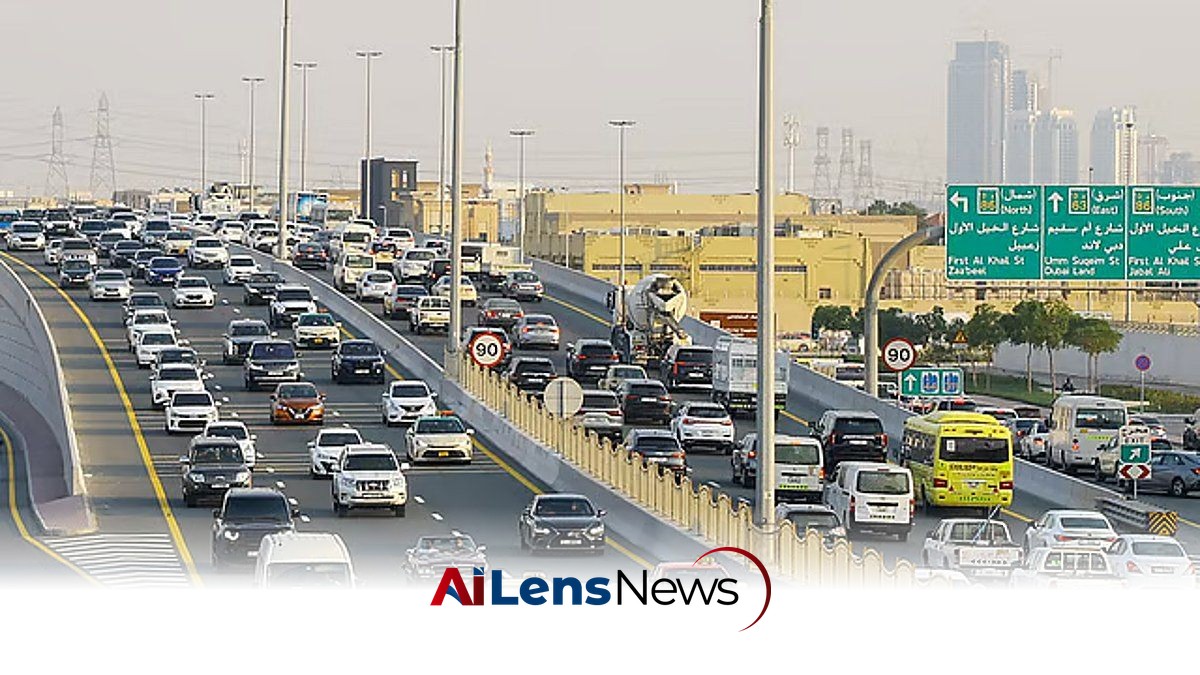


Motorists in Dubai face mixed traffic conditions with heavy congestion near Dubai South and the Dubai-Sharjah border, while Business Bay sees smoother flow.
Riyadh, Saudi Arabia Jul 14, 2026 ALN: Dubai: Motorists across Dubai are experiencing a mixed start to Tuesday, July 14, with pockets of heavy congestion reported in the southern and northern parts of the emirate, according to live traffic data. Traffic congestion is a common occurrence in major urban areas, particularly in a rapidly developing city like Dubai, where population growth and increased vehicular traffic frequently lead to delays. The city has seen a remarkable transformation over the past few decades, evolving from a modest trading port into a global hub for tourism, business, and innovation.
The rise in traffic congestion can be attributed to several factors, including the continuous influx of residents and tourists, ongoing construction projects, and the reliance on personal vehicles for commuting. Dubai's population has surged in recent years, with estimates suggesting that the emirate is home to over three million people, a number that continues to grow as expatriates flock to the city for work and lifestyle opportunities. This demographic shift has put immense pressure on the existing road networks, which were not originally designed to accommodate such high volumes of traffic.
The Dubai government has been actively working to improve road infrastructure and public transport options to mitigate these issues, but challenges remain. Investments in new roads, bridges, and tunnels are ongoing, alongside enhancements to public transportation systems, including the expansion of the Dubai Metro and bus services. However, the pace of urban development often outstrips the speed at which infrastructure can be improved, leading to periodic traffic snarls that affect daily commuters.
Dubai South / Al Maktoum International Airport (DWC) Commuters heading towards Dubai South via Emirates Road (E311) and D53 are facing slowdowns near the interchange close to Dubai South Sales Centre and Dubai South Commercial District. Traffic is backed up in the stretch leading towards Al Maktoum International Airport (DWC), and drivers heading in this direction should budget extra time. This area is significant for both business and travel, as it is home to the Dubai South development, which includes the airport, residential areas, and commercial districts. The Dubai South project is part of a larger vision to create a city within a city, fostering economic growth and providing a high quality of life for residents.
Dubai South is a master-planned city that aims to provide a comprehensive ecosystem for business and living, which has attracted many companies and residents. The proximity to Al Maktoum International Airport, which is set to become one of the largest airports in the world, adds to the traffic volume as both business travelers and tourists frequent the area. As the airport continues to expand, it is expected that traffic will increase further, necessitating ongoing improvements to road infrastructure. The airport is designed to accommodate a significant increase in passenger and cargo traffic, which adds to the urgency of addressing traffic bottlenecks in the surrounding areas.
Business Bay / Ras Al Khor It's a smoother picture around Business Bay, Dubai Design District, and Ras Al Khor, with Sheikh Zayed Road (E11), Al Ain Road (E66), and Emirates Road (E311) all flowing freely. Minor slowdowns are visible around the D68/E11 junction near Business Bay and Dubai Design District, but nothing significant. A brief hold-up is noted near the E44 junction close to Ras Al Khor, likely due to routine signal activity rather than an incident. Business Bay is a key commercial and residential area that has seen significant development in recent years, making it a focal point for businesses and residents alike. The area is characterized by its modern skyscrapers, luxury apartments, and a vibrant nightlife, contributing to its popularity.
The Dubai Design District, located adjacent to Business Bay, is a hub for creativity and innovation, housing numerous design and fashion companies. The presence of these industries contributes to a vibrant economic environment but also adds to the traffic burden during peak hours. The strategic location of these areas near major highways facilitates access but can also lead to congestion during busy periods. The district's focus on the arts and design has made it a desirable location for creative professionals, further increasing the number of vehicles on the roads during commuting hours.
Dubai-Sharjah border The most notable congestion this morning is along the Dubai-Sharjah corridor. Sheikh Zayed Road/Al Ittihad Road (E11) is red near Al Mamzar Beach Park and Bu Shagara heading into Sharjah, with further slow-moving traffic around Sahara Centre. The Dubai-Sharjah corridor is one of the most heavily traveled routes in the UAE, connecting two major emirates that share a significant economic and cultural relationship. As a result, the daily commute between Dubai and Sharjah is a routine for many residents, leading to increased traffic volume. The corridor serves as a vital link for workers who commute daily between the two emirates, contributing to the high traffic loads observed during peak hours.
Drivers using Sharjah's internal road network, particularly around Madina Mall and the S112/S116 corridor near Al Khawaneej and Muhaisnah, should also expect delays, with red stretches indicating stop-start conditions in both directions. The internal road networks in Sharjah, while generally well-maintained, can become congested, especially during peak hours when residents are commuting to work or school. The proximity of shopping malls and commercial centers also contributes to traffic as shoppers and visitors flock to these areas. As Sharjah continues to grow as a residential area for many who work in Dubai, the traffic conditions are likely to remain a challenge that requires careful management and planning.
Motorists travelling towards DWC, Sharjah, or the Muhaisnah/Al Khawaneej area during peak morning hours are advised to allow extra travel time or consider alternate routes where possible. Traffic conditions are subject to rapid change, and drivers are encouraged to check live navigation apps before setting off. The use of technology to monitor traffic conditions has become increasingly popular among commuters, with many relying on GPS and navigation apps that provide real-time updates on traffic flow and potential delays. These tools not only help drivers make informed decisions about their routes but also contribute to a more efficient use of road networks.
In addition to personal navigation tools, the Dubai Roads and Transport Authority (RTA) has implemented various measures to enhance traffic management. These include the installation of smart traffic signals, real-time traffic monitoring systems, and public awareness campaigns aimed at promoting safe driving practices. The RTA continuously evaluates traffic patterns and makes necessary adjustments to improve the flow of vehicles on the roads. The integration of technology into traffic management is crucial for adapting to the dynamic nature of urban transportation.
Furthermore, public transport options such as the Dubai Metro and bus services play a critical role in reducing traffic congestion. As the city expands, the government is investing in the enhancement of public transport infrastructure to encourage more residents to use these services instead of relying solely on private vehicles. This shift not only helps to alleviate road congestion but also contributes to a reduction in carbon emissions, aligning with Dubai's sustainability goals. The expansion of the Metro network, including new lines and stations, is designed to make public transport a more attractive option for commuters.
Overall, while traffic delays are an unfortunate reality in a bustling metropolis like Dubai, ongoing efforts to improve infrastructure, promote public transportation, and leverage technology for traffic management are steps in the right direction. As the city continues to grow and evolve, it will be essential for both authorities and residents to adapt to changing traffic conditions and explore innovative solutions to ensure smooth and efficient transportation throughout the emirate. The challenges posed by traffic congestion are not unique to Dubai; they are faced by cities around the world. However, with proactive planning and investment, Dubai aims to set a benchmark for urban mobility in the region.
To learn more about the latest developments in Local & Regional, stay updated with our exclusive reports and analyses on AiLensNews.

