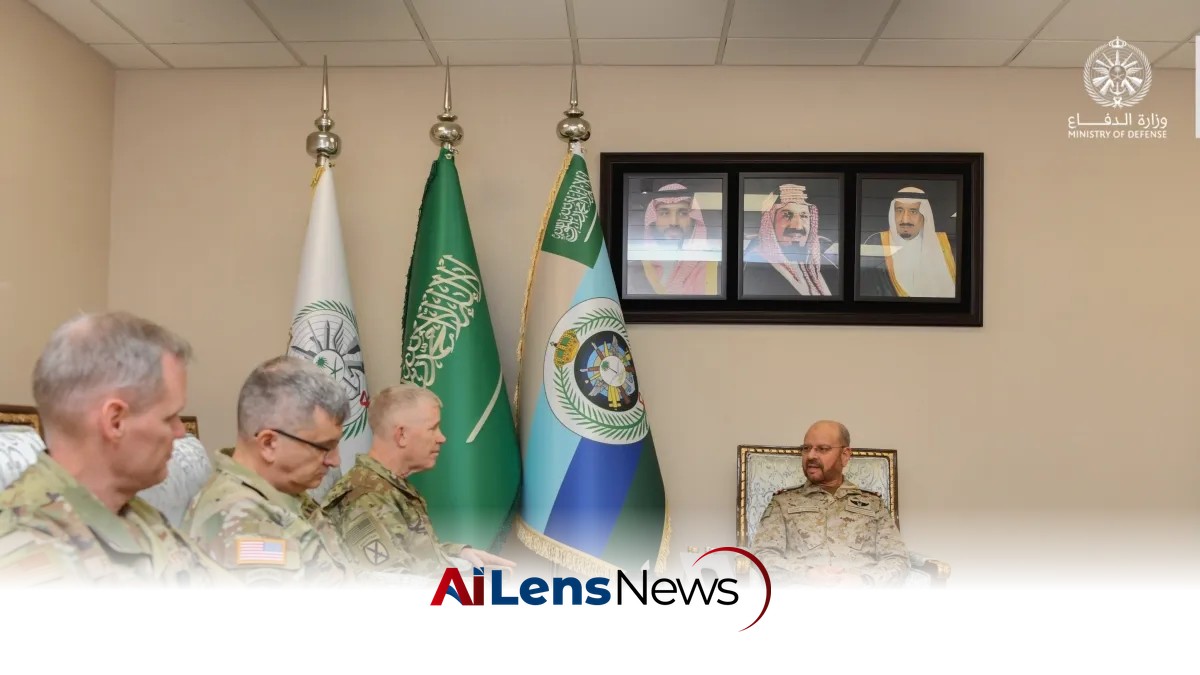


Saudi Arabia's Chief of General Staff Gen. Fayyadh Al-Ruwaili met with U.S. Central Command Deputy Commander Lt. Gen. Patrick Frank to explore military collaboration.
Riyadh, Saudi Arabia Jul 16, 2026 ALN: Saudi Arabia's Chief of the General Staff Gen. Fayyadh Al-Ruwaili met with U.S. Central Command Deputy Commander Lt. Gen. Patrick Frank to discuss ways to strengthen military cooperation between the two countries. This meeting is part of a broader effort to enhance defense collaboration, reflecting the ongoing strategic partnership between Saudi Arabia and the United States.
The Ministry of Defense reported that the two military leaders reviewed opportunities to expand cooperation across various defense fields in a manner that serves the shared interests of Saudi Arabia and the United States. This includes discussions on military training, joint exercises, and operational planning, which are crucial for maintaining a robust defense posture in the face of evolving threats.
The discussions between Gen. Al-Ruwaili and Lt. Gen. Frank come at a time of heightened geopolitical tensions in the Middle East, particularly regarding Iran's activities in the region and its nuclear ambitions. Iran's influence has been a source of concern for both nations, leading to a strategic alignment in their defense policies. The United States and Saudi Arabia have historically maintained a close military relationship, largely driven by mutual concerns over regional security threats, such as the activities of Iranian proxies in Iraq, Syria, and Yemen.
This meeting underscores the ongoing commitment of both nations to collaborate on defense strategies that enhance their security frameworks. The U.S. has long viewed Saudi Arabia as a pivotal ally in the Middle East, and the kingdom's geographic location is critical for U.S. military operations in the region. The partnership allows for a coordinated response to threats and facilitates the U.S. military's ability to project power in a volatile environment.
Saudi Arabia's military modernization efforts have been significant in recent years, particularly as the kingdom seeks to bolster its defense capabilities in the face of regional instability. The Saudi government has invested heavily in advanced military technology and equipment, often sourced from the United States. This investment aligns with the Vision 2030 initiative, which aims to diversify the Saudi economy and reduce its dependency on oil revenues. A robust military is seen as essential for national security and regional influence, and these modernization efforts are intended to create a more capable and self-sufficient defense force.
In addition to traditional military cooperation, the discussions may also encompass cybersecurity, intelligence sharing, and counterterrorism efforts. The threat of extremist groups operating in the region remains a pressing concern for both nations. The U.S. has been involved in various operations aimed at dismantling terrorist networks, and Saudi Arabia has been a key partner in these efforts, providing critical intelligence and resources. The collaboration in counterterrorism is particularly vital as both countries face the persistent threat of groups like ISIS and Al-Qaeda, which continue to exploit regional instability.
Furthermore, the relationship between the U.S. and Saudi Arabia is not without its complexities. While both countries share a common interest in countering Iranian influence and ensuring the stability of global oil markets, there are also underlying tensions related to human rights issues in Saudi Arabia and the kingdom's involvement in the conflict in Yemen. The U.S. has faced criticism from various quarters for its arms sales to Saudi Arabia, particularly in light of reports of civilian casualties in Yemen. These issues complicate the diplomatic landscape and may influence the nature of military cooperation moving forward. The U.S. administration has been under pressure to address human rights concerns while balancing strategic interests in the region.
The meeting between the military leaders also reflects broader trends in U.S. foreign policy, which has been increasingly focused on strengthening alliances in the Indo-Pacific region while maintaining commitments in the Middle East. The U.S. military presence in the region, particularly through Central Command, is aimed at deterring aggression and ensuring freedom of navigation in critical waterways. Saudi Arabia plays a crucial role in this strategy, given its geographic location and its status as a leading oil exporter. The stability of Saudi Arabia is seen as pivotal to the security of global oil supplies, which further underscores the importance of U.S.-Saudi military cooperation.
As part of the ongoing discussions, both military leaders may explore joint training exercises and operational planning that could enhance interoperability between U.S. and Saudi forces. Such initiatives have the potential to improve the effectiveness of both militaries in responding to regional crises and conducting joint operations when necessary. The ability to operate seamlessly together is essential for addressing any emergent threats that may arise in a rapidly changing security environment.
The implications of enhanced military cooperation extend beyond bilateral relations. As Saudi Arabia continues to assert itself as a regional power, its partnership with the U.S. could influence the dynamics of security alliances in the Middle East. Other nations in the region are closely monitoring these developments, as they may seek to recalibrate their own defense strategies in response to the evolving security landscape. Countries like Iran, Turkey, and even Israel are likely to adjust their military and diplomatic strategies based on the perceived strength of the U.S.-Saudi alliance.
In conclusion, the meeting between Gen. Al-Ruwaili and Lt. Gen. Frank is a significant step in reinforcing the military ties between Saudi Arabia and the United States. As both nations navigate the complexities of regional security challenges, their collaboration will likely evolve to address emerging threats and maintain stability in the Middle East. The outcomes of such discussions will not only impact the bilateral relationship but also shape the broader geopolitical environment in which both countries operate. Future engagements will be critical in determining how effectively they can respond to both traditional and non-traditional security threats in an increasingly interconnected world.
To learn more about the latest developments in World News & International Affairs, stay updated with our exclusive reports and analyses on AiLensNews.

