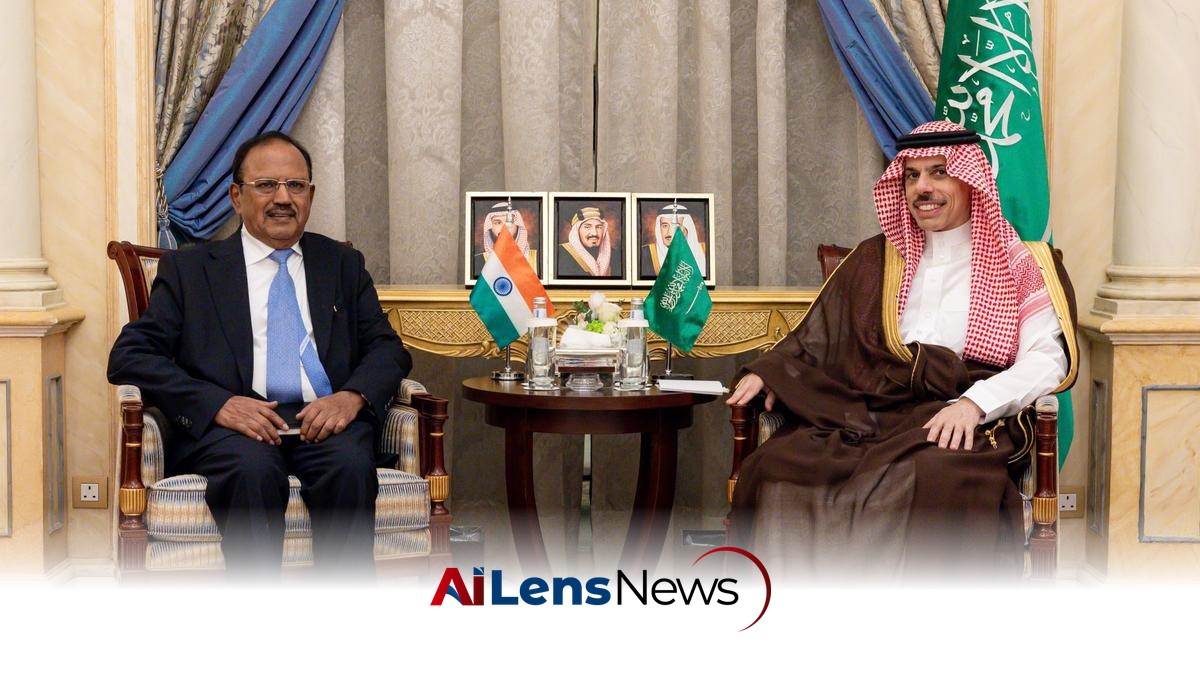


NSA Ajit Doval's visit to Saudi Arabia focuses on enhancing energy security and addressing regional tensions, particularly concerning maritime routes affected by U.S.-Iran conflicts.
Riyadh, Saudi Arabia Jul 21, 2026 ALN: Security Advisor (NSA) Ajit Doval's recent visit to Saudi Arabia represents a significant diplomatic engagement between India and the Kingdom, particularly in the context of energy security and maritime safety amidst escalating regional tensions. This visit, which took place on July 20, 2026, involved discussions with Saudi Foreign Minister Prince Faisal bin Farhan and highlighted the importance of strengthening bilateral relations between the two nations.
The backdrop of Mr. Doval's visit is marked by heightened tensions in West Asia, particularly due to ongoing conflicts involving Iran and its regional proxies, notably the Houthi rebels in Yemen. The Houthis, who are backed by Iran, have announced a 'maritime embargo' against Saudi Arabia, threatening to block Saudi vessels in the strategically important Bab al-Mandab Strait. This strait serves as a critical chokepoint for global shipping, linking the Red Sea to the Gulf of Aden and ultimately the Arabian Sea, making it vital for inter trade and energy supplies.
The Houthi rebels' actions are framed as a response to what they term a blockade imposed by Saudi Arabia on ports and airports in Houthi-controlled areas of Yemen. This situation has raised alarm bells not just for Saudi Arabia but for the inter community as well, given the potential for significant disruptions to shipping routes that are crucial for global energy supplies. In response to the Houthi threats, Saudi Arabia has firmly rejected the claims and vowed to take all necessary measures to protect its maritime interests in accordance with inter law.
During the discussions, Mr. Doval and Prince Faisal also reviewed the broader regional developments and the implications of these tensions on energy security. The ongoing conflict between the U.S. and Iran has already led to disruptions in the Strait of Hormuz, another critical maritime route through which a significant portion of the world's oil supply transits. This context underscores the urgency of the talks between India and Saudi Arabia, as both nations seek to ensure the stability of their energy supplies and the security of maritime routes.
Mr. Doval's meeting with Prince Faisal is part of a series of engagements that he has had with Saudi officials this year, marking his third visit to the Kingdom in 2026 alone. His earlier visits in February and April included discussions not only with the Foreign Minister but also with Saudi Energy Minister Prince Abdulaziz bin Salman and Security Advisor Musaed bin Mohammed Al Aiban. These repeated engagements signal India's commitment to deepening its strategic partnership with Saudi Arabia, particularly in the realms of energy cooperation and security.
India and Saudi Arabia have historically enjoyed close ties, underpinned by strong economic and energy relations. Saudi Arabia is one of India's largest suppliers of crude oil, which is essential for India's energy needs. Furthermore, the Indian diaspora in Saudi Arabia, numbering approximately 2.6 million, represents the largest expatriate community in the Kingdom. This demographic factor adds another layer of importance to India's diplomatic efforts, as the safety and welfare of Indian citizens abroad are a priority for the Indian government.
Amidst the backdrop of regional instability, India is actively stepping up its diplomatic engagement with Gulf countries, focusing on safeguarding energy supplies, securing vital sea lanes, and ensuring the safety of its citizens and seafarers in the region. The Indian government recognizes the strategic significance of the Gulf region, not only for energy security but also for economic partnerships that can contribute to India's broader geopolitical objectives.
The implications of Mr. Doval's visit and the discussions held with Saudi officials extend beyond immediate energy concerns. They reflect India's broader strategy of increasing its influence in the Gulf region, which has become increasingly important as geopolitical dynamics shift. The evolving relationship between India and Saudi Arabia is indicative of a changing landscape in which energy security, maritime safety, and regional stability are paramount.
As the situation in West Asia continues to evolve, the role of major powers like India in mediating tensions and ensuring stability will be closely watched. The engagement between India and Saudi Arabia may serve as a model for how countries can collaborate on shared security concerns, particularly in a region fraught with conflicts and competing interests. The focus on energy security and maritime corridor protection is not just a bilateral concern; it has implications for global energy markets and inter trade, making such diplomatic efforts critical in the current geopolitical climate.
In conclusion, NSA Ajit Doval's talks with Saudi Foreign Minister Prince Faisal bin Farhan highlight the importance of India-Saudi relations in the context of energy security and regional stability. As both nations navigate the complexities of a turbulent geopolitical landscape, their strategic partnership will likely play a crucial role in addressing the challenges posed by regional conflicts and ensuring the safety of vital maritime routes essential for global trade and energy supplies.
The historical context of India-Saudi relations can be traced back to ancient trade routes that established economic and cultural ties long before the modern state system emerged. The discovery of oil in the Arabian Peninsula in the 20th century transformed Saudi Arabia's economy and its role on the global stage, while India, with its burgeoning population and growing economy, has become increasingly reliant on energy imports. This interdependence has fostered a relationship characterized by mutual benefit, with India being one of the largest consumers of Saudi oil.
In the contemporary geopolitical landscape, the Gulf region has become a focal point for various global powers. The United States has historically been a key player in the region, providing security guarantees to Gulf monarchies while also pursuing its own strategic interests. However, the shifting dynamics, particularly with the rise of China and the changing approach of the U.S. under different administrations, have opened opportunities for countries like India to enhance their influence and forge stronger ties with Gulf nations.
India's engagement strategy is multifaceted, encompassing not just energy security but also counter-terrorism, trade, and investment. The Indian government has recognized the importance of diversifying its energy sources and reducing dependence on a single supplier, which makes its relationship with Saudi Arabia even more critical. The Kingdom's Vision 2030 initiative, aimed at diversifying its economy and reducing its reliance on oil, aligns with India's interests in investing in non-oil sectors and technology transfer.
Moreover, the Indian diaspora in Saudi Arabia plays a significant role in strengthening bilateral ties. Indian workers contribute substantially to the Saudi economy, and their remittances are vital for India's economic stability. The welfare of this community is a priority for the Indian government, which seeks to ensure their safety and rights while abroad. This demographic connection enhances the diplomatic dialogue between the two nations, providing a human element to the strategic discussions.
As regional tensions persist, particularly with Iran's influence in Iraq, Syria, and Yemen, the need for a coordinated response among Gulf nations becomes increasingly critical. India's role as a mediator and stabilizing force can potentially enhance its standing in the region, allowing it to contribute to peace-building efforts and economic collaboration. The conversations between Mr. Doval and Saudi officials are not merely about immediate concerns; they are part of a broader strategy to position India as a key player in Gulf geopolitics.
In summary, NSA Ajit Doval's discussions with Saudi Foreign Minister Prince Faisal bin Farhan are emblematic of a deepening partnership between India and Saudi Arabia. This partnership is rooted in historical ties, economic interdependence, and a shared vision for regional stability. As both nations work together to navigate the complexities of energy security and maritime safety, their collaboration will likely have lasting implications for the geopolitical landscape of West Asia and beyond.
To learn more about the latest developments in World News & International Affairs, stay updated with our exclusive reports and analyses on AiLensNews.

