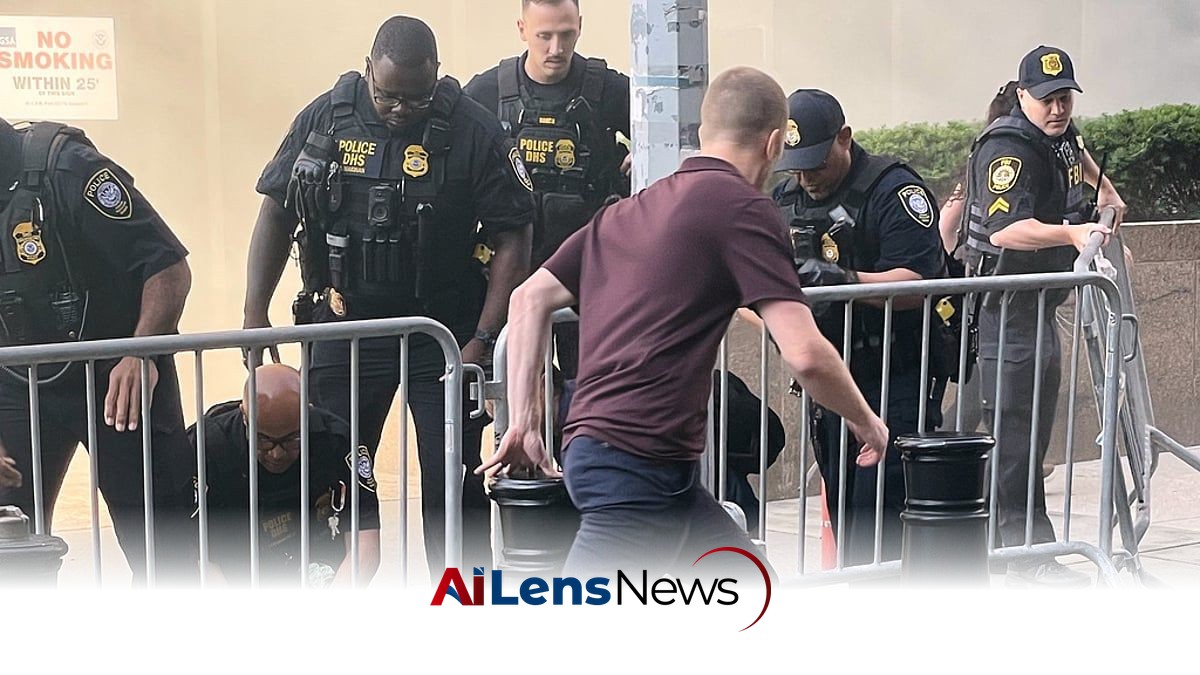


A former US Army soldier has been jailed without bail after confessing to a fiery attack on a Manhattan federal office building, resulting in minor injuries.
Riyadh, Saudi Arabia Jul 22, 2026 ALN: New York: A former US Army soldier was charged with arson and jailed without bail after prosecutors say he confessed to carrying out a fiery attack on a Manhattan federal office building where immigration hearings are held. The incident occurred at 26 Federal Plaza, a site that has been a focal point for protests against immigration policies in the United States.
Andrew Arrabaca, 43, plotted the attack for months and considered striking other New York City targets before setting a fire, lighting fireworks, and firing a pellet gun Monday morning outside the building. Assistant US Attorney Samantha Fry detailed the premeditated nature of the act, indicating that Arrabaca had been planning the attack as far back as January. His actions were not impulsive but rather the culmination of a lengthy period of contemplation and preparation.
Upon being apprehended, Arrabaca acknowledged to investigators that he understood the potential consequences of his actions, including the possibility of harming or killing others. He reportedly expressed a willingness to accept his own death in the process, highlighting a concerning mindset that raises questions about his mental health and state of mind at the time of the attack.
Fry characterized Arrabaca's actions as “calculated, targeted and unacceptably dangerous.” The implications of such a statement are significant, as it underscores the severity of the threat posed not only to the immediate vicinity of the federal building but also to the broader community. The attack resulted in minor injuries to three individuals, including one person who was present for an immigration court hearing. The building also houses offices for US Immigration and Customs Enforcement (ICE) and the FBI, making it a sensitive location that has been a magnet for protests against President Donald Trump’s immigration crackdown.
During his court appearance, Arrabaca sat quietly between his lawyers, nodding at times as they spoke with him and explained the proceedings. He was not required to enter a plea during this initial hearing, as the legal process is still in its early stages. The charge of arson or explosion causing damage to U.S. government property carries a minimum sentence of seven years in prison, which reflects the serious nature of the offense.
US Magistrate Judge Robyn F. Tarnofsky ordered Arrabaca to be jailed at a federal lockup in Brooklyn, rejecting his lawyer's suggestion that he be sent to a locked ward at a Veterans Health Administration facility for a mental health evaluation. This decision indicates a recognition of the complexities surrounding Arrabaca's mental health issues, which have been cited as a factor in his behavior. Judge Tarnofsky expressed a desire for Arrabaca to be evaluated at the jail as soon as possible, stating, "This is an individual who, notwithstanding what he appears to have done, has served our country and is quite clearly ill."
Arrabaca's situation is further complicated by his living conditions leading up to the attack; he was reportedly living in his car and had slept in a park the night before. Fry noted that in 2020, he was prescribed medication for a mental health condition but stopped taking it about a year later. This lapse in treatment raises questions about the availability and accessibility of mental health services for veterans, a demographic that often faces unique challenges in accessing care.
Additionally, a military-style helmet that authorities say Arrabaca wore during the attack had words on it suggesting he was suicidal. This detail adds another layer of urgency to the discussion about mental health support for veterans, particularly those who have served in combat or high-stress environments. Defense lawyer Jennifer Brown emphasized that Arrabaca has no prior criminal history and, until recently, had a long history of employment, which paints a picture of a man who may have experienced a significant decline in his mental health and stability.
Arrabaca is a US citizen and a lifelong New York resident, having grown up in Queens. Public records indicate he was linked to an address in Poughkeepsie. His military background includes repairing Patriot missile systems while serving in the Army from 2001 to 2004, as well as a year in the New York Army National Guard. Notably, he had no deployments during his service and left the Army as a specialist, which may contribute to the narrative of a veteran struggling to reintegrate into civilian life.
Fry, arguing for jail instead of hospitalization or release, contended that Arrabaca poses a danger to the community and is a flight risk. This assertion is significant in light of the nature of his crime, which involved premeditated actions that could have resulted in much greater harm. Brown conceded that “the nature of this offense is undoubtedly dangerous,” but argued that Arrabaca’s “expressed intention was not to cause damage to people but to cause damage to property.” This distinction, while noteworthy, does not mitigate the potential risks associated with his actions.
According to Fry, Arrabaca's planning included trips to upstate New York to acquire weapons and to Pennsylvania to purchase fireworks, indicating a methodical approach to executing his plan. Outside the Manhattan building, he was tackled by a security officer after authorities say he dumped gasoline outside an employee entrance and set the sidewalk on fire. The presence of multiple weapons, including two axes, three fixed-blade knives, a hammer, and a machete, further illustrates the level of preparedness and intent behind his actions.
During his arrest, Arrabaca reportedly made “anti-government and anti-American statements” along with derogatory remarks about ICE, leading to concerns about his motivations and ideological beliefs. James Barnacle, the head of the FBI’s New York field office, highlighted the potential for greater tragedy, stating that “this attack could have ended much more tragically” given that the building serves as a workplace for hundreds of federal employees, a daycare for children, and a post office for the public. The presence of these vulnerable populations underscores the broader implications of Arrabaca's actions and the need for vigilance in protecting federal facilities.
Fry asserted that there is “overwhelming evidence of his guilt,” including “his own fulsome confession,” which complicates Arrabaca's defense. Tarnofsky acknowledged the troubling nature of the charges and indicated that she seriously considered the psychiatric ward option but ultimately rejected it due to concerns about Arrabaca's willingness to comply with treatment. This decision reflects a broader issue within the criminal justice system regarding the intersection of mental health and criminal behavior, particularly for veterans who may not seek help despite having access to resources.
As the legal proceedings unfold, the case raises important questions about the treatment of veterans, mental health awareness, and the potential for violence stemming from untreated mental health issues. The implications of this case extend beyond the individual, touching on systemic issues within both the military and civilian sectors regarding how society supports those who have served in uniform and the importance of addressing mental health challenges in a timely and effective manner.
To learn more about the latest developments in Crime & Law, stay updated with our exclusive reports and analyses on AiLensNews.

