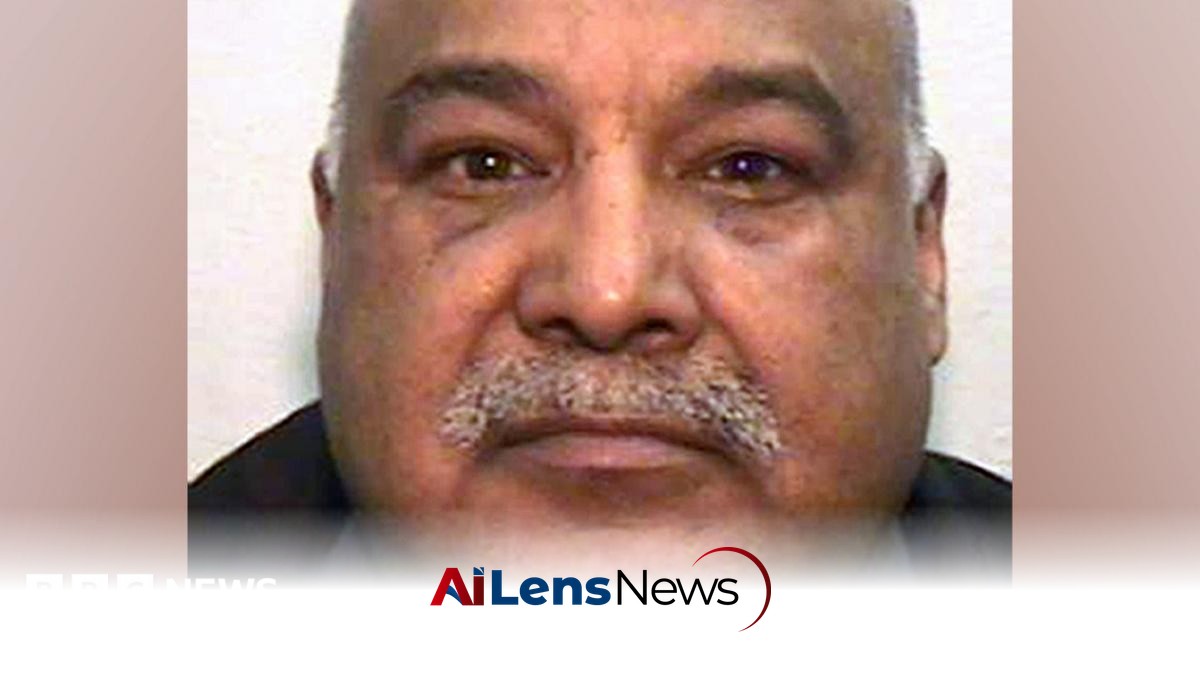


Shabir Ahmed, the ringleader of a Rochdale grooming gang, is set to be released from prison this week but cannot be deported due to UK immigration laws.
New Delhi, India Jul 1, 2026 ALN: The ringleader of a notorious Rochdale grooming gang is set to be released from jail this week and cannot be deported, his victims have been told.
Shabir Ahmed, 73, known to his victims as "Daddy," had dual British-Pakistani citizenship but was stripped of the former following his conviction in 2012 for multiple counts of rape and sexual offences against girls.
Documents shared online, reportedly from the Probation Service to one of his victims, state that he will be released on Thursday.
The Home Office stated that Ahmed's crimes were "appalling" and that he would be subject to stringent licence conditions upon his release from prison.
Ahmed must initially live in supervised accommodation 24/7 and will be subject to an "exclusion zone" centred on Rochdale.
The papers published online indicated that Ahmed cannot be deported back to Pakistan due to provisions under the Immigration Act 1971.
This act states that because Ahmed arrived in the UK before 1973 and lived in the country for at least five years before his deportation was considered, his removal is barred.
In 2022, Andy Burnham, likely to succeed Sir Keir Starmer as prime minister, called on the Conservative government "to do everything within [its] power" to deport members of grooming gangs.
Paul Waugh, MP for Rochdale, expressed his frustration, stating: "The people of Rochdale want him booted out of the country and it's simply unacceptable that the government of Pakistan are refusing to take him back. If the Citizenship Act needs to be amended to do that, ministers should look at doing just that."
For two years from early 2008, girls as young as 12 were plied with alcohol and drugs, gang-raped in rooms above takeaway shops, and ferried to different flats in taxis where cash was paid to use the girls for sex.
Ahmed was described in court as a "violent, hypocritical bully." At his trial, he called the judge a "racist" and took his case to the European Court of Human Rights, claiming he had not received a fair trial.
He was jailed for 19 years in 2012 at Liverpool Crown Court, one of nine men in the Rochdale grooming gang trial convicted of offences against five girls.
Police reported that as many as 50 girls could have been victims of the gang, many of whom came from "chaotic," "council estate" backgrounds.
Judge Gerald Clifton noted that victims were treated "as though they were worthless and beyond any respect" because they were not part of the gang's community or religion.
Greater Manchester Police stated at the time that there was no "racial or cultural" element to the crimes.
A report later found that police had not acted despite multiple concerns being raised, indicating there had been "serious multiple failures" by police and local authorities.
Ahmed's case follows a similar legal battle by two other gang members, Qari Abdul Rauf and Adil Khan. Both were stripped of their British citizenship in 2022 after fighting a long legal battle which went all the way to the Court of Appeal.
Both invoked their human rights under Article 8 of the European Convention on Human Rights—the right to a private and family life—to avoid deportation.
The Home Office has not confirmed if either man has been deported.
A Home Office spokesperson stated: "Ahmed's horrific crimes were at the heart of the grooming gangs scandal that represents one of the darkest moments in our country's history. The most vulnerable people were abused and exploited at the hands of evil child rapists, and must face the full force of the law."
It was also noted that Ahmed must sign the sex offenders' register for life, and any breach of his licence conditions would result in him being "immediately locked up."
In conclusion, the case of Shabir Ahmed highlights ongoing concerns regarding the legal framework surrounding deportation and the protection of victims of such heinous crimes. As Ahmed prepares for his release, the community and authorities remain vigilant regarding the implications of his return to society.
To learn more about the latest developments in Crime & Law, stay updated with our exclusive reports and analyses on AiLensNews.

