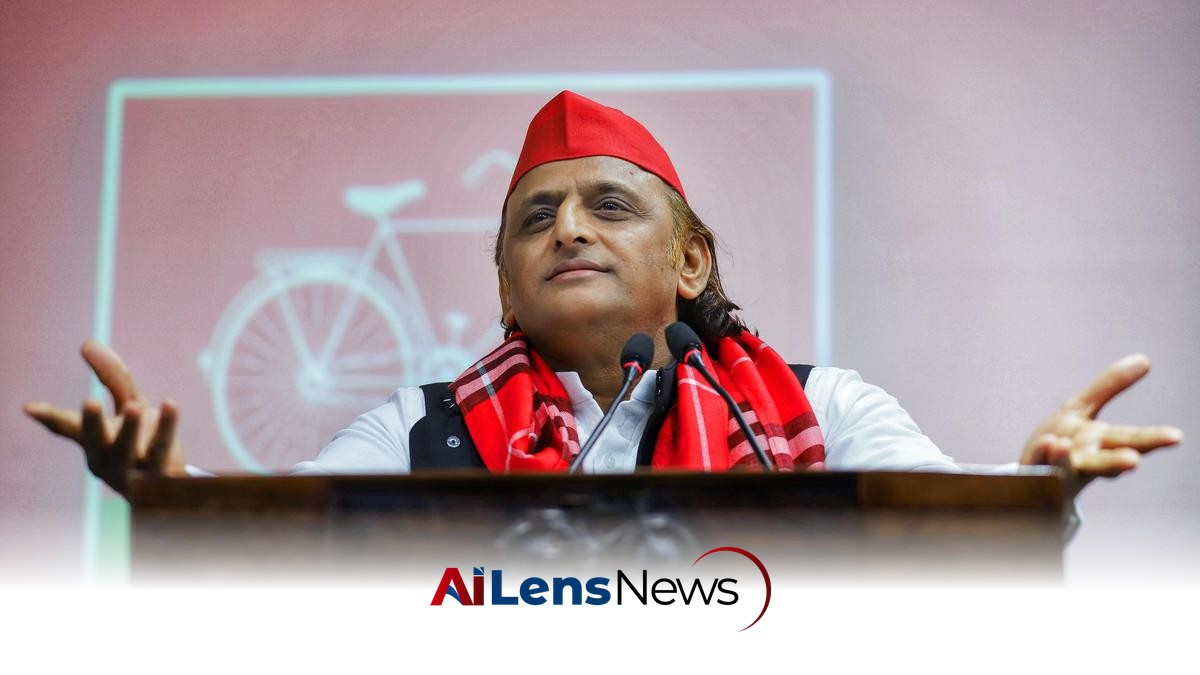


Akhilesh Yadav claims BJP's internal power struggles compromise public faith amid Ram temple donation controversy in Uttar Pradesh.
New Delhi, India Jul 6, 2026 ALN: Samajwadi Party President Akhilesh Yadav made significant allegations on July 6, 2026, asserting that a "power struggle" is unfolding within the Bharatiya Janata Party (BJP) and the Uttar Pradesh government. His comments came in the wake of a controversy surrounding donations for the construction of the Ram Temple in Ayodhya, a site of immense religious significance for millions of s. Yadav claimed that the ongoing political dynamics are compromising the faith and religious sentiments of the people in Ayodhya.
During a press conference held after a meeting with party leaders and office-bearers, Mr. Yadav expressed his concerns regarding the governance and development projects in the state, as well as the condition of the Jayaprakash Narayan Inter Centre (JPNIC). He pointed out what he perceives as a lack of effective collaboration between the central government and the state government, referring to it as a "double-engine government," a term often used to describe a scenario where the same party governs both the state and the center. Instead of working together, Yadav argued that these two entities are embroiled in conflict, which he believes is detrimental to the people they are meant to serve.
Mr. Yadav’s remarks about the Ram Temple donation controversy reflect a broader narrative within Indian politics, where religious sentiments often intersect with political ambitions. The Ram Temple in Ayodhya has been a focal point of ism and has been at the center of a long-standing dispute between and Muslim communities in India. The temple's construction was announced following a Supreme Court ruling in 2019 that paved the way for its building at a site where the Babri Masjid once stood. This decision has been celebrated by many within the BJP and its supporters as a victory for identity, while others see it as a source of communal tension.
Yadav criticized the BJP leadership for prioritizing internal rivalries over the religious sentiments of the people. He stated, "Our faith and devotion are being toyed with. Everyone knows what is happening, yet they remain silent." This statement underscores a sentiment among opposition parties that the ruling party is more focused on consolidating power than addressing the concerns of its constituents.
In his critique, Yadav suggested that the ongoing investigations into the donation controversy, particularly the involvement of a Special Investigation Team (SIT), symbolize the internal conflicts within the BJP. He remarked, “If it were a matter for the Enforcement Directorate, CBI, or Income Tax, the investigation would have been handled in Delhi. Before Delhi could address it, Lucknow took charge. This situation is a result of the power struggle.” This assertion implies that the BJP, while projecting an image of unity and strength, may be experiencing fractures in its leadership and decision-making processes.
Yadav's invocation of Lord Ram and his appeal to religious leaders and institutions to take notice of the controversy indicates the significant role religion plays in Indian politics. He urged Ram devotees, saints from Ayodhya, and various societal groups to recognize the implications of the BJP's actions, alleging that the party is willing to engage in "false propaganda" to maintain its narrative and control.
Additionally, Mr. Yadav commented on BJP President Nitin Nabin's visit to Lucknow, suggesting that it highlighted the friction between the party organization and the state government. He stated, "When their president visited, it felt as though a curfew had been imposed in Lucknow. There is a serious conflict between the organization and the government." This observation points to a potential rift within the BJP, as local leaders may be feeling overshadowed or undermined by central party leadership.
In a more critical tone, Yadav remarked on Nabin's visit to a local tea stall, implying that the BJP leaders were engaging in trivial activities instead of addressing pressing governance issues. He accused the BJP government of neglecting important institutions like the Jayaprakash Narayan Inter Centre, which he described as not just a building but a memorial to a significant political figure, Jayaprakash Narayan, who played a crucial role in India's socialist movement. Yadav criticized the BJP for what he perceives as a disdain for the socialist legacy and values that Narayan represented.
Yadav also reflected on the historical context of the BJP's formation, noting that when the party was established, there was considerable debate regarding its ideological direction. He claimed that the BJP had initially sought to align itself with socialist principles, but over time, it has shifted towards a more exclusionary stance, particularly concerning its relationship with minority communities. He remarked, “Today, they (BJP) harbour such animosity towards our Muslim brothers. The first person to propose their president was also a Muslim.” This statement underscores the complexities of identity politics in India, where religious affiliations can significantly influence political narratives and alignments.
As the country approaches future elections, Yadav's remarks serve as a rallying cry for the opposition, as he accused many ruling party leaders of contemplating changes to their constituencies in anticipation of electoral challenges. He challenged them, stating, "If they have the courage, they should contest again from the same constituencies. We are ready to defeat them there itself." This challenge reflects the competitive nature of Indian politics, where incumbents often face scrutiny and opposition from various fronts.
Furthermore, Yadav criticized the BJP government for its handling of engineering education and infrastructure development in Uttar Pradesh. He pointed to reports indicating a significant number of engineering colleges shutting down in the state, suggesting a systemic failure in the education sector. He claimed that the Chief Minister lacks a fundamental understanding of engineering, which he believes contributes to the decline in educational institutions. Yadav also criticized the ₹7,000-crore Green Corridor project in Lucknow, alleging that its design is inefficient and inconvenient for commuters. This critique highlights ongoing concerns about infrastructure projects and their impact on citizens' daily lives.
In conclusion, Akhilesh Yadav's statements reflect a deep-seated concern regarding the political climate in Uttar Pradesh, particularly as it relates to the BJP's governance and the implications of the Ram Temple donation controversy. His allegations of a power struggle within the BJP, the call for greater accountability, and the emphasis on the importance of faith and religious sentiments underscore the intricate interplay between politics and religion in India. As the political landscape continues to evolve, the ramifications of these issues will likely play a significant role in shaping the future of Uttar Pradesh and the broader Indian polity.
To learn more about the latest developments in Politics, stay updated with our exclusive reports and analyses on AiLensNews.

