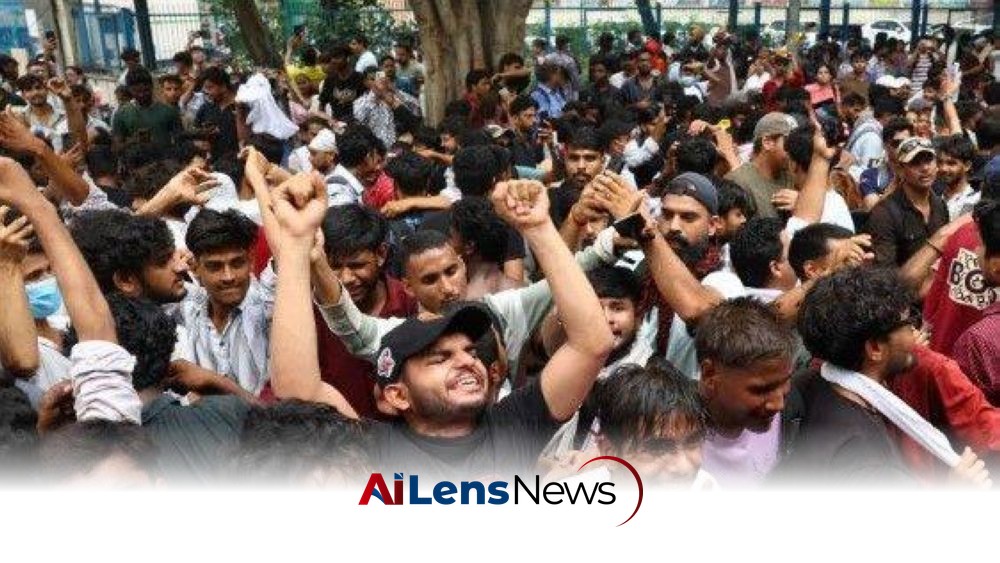


India's youth protesters have called off their agitation after Education Minister Dharmendra Pradhan resigned, marking a significant victory for the movement against exam paper leaks.
Doha, Qatar Jul 26, 2026 ALN: India’s youth protesters have agreed to end their weeks-old agitation “in good faith” after Education Minister Dharmendra Pradhan resigned, marking a significant victory for the movement that has been protesting against a series of examination paper leaks. These leaks have raised serious concerns about the integrity of the education system and the future of countless students across the nation.
Pradhan announced his resignation on X on Saturday, coinciding with a tense moment when police fired tear gas to disperse the protesters in New Delhi. This occurred just hours before their leaders were scheduled to engage in further discussions with federal ministers, highlighting the increasingly volatile atmosphere surrounding the protests.
In his resignation post, Pradhan expressed his concern about the situation at Jantar Mantar, the main protest site in the capital, and the potential for "antinational forces" to exploit the unrest. His statement reflected a sense of urgency and responsibility, emphasizing the need for stability and dialogue in a time of heightened tensions. “I deeply respect the aspirations, feelings, and legitimate expectations of the country’s youth,” he added, acknowledging the grievances that had fueled the protests.
Shortly after Pradhan's announcement, leaders of the Cockroach Janta Party (CJP), the satirical movement that spearheaded the protests, declared an end to their demonstrations. This decision came after the government reportedly accepted all demands put forth by the CJP, including Pradhan's resignation. CJP spokesman Ashutosh Ranka stated, “All our demands have been accepted, so we request the protesters to withdraw immediately and return home peacefully,” indicating a significant breakthrough in negotiations.
The demands of the protesters extended beyond the resignation of the education minister. They included a compensation of 10 million rupees (approximately $103,554) to the families of all students who died by suicide after being instructed to retake exams, a commitment to refrain from punitive actions against those who participated in the protests, and a public apology from the Delhi Police and the Rapid Action Force paramilitary for their aggressive tactics against the demonstrators.
A federal minister confirmed that the government had accepted all the demands, urging the protesters to call off their agitation. Abhijeet Dipke, the founder of CJP, celebrated the moment, stating, “We have done it,” which was met with cheers from the crowd at Jantar Mantar. The atmosphere was charged with a sense of victory, as protesters shouted “Jai Hind,” a patriotic slogan meaning “Victory to India,” while the national anthem played on loudspeakers. Sweets were distributed among the crowd, creating a festive mood amidst the backdrop of a heavy police presence, with at least 1,000 officers stationed nearby.
Similar celebrations were reported across various cities in India, indicating the widespread resonance of the movement among the youth. The CJP took to social media to declare, “Cockroaches won… Democracy won!” symbolizing their triumph in a struggle perceived as a fight for democratic rights and accountability.
Activist Sonam Wangchuk, who had been on a hunger strike for 26 days in solidarity with the movement, described Pradhan’s resignation as “a victory of peace, patience & perseverance” on X, reflecting the sentiments of many who had rallied for change. The protests had gained traction, driven by a collective frustration over systemic issues within the education sector, including repeated examination leaks that undermined the credibility of academic qualifications.
Opposition Congress party leader Rahul Gandhi welcomed the resignation, but he also emphasized the need for accountability regarding the violence inflicted on students during the protests. He called for an apology from Prime Minister Narendra Modi for the force used against demonstrators, highlighting the political implications of the protests and the government's response.
Following Pradhan’s resignation, authorities restored mobile internet access around Jantar Mantar, which had been blocked for most of the week in an attempt to control the protests. This restoration was seen as a positive step towards normalcy and communication, allowing protesters to share their experiences and celebrate their victory.
“Young generation is here. This is a win for the constitution,” said protester Tluanga Ralte, who was seen walking with a copy of the Indian constitution at the protest site. His statement encapsulated the spirit of the movement, which sought to assert the rights and voices of the youth in a democratic society. “We are not a lazy generation,” he added, challenging stereotypes often associated with younger demographics.
The protests had escalated following a violent confrontation on Monday, where police used baton charges, tear gas, and even pellet guns against students who were marching towards parliament. This crackdown intensified public outrage and galvanized support for the movement, as many viewed the police response as excessive and indicative of a broader issue of government repression.
In response to the growing unrest, Modi's government had attempted to ease tensions by announcing the establishment of fast-track courts to handle cases related to exam paper leaks. Additionally, the government indicated plans to introduce legislation aimed at strengthening measures against cheating and corruption within the examination system. These initiatives were part of a broader strategy to restore public confidence in the educational framework and address the root causes of the protests.
Modi himself deviated from his usual scripted addresses and monthly radio broadcasts to post a personal video expressing his distress over the examination leaks and pledging to take strict action. However, the protesters remained adamant that they would not back down until Pradhan resigned, underscoring the depth of their discontent and the importance of their demands.
Dharmendra Pradhan, 57, is a senior member of Modi’s Bharatiya Janata Party (BJP) and comes from a political lineage, being the son of a veteran BJP leader. He has held multiple ministerial positions since Modi first took office in 2014, including portfolios such as petroleum and natural gas and steel, before taking on the role of education minister in 2021. His resignation marks a significant political shift and raises questions about the future direction of the education ministry and the government's approach to handling dissent.
The “Cockroach” protests, named after the CJP’s satirical branding, represent one of the most visible and vocal expressions of public dissent against Modi’s government in recent years. The movement encapsulates broader societal frustrations regarding job scarcity, rampant corruption, and a perceived lack of government accountability. As the protests concluded, CJP leader Dipke cautioned, “Remember, do not mess with cockroach,” signaling a warning to the government about the potential for continued activism and unrest if the underlying issues are not addressed.
To learn more about the latest developments in Crime & Law, stay updated with our exclusive reports and analyses on AiLensNews.

