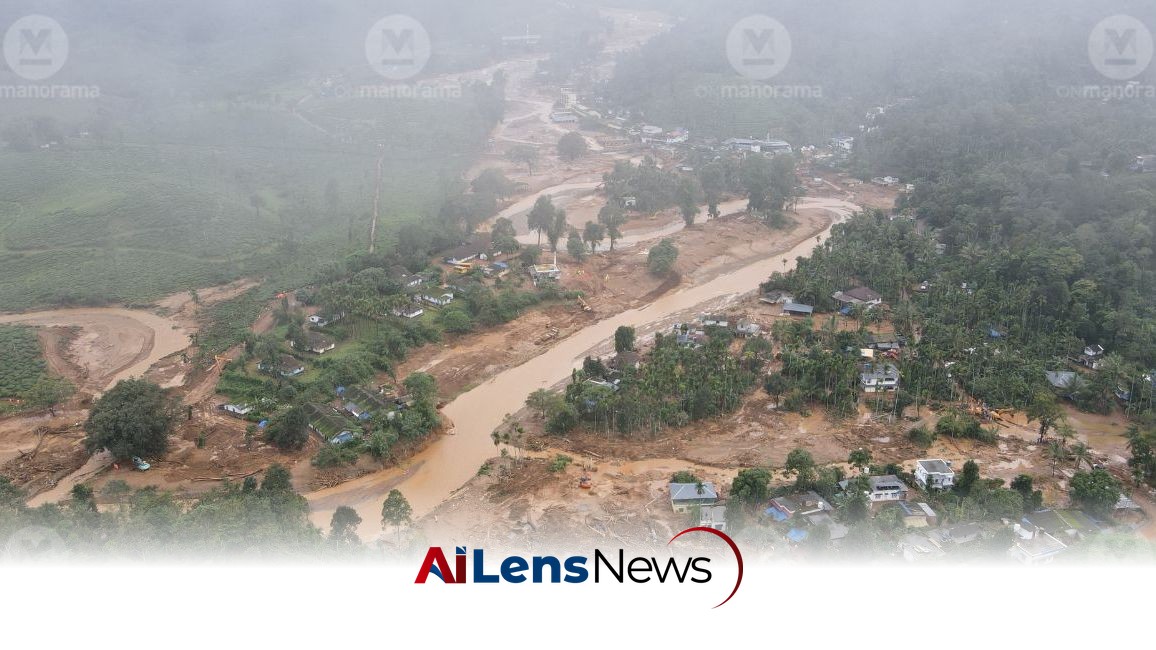


Two years after the devastating Wayanad landslide, survivors grapple with unfulfilled rehabilitation promises, including incomplete housing and delayed compensation.
Doha, Qatar Jul 30, 2026 ALN: Kalpetta: Two years on, the survivors of the Wayanad landslide nurse scars of a fateful night and unfulfilled promises. The catastrophe, which struck in July 2021, claimed 298 lives, including 32 individuals who were later declared dead after being reported missing. The disaster left a profound impact on the local community, with more than 630 people rescued from the mud and debris that engulfed their homes and livelihoods. The landslide was not merely a natural disaster; it was a harbinger of the vulnerabilities faced by communities living in hilly terrains, especially in the context of climate change and environmental degradation.
In the aftermath of the tragedy, the state government announced an ambitious rehabilitation package aimed at addressing the immediate and long-term needs of the survivors. Backed by substantial contributions received for rescue, relief, and rehabilitation, the government promised a state-of-the-art township, speedy rehabilitation, compensation for losses, livelihood assistance, and ecological restoration of affected areas. These commitments were crucial not only for the survivors’ recovery but also for restoring hope in a community that had been shattered.
However, much of that promise remains unfulfilled. The township, planned for approximately 410 affected families, is still under construction. As of now, only 178 families have moved into completed houses in the first phase, while work on another 157 houses is still ongoing. This slow pace of rehabilitation has left many families in limbo, still grappling with the trauma of their loss while waiting for a stable living situation.
Compensation for many shop owners who lost both their commercial buildings and livelihoods is yet to be paid, further exacerbating the sense of abandonment felt by the survivors. The government's promise to identify no-go zones of land along the River Punnappuzha, restore cultivable land to farmers, and permit agriculture wherever feasible has seen little progress. The rejuvenation of the river ecosystem, which was a critical aspect of the rehabilitation plan, remains largely on paper, highlighting the disconnect between government promises and ground realities.
The government had also announced a ₹2 lakh micro-plan grant for each surviving family to help rebuild livelihoods. However, many beneficiaries are still waiting for the full assistance, which has led to frustration and disillusionment among the affected families. K Babu, the former president of the Meppadi Grama Panchayat, expressed disappointment over the lack of action, stating, "The previous LDF government failed even to publish a final beneficiary list for the township before leaving office." This failure to provide clarity and transparency has left many survivors feeling lost and unsupported.
Babu went on to say, "The LDF government had nearly one year and ten months after the disaster to prove its commitment. Complaints regarding irregularities in beneficiary selection are yet to be addressed. I hope the UDF government will expedite the remaining procedures and ensure justice for the survivors." This sentiment reflects a broader concern among the community regarding the political dynamics that have influenced the pace and effectiveness of the rehabilitation efforts.
Naseer Alakkal, convener of the Jana Shabdam Action Council, echoed these frustrations, stating that after two years, at least a final beneficiary list should have been ready. He acknowledged the quality of work being carried out by the Uralungal Labour Contract Cooperative Society (ULCCS) but pointed out that labor shortages and adverse weather have slowed down construction. He added, "Even then, the government could have completed other relief measures, especially the livelihood grants that would have helped families rebuild their lives. It is difficult to understand why these funds remain undistributed despite the availability of resources." This highlights a critical issue in disaster response: the need for efficient management and distribution of resources to ensure timely support for affected individuals.
While rehabilitation drags on, many survivors who lost everything have gradually begun rebuilding their lives, often aided by the compassion of individuals and organizations within and outside their community. For some, this rebuilding process involves starting new businesses or finding new employment opportunities. Others, however, continue to live with grief that refuses to fade, as the emotional scars of the disaster remain fresh. Among them is Kalathingal Noufal of Chooralmala, who tragically lost 11 members of his family, including his wife, children, and parents, on the night of the disaster. The enormity of such a loss is difficult to comprehend, and Noufal's journey of recovery has been fraught with challenges.
In a remarkable display of community support, the Kerala Muslim Cultural Centre (KMCC), Muscat unit, mobilized funds to build Noufal a 1,200 sq.ft house. Well-wishers also assisted him in establishing a restaurant at Meppadi, aptly named "July 30," commemorating both the tragedy and his struggle to begin life anew. Noufal shared, "I keep myself busy in the restaurant, and that helps me stay away from painful memories. But sometimes the memories return like another landslide, and I break down." His story illustrates the resilience of the human spirit, even in the face of overwhelming loss, and the importance of community support in the healing process.
Another couple, Aneesh and Sayana, lost their three sons—Nived, Dhyan, and Ishan—in the disaster. Their grief is palpable, and they continue to visit the mass grave at Puthumala, leaving sweets and toys for their children. Their act of remembrance serves as a poignant reminder of the enduring impact of loss on families. The couple drew public attention last Christmas after building a crib beside the grave, fulfilling a promise Aneesh had made to his son Dhyan before the tragedy. Aneesh expressed his ongoing connection to his sons, saying, "Whenever I miss them, I go to the grave and spend some time talking to them." His wife Sayana, however, is still struggling to recover from the trauma, highlighting the long-term psychological effects of such a disaster on families.
Sruthi, who lost her entire family in the landslide, had slowly begun rebuilding her life with the support of her fiancé, Jenson. Their marriage had been fixed, offering her a glimmer of hope for a happier future. Tragically, tragedy struck again when Jenson died in a road accident, shattering her hopes once more. Now, still recovering from multiple fractures suffered during the landslide, Sruthi lives with relatives while trying to heal the emotional and physical scars left by successive tragedies. Her story underscores the compounding nature of grief and the challenges faced by those who have experienced multiple losses.
River Punnappuzha - a reminder of the disaster
Before the landslide, the River Punnappuzha was a narrow mountain stream winding gently through dense greenery. Today, the river corridor has widened dramatically, scarred by vast stretches of debris, boulders, and eroded banks. This transformation of the river reflects not only the physical changes to the landscape but also the broader environmental implications of the landslide. Experts estimate that 5.7 million cubic meters of debris spread across nearly eight kilometers of the river course must eventually be managed to restore the ecosystem. The proposed restoration plan includes ₹50 crore for debris removal, ₹140 crore for river-training structures, ₹3.9 crore for monitoring and early-warning systems, and ₹90 lakh for sub-soil investigations and scientific studies. These figures illustrate the scale of the challenge ahead and the need for a coordinated and comprehensive approach to ecological restoration.
Although emergency work has cleared parts of the channel to ensure the free flow of water, comprehensive ecological restoration of the river has yet to begin. This delay raises concerns about the long-term health of the river ecosystem and the potential impacts on the communities that rely on it for their livelihoods. The restoration of the River Punnappuzha is not just an environmental issue; it is a critical component of the overall recovery process for the survivors and the community as a whole.
Prayers at the mass grave
On the second anniversary of the disaster, people from all faiths gathered at the mass grave at Puthumala to remember the victims and honor their memories. Families of the victims participated in a memorial service, which served as a poignant reminder of the lives lost and the ongoing grief experienced by the community. Dignitaries such as Agriculture Minister T Siddique, Revenue Minister A P Anilkumar, and Local Self-Government Minister K M Shaji attended the program, which was jointly organized by the Meppadi Grama Panchayat and the district administration. Special KSRTC buses were arranged to operate from Kalpetta to Puthumala, facilitating travel for the victims' families and other mourners. This communal act of remembrance underscores the importance of solidarity and support within the community as they navigate the aftermath of such a profound tragedy.
The Wayanad landslide serves as a stark reminder of the vulnerabilities faced by communities in disaster-prone areas. As survivors continue to grapple with the emotional and physical scars left by the disaster, the need for effective rehabilitation and support remains paramount. The unfulfilled promises of the government highlight the challenges of disaster response and recovery, and the importance of ensuring that the voices of survivors are heard and addressed in the ongoing efforts to rebuild their lives.
To learn more about the latest developments in Crime & Law, stay updated with our exclusive reports and analyses on AiLensNews.

