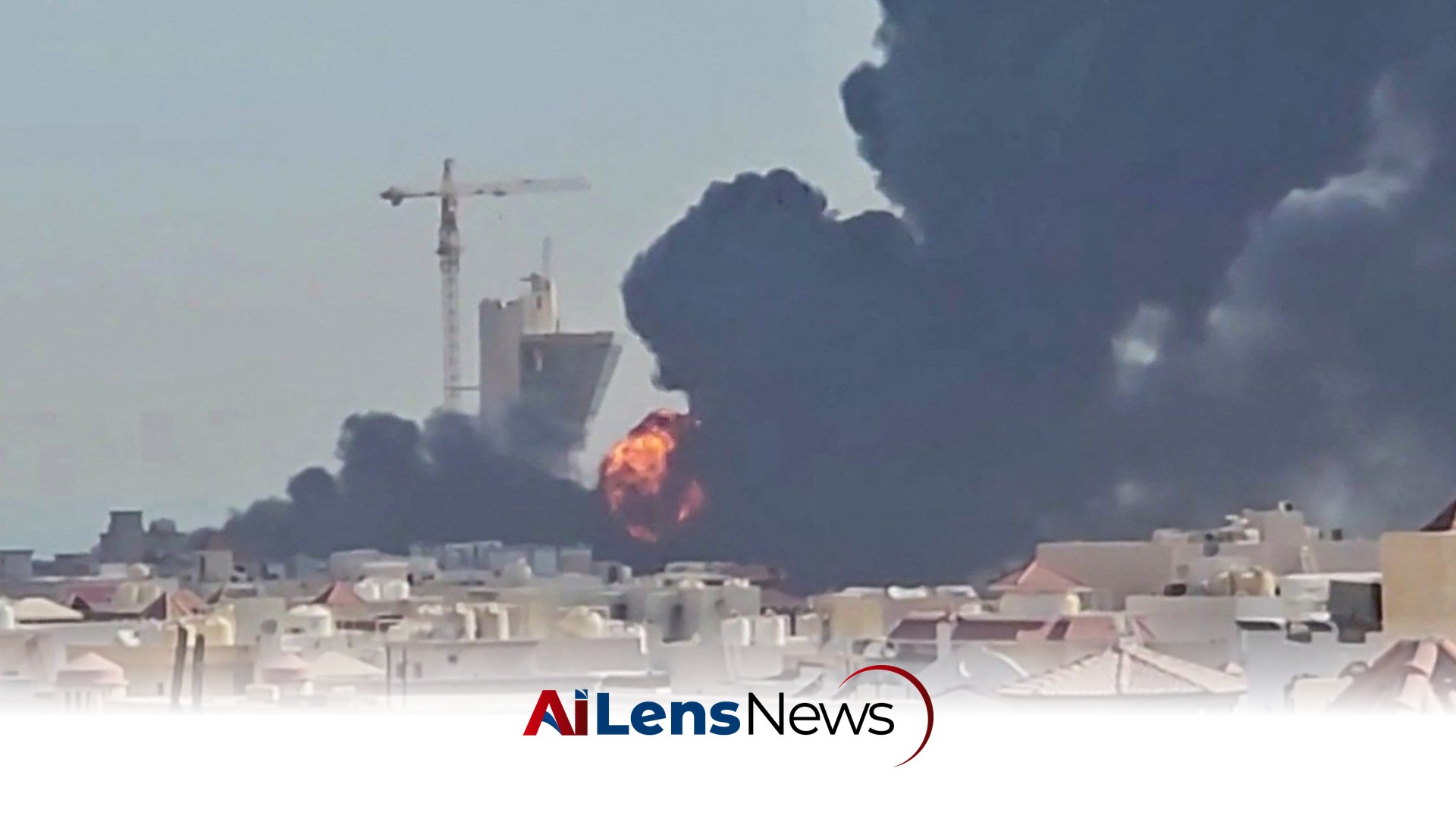


As US forces continue their operations against Iran, President Trump expresses sorrow over the loss of soldiers in Jordan, marking a significant escalation in the conflict.
Doha, Qatar Jul 19, 2026 ALN: The conflict between the United States and Iran has escalated significantly, with US forces launching strikes against Iranian positions for the eighth consecutive night. This military action comes in the wake of recent casualties among US soldiers, which President Trump has described as a "sad thing." The situation has raised alarms not only within the US but also among global leaders and analysts who are closely monitoring the developments in the region.
The tensions between the US and Iran have been mounting for several months, rooted in a complex history of diplomatic strife, military confrontations, and differing geopolitical interests. The US withdrawal from the Joint Comprehensive Plan of Action (JCPOA) in 2018 marked a significant turning point, as it led to the re-imposition of economic sanctions on Iran. These sanctions have severely impacted the Iranian economy and heightened hostilities. In response, Iran has gradually stepped back from its commitments under the nuclear deal, leading to further tensions.
In recent months, a series of incidents, including attacks on commercial shipping in the Persian Gulf, drone strikes on Saudi oil facilities, and skirmishes involving US forces in Iraq, have contributed to the escalating conflict. The US has accused Iran of supporting proxy groups that threaten American interests and allies in the region, prompting military responses aimed at deterring further aggression.
US forces have targeted specific locations in Iran, aiming to dismantle military capabilities that pose risks to American troops and allies. These operations have been characterized by their intensity and frequency, reflecting a shift in US military strategy towards a more aggressive posture in the region. The strikes are reportedly aimed at Iranian military installations, weapons depots, and command centers associated with groups such as Hezbollah and other militias supported by Iran.
The decision to escalate military operations comes amid increasing concerns about the safety of US personnel stationed in the Middle East. US officials have indicated that the strikes are intended to send a clear message to Iran that any attacks on American forces will be met with swift and decisive action. This strategy aims to deter Iranian aggression while reassuring allies in the region of the US commitment to their security.
President Trump has publicly mourned the loss of American soldiers, emphasizing the gravity of the situation. His comments highlight the human cost of the ongoing conflict and the administration's commitment to protecting US interests abroad. Trump’s administration has faced criticism for its handling of foreign policy in the Middle East, and the recent casualties may intensify scrutiny over the efficacy of military actions.
In addition to President Trump’s remarks, other government officials have expressed their views on the conflict. Defense Secretary and military leaders have reiterated the need for a robust military presence in the region to counter Iranian threats. Meanwhile, some lawmakers have called for a reevaluation of US military strategy, arguing that continued military engagement may not lead to a sustainable resolution of the underlying issues.
The ongoing military actions have drawn attention from international observers, raising concerns about the potential for broader conflict in the Middle East. Analysts suggest that continued escalation could lead to significant geopolitical ramifications, not only for the US and Iran but also for regional stability. Countries such as Russia and China, which have historically supported Iran, may respond by increasing their military and economic ties with Tehran in opposition to US actions.
Furthermore, the strikes could provoke retaliatory actions from Iran, which has vowed to defend its sovereignty. This could lead to a cycle of violence that escalates beyond the immediate area, potentially involving other nations and non-state actors in the region. The implications of such an escalation could be dire, affecting global oil markets, international security arrangements, and the delicate balance of power in the Middle East.
Within the United States, the conflict has sparked a range of reactions from various political factions. While some support the military strikes as necessary for national security, others have voiced concerns over the potential for a protracted war. Anti-war activists and some lawmakers have called for a diplomatic approach, arguing that military solutions have historically failed to bring about lasting peace in the region.
The American public's perception of the conflict is also a critical factor. Polls indicate a divided opinion regarding military engagement in Iran, with many citizens wary of entering another prolonged conflict. The loss of soldiers adds a somber note to the ongoing conflict, prompting discussions about the future of US involvement in the region and the need for a clear strategy moving forward.
The historical context of US-Iran relations is essential to understanding the current conflict. The relationship has been fraught with tension since the 1979 Iranian Revolution, which resulted in the overthrow of the US-backed Shah and the establishment of the Islamic Republic of Iran. The subsequent hostage crisis, where American diplomats were held for 444 days, cemented a legacy of mistrust between the two nations.
In the years that followed, the US has engaged in various military interventions in the Middle East, often citing the need to counter Iran's influence. The 2003 invasion of Iraq, for example, removed Saddam Hussein, a long-time adversary of Iran, inadvertently increasing Iran's regional influence. This shift has led to a complex web of alliances and enmities that continue to shape the geopolitical landscape of the region.
As the situation unfolds, the future of US-Iran relations remains uncertain. The potential for further military engagement is high, but so too is the possibility for diplomatic negotiations. The Biden administration has expressed a willingness to return to the negotiating table regarding Iran's nuclear program, but the recent military actions may complicate these efforts.
The coming days and weeks will be crucial in determining the trajectory of US-Iran relations and the broader stability of the Middle East. Analysts will be closely watching how both the US and Iran respond to the current situation, as well as the reactions from other global powers. The stakes are undeniably high, and the implications of the ongoing conflict extend far beyond the immediate region.
As the situation unfolds, the US military's operations against Iran are likely to remain a focal point of international news. The loss of soldiers adds a somber note to the ongoing conflict, prompting discussions about the future of US involvement in the region. The potential for further escalation or a shift towards diplomatic negotiations remains uncertain, but the stakes are undeniably high. The coming days and weeks will be crucial in determining the trajectory of US-Iran relations and the broader stability of the Middle East.
To learn more about the latest developments in Politics, stay updated with our exclusive reports and analyses on AiLensNews.

