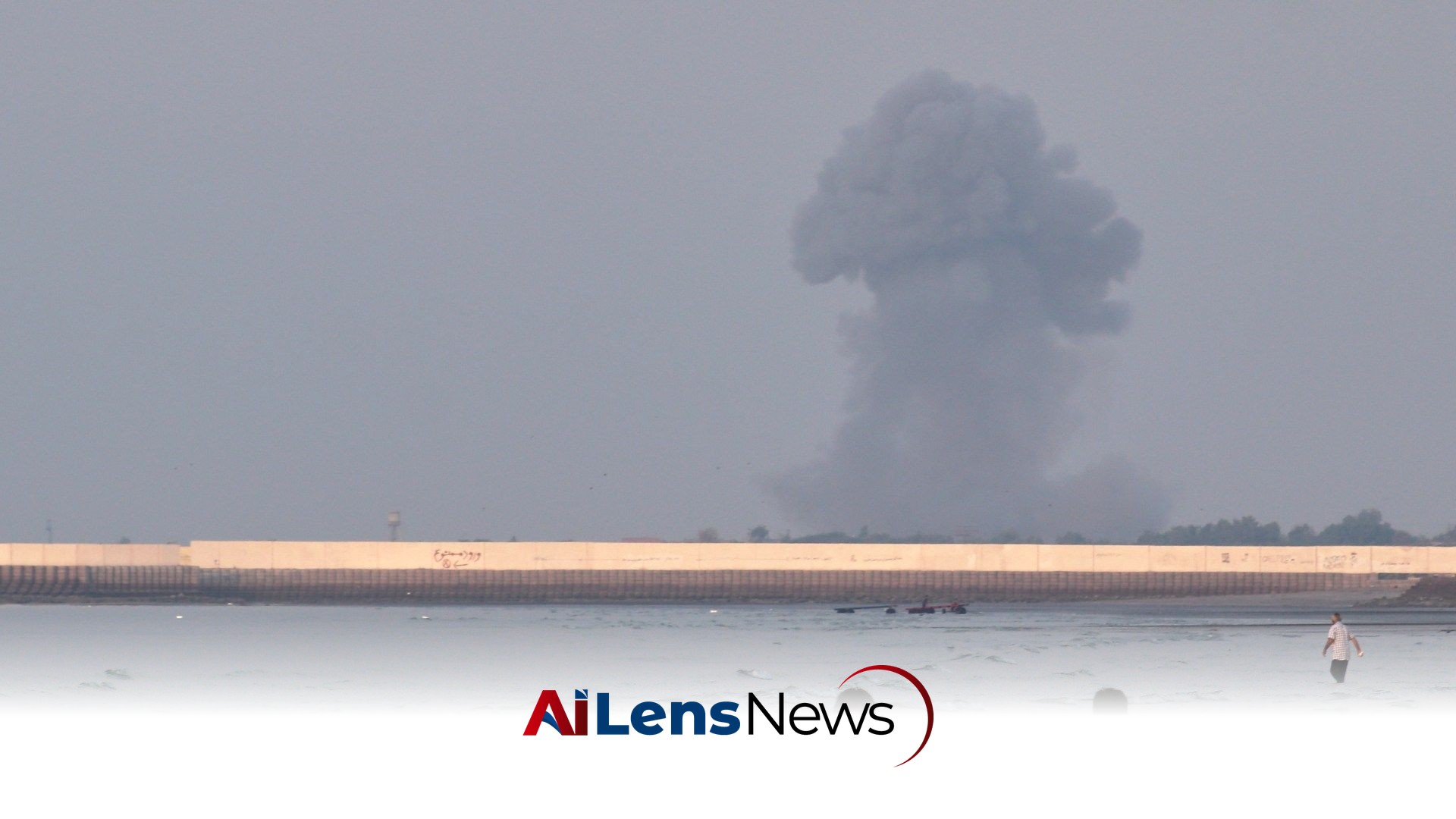


The US has intensified its military actions against Iran, with reports of explosions in key Iranian locations, as tensions escalate in the region.
Doha, Qatar Jul 14, 2026 ALN: The ongoing conflict between the United States and Iran has reached a new level of intensity, with the US launching additional military strikes in response to escalating tensions. Recent reports indicate that Iranian media have documented explosions in several significant locations, including Kish, Qeshm, and Bandar Abbas. These developments come against a backdrop of longstanding hostilities and geopolitical rivalries that have characterized US-Iran relations for decades.
The history of US-Iran relations is fraught with tension, dating back to the 1953 CIA-backed coup that overthrew Iran's democratically elected Prime Minister Mohammad Mossadegh. This event set the stage for decades of mistrust and animosity. The 1979 Iranian Revolution, which resulted in the establishment of the Islamic Republic, further solidified this antagonistic relationship, particularly following the hostage crisis in which American diplomats were held for 444 days. Since then, various incidents, including military confrontations, economic sanctions, and proxy conflicts, have kept the two nations at odds.
The US military actions appear to be a direct response to previous provocations from Iran, which have raised concerns about regional stability. The strikes have reportedly targeted military installations and facilities associated with Iranian operations, including sites believed to be linked to Iran's missile and drone programs. The Pentagon has stated that these operations are aimed at deterring further Iranian aggression and protecting US interests in the region.
In recent months, tensions have escalated due to a series of incidents involving Iranian forces and US assets in the Persian Gulf. These include attacks on commercial shipping vessels and drone strikes attributed to Iranian-backed militias in Iraq and Syria. The US has accused Iran of destabilizing the region through its support for these groups, which are seen as proxies in a broader struggle for influence between Iran and its regional adversaries, including Saudi Arabia and Israel.
In the aftermath of these attacks, the United Arab Emirates has reported that at least one individual was killed in a tanker strike, further complicating the already volatile situation. This incident has prompted international calls for restraint and dialogue to prevent further escalation. The death of civilians or individuals associated with commercial shipping operations can have far-reaching consequences, potentially igniting public outrage and prompting retaliatory actions.
The international community has reacted with concern, emphasizing the need for de-escalation. Various governments, including those of European nations, have expressed apprehension over the potential for a broader conflict that could destabilize the entire region. The Gulf States, which are often caught in the crossfire of US-Iran tensions, have voiced their worries about the implications for their own national security.
The rising conflict has significant implications not only for the Middle East but also for global security. Analysts warn that continued military actions could lead to a broader confrontation, affecting oil markets and international relations. The Strait of Hormuz, a critical chokepoint for global oil shipments, could become a flashpoint for military engagement, disrupting the flow of oil and leading to skyrocketing prices. This has raised alarm among oil-importing nations, which depend heavily on stable energy supplies.
Furthermore, the conflict could exacerbate existing tensions between the US and other major powers, particularly China and Russia, both of whom have strategic interests in Iran. Any escalation in military action may lead to a realignment of alliances and partnerships in the region, complicating diplomatic efforts and potentially leading to a wider geopolitical crisis.
In light of the escalating violence, various nations and organizations are urging both the US and Iran to seek diplomatic solutions. The potential for a peaceful resolution remains a critical concern for global leaders. Diplomatic channels have been largely strained since the US withdrew from the Joint Comprehensive Plan of Action (JCPOA) in 2018, which was aimed at curtailing Iran's nuclear program in exchange for sanctions relief. The subsequent re-imposition of stringent sanctions on Iran has led to economic hardship and increased hostility.
Efforts to revive the JCPOA or to establish new diplomatic frameworks have been met with challenges, as both sides have significant demands and conditions that complicate negotiations. The Biden administration has expressed a willingness to engage in talks, but Iran's insistence on the lifting of sanctions as a precondition for meaningful dialogue poses a significant hurdle.
The situation in the region remains fluid, with the potential for further military actions looming. As the US continues its operations against Iran, the international community watches closely, hoping for a de-escalation of tensions and a return to diplomatic negotiations. The stakes are high, not just for the countries directly involved but for the global community, which stands to be affected by the ripples of this conflict. The path forward will require careful navigation and a commitment to dialogue, as the alternative could lead to a devastating conflict with consequences that extend far beyond the Middle East.
To fully understand the current situation, it is essential to consider the historical context of US-Iran relations. The 1953 coup that reinstated the Shah of Iran marked a significant turning point, leading to widespread resentment among Iranians towards the US, which they viewed as an imperial power meddling in their affairs. The Shah's regime, characterized by authoritarianism and Westernization, faced increasing opposition, culminating in the 1979 revolution.
The revolution not only established a theocratic regime but also led to the severance of diplomatic ties with the US, which has not been normalized since. The hostage crisis that followed the revolution fueled anti-American sentiment in Iran and solidified the narrative of the US as a hostile actor in Iranian politics. This historical animosity has shaped the policies and perceptions of both nations, leading to a cycle of confrontation.
Today, the geopolitical landscape in the Middle East is increasingly complex, with multiple actors and interests at play. Iran's influence has grown through its support of proxy groups in Iraq, Syria, Lebanon, and Yemen, which has alarmed both the US and its allies in the region. The rise of these proxy forces is viewed by the US as an extension of Iran's ambitions to expand its regional dominance, challenging the interests of Gulf Arab states and Israel.
In response, the US has sought to bolster its alliances in the region, particularly with Saudi Arabia and Israel, as a counterbalance to Iranian influence. This has led to a series of military and economic initiatives aimed at containing Iran's reach. However, these efforts have not been without controversy, as they often involve complex diplomatic negotiations and military commitments that can further entrench the cycle of conflict.
The future of US-Iran relations remains uncertain, with the potential for both escalation and diplomacy. While military confrontations may provide short-term deterrence, they also risk igniting wider conflicts that could engulf the region. The international community's calls for restraint and dialogue underscore the necessity of finding a peaceful resolution to the ongoing tensions.
As global leaders consider their next steps, the importance of addressing the underlying issues that fuel the conflict cannot be overstated. This includes not only Iran's nuclear ambitions but also its regional activities and the broader geopolitical rivalries that complicate the situation. A comprehensive approach that includes diplomatic engagement, economic incentives, and security guarantees may be necessary to pave the way for a sustainable resolution.
Ultimately, the path forward will require a commitment from all parties to engage in constructive dialogue and to prioritize the pursuit of peace over military confrontation. The stakes are high, and the consequences of failure could reverberate across the globe, highlighting the urgent need for a reassessment of strategies and a renewed focus on diplomacy.
To learn more about the latest developments in World News & International Affairs, stay updated with our exclusive reports and analyses on AiLensNews.

