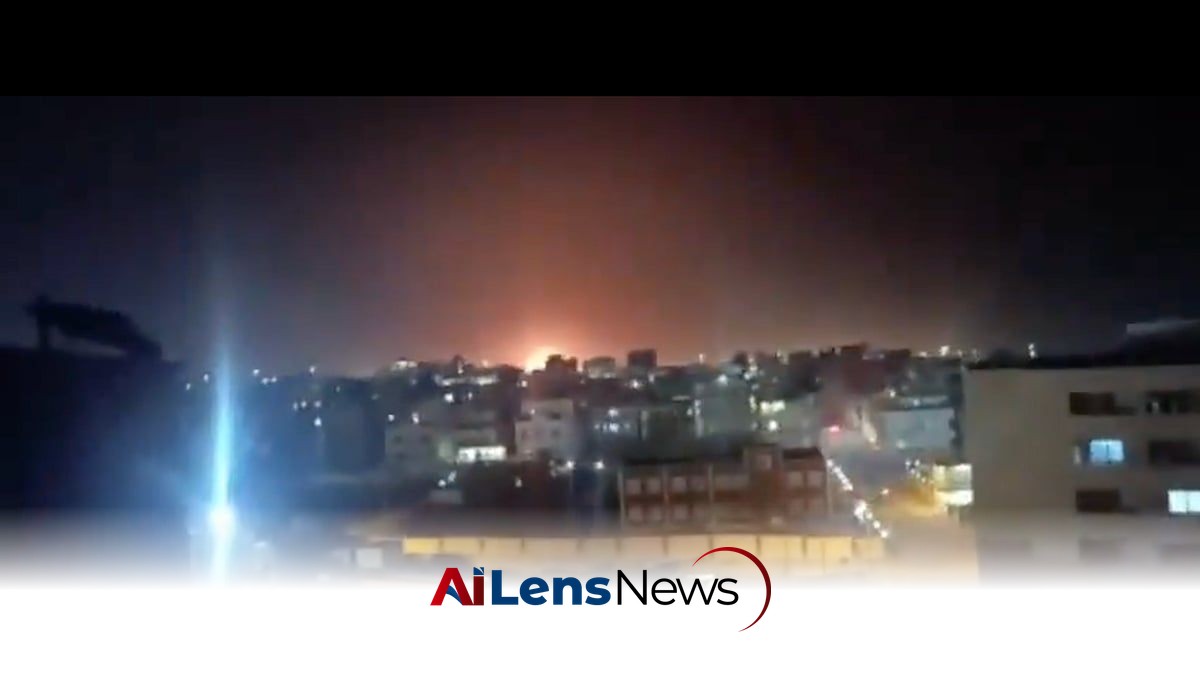


At least seven Iranian soldiers were killed in US airstrikes on military sites in Rask, Chabahar, and Bampur, escalating tensions in the region.
Doha, Qatar Jul 16, 2026 ALN: On a recent evening, two projectiles struck the southeastern Iranian cities of Rask and Chabahar, located in the Sistan and Baluchestan province. This incident, occurring late on a Wednesday, was reported by Iranian media outlets, which indicated that explosions were heard in these areas. However, details regarding the extent of the damage and the total number of casualties were initially sparse.
Following the initial reports, the semi-official Tasnim News Agency provided further information, indicating that the Chabahar Port's maritime traffic control center was specifically targeted in what is believed to be a renewed strike by US forces. Additionally, there were reports of attacks on other locations within the province, including a military facility known as the Bampur Army garrison. These strikes reportedly resulted in the deaths of at least seven Iranian military personnel, underscoring the gravity of the situation.
The recent military actions come amid an escalating conflict between the United States and Iran, with southeastern Iran emerging as a new focal point for military operations that extend beyond the historically significant Strait of Hormuz. This region has become increasingly important in the context of geopolitical tensions, particularly as it relates to maritime security and the movement of oil through key shipping lanes.
Chabahar, where one of the strikes occurred, holds significant strategic importance for Iran. It is the country’s only deep-water ocean port situated on the Gulf of Oman, which allows it to bypass the heavily monitored Strait of Hormuz, a critical chokepoint for global oil shipments. The port serves as a vital commercial and naval hub, facilitating trade and military operations for Iran. Its strategic position makes it a target of interest not only for Iranian forces but also for foreign military operations that seek to disrupt Iranian influence in the region.
Rask, the other city affected by the strikes, is located further inland and close to the border with Pakistan. This area has a history of hosting facilities belonging to the Islamic Revolutionary Guard Corps (IRGC), which has been involved in various military and paramilitary operations both within Iran and abroad. Rask has also previously been the site of militant attacks, reflecting the ongoing security challenges faced by Iran in its southeastern territories.
As tensions between the US and Iran continue to rise, Iranian authorities have yet to officially assign blame for the latest strikes to any specific actor, although state and semi-official media outlets have characterized these attacks as part of the ongoing military operations conducted by the United States. The lack of independent verification regarding the claims made by Iranian media adds another layer of complexity to the situation, as it raises questions about the accuracy of reported incidents and the potential for misinformation in the midst of conflict.
The implications of these strikes are significant, as they may further escalate the already heightened tensions between the two nations. The US has previously engaged in military actions against Iranian targets, citing concerns over Iran's nuclear program and its support for proxy groups throughout the Middle East. The strikes on Iranian military sites could be interpreted as a continuation of a broader strategy aimed at curbing Iran's regional influence and deterring its military capabilities.
In recent months, the rhetoric from both sides has intensified, with US officials claiming that they have struck Iran "very hard" in a series of military engagements. This includes assertions that maritime traffic in the Strait of Hormuz has remained uninterrupted despite the ongoing hostilities. Conversely, Iran has vowed to retaliate against any attacks on its territory, further complicating the potential for diplomatic resolutions.
As the situation evolves, the international community is closely monitoring developments in the region, particularly given the strategic importance of the Gulf of Oman and the Strait of Hormuz. The potential for conflict escalation raises concerns not only for regional stability but also for global energy markets, as disruptions in oil supply routes could have far-reaching economic implications.
In summary, the recent US strikes on Iranian military targets in Sistan and Baluchestan province mark a significant escalation in the ongoing conflict between the two nations. The attacks, which resulted in the deaths of Iranian soldiers and targeted key infrastructure, highlight the strategic importance of the region and the complex dynamics at play. As both nations navigate this fraught landscape, the potential for further military engagement remains a pressing concern, underscoring the need for careful diplomatic efforts to de-escalate tensions and promote stability in the region.
To understand the broader context of these events, it is essential to consider the historical relationship between the United States and Iran. The two nations have faced significant tensions since the 1979 Iranian Revolution, which resulted in the overthrow of the US-backed Shah and the establishment of the Islamic Republic of Iran. Since then, Iran has been viewed by the US as a state sponsor of terrorism, particularly due to its support for groups such as Hezbollah in Lebanon and various militia groups in Iraq and Syria. This perception has led to a series of sanctions and military actions against Iranian interests.
In recent years, the US withdrawal from the Joint Comprehensive Plan of Action (JCPOA), commonly known as the Iran nuclear deal, in 2018 further exacerbated tensions. The reimposition of economic sanctions on Iran has had a devastating impact on its economy, leading to widespread protests and civil unrest within the country. In response, Iran has gradually reduced its compliance with the nuclear deal, raising concerns among international observers about its nuclear ambitions.
The Sistan and Baluchestan province, where the recent strikes occurred, is known for its ethnic diversity and has been a hotspot for unrest and militant activity. The region is home to a significant population of Baluch people, who have historically faced marginalization within Iran. This has led to the emergence of various separatist groups that have conducted attacks against Iranian security forces. The presence of these groups complicates the security landscape in the region and poses challenges for the Iranian government in maintaining stability.
Furthermore, the geopolitical significance of the Gulf of Oman and the Strait of Hormuz cannot be overstated. Approximately 20% of the world’s oil supply passes through this narrow waterway, making it a critical artery for global energy markets. Any disruption in this region can have immediate and severe implications for oil prices and global economic stability. The US has maintained a significant military presence in the area, aiming to ensure the free flow of maritime traffic and to deter Iranian aggression.
As both the US and Iran continue to engage in military posturing, the potential for miscalculation remains high. Incidents such as the recent strikes can lead to unintended escalations, drawing in regional allies and further complicating the conflict. The involvement of other nations, including Russia and China, who have strategic partnerships with Iran, adds another layer of complexity to the situation, as they may seek to counterbalance US influence in the region.
In conclusion, the recent US strikes on Iranian military targets in Sistan and Baluchestan province represent a critical juncture in the ongoing conflict between the two nations. The potential for further military engagement remains a pressing concern, as both sides navigate a landscape fraught with historical grievances, geopolitical rivalries, and the specter of escalating violence. The international community's role in mediating these tensions will be crucial in seeking a path toward de-escalation and stability in this strategically vital region.
To learn more about the latest developments in World News & International Affairs, stay updated with our exclusive reports and analyses on AiLensNews.

