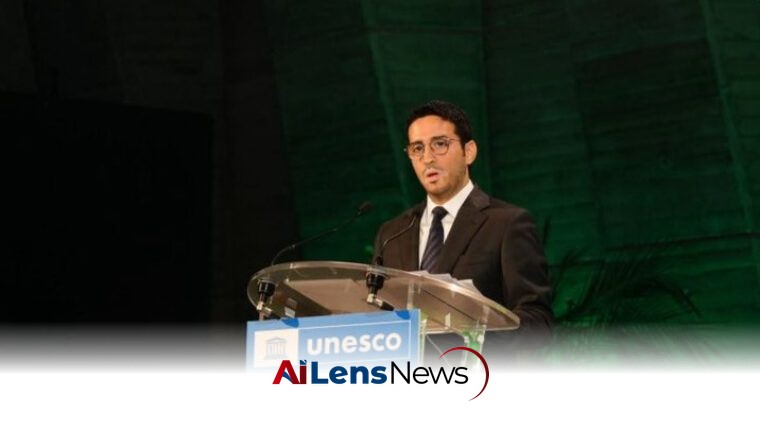


UNESCO honors the contributions of H.H. the Father Amir Sheikh Hamad bin Khalifa Al-Thani in education and development during a high-level ministerial dialogue.
Doha, Qatar Jul 17, 2026 ALN: H.E. Chairperson of the Executive Board of the United Nations Educational, Scientific, and Cultural Organization (UNESCO) and Permanent Representative of the State of Qatar to UNESCO Dr. Nasser bin Hamad Al Hinzab expressed that the passing of H.H. the Father Amir Sheikh Hamad bin Khalifa Al-Thani, may Allah have mercy on him, signifies a profound loss for the international community, given his enduring contributions to advancing development and expanding educational opportunities worldwide.
This statement was made at the opening of the high-level ministerial dialogue titled 'The Global Compact for Sciences - Sustainable Development: Commitments for 2030 and Beyond', held at UNESCO in Paris, France, attended by H.E. Director-General of UNESCO Dr. Khaled El-Enany, alongside numerous ministers and senior officials from various countries. This gathering was not merely a ceremonial event; it served as a platform for global leaders to reflect on the contributions of a significant figure in the realm of education and development while also addressing pressing global challenges.
The Chairperson of the UNESCO Executive Board called upon the participants to observe a minute of silence in mourning for H.H. the Father Amir Sheikh Hamad bin Khalifa Al-Thani, may Allah have mercy on him, in recognition of his humanitarian legacy and contributions to education and development. This moment of silence was a poignant reminder of the impact that one individual can have on the world, particularly in the areas of education and humanitarian efforts. It underscored the collective respect and admiration for a leader who dedicated his life to the betterment of society.
Dr. Al Hinzab emphasized that H.H. the Father Amir believed education is the cornerstone of human dignity, sustainable development, and lasting peace. His Highness, may Allah have mercy on him, utilized education, science, culture, and international cooperation as essential tools for empowering individuals, expanding opportunities, and building inclusive societies capable of facing challenges. This perspective aligns with UNESCO's foundational principles, which advocate for education as a universal human right and a vital instrument in fostering peace and understanding among diverse cultures.
H.E. Dr. Nasser Al Hinzab further noted that His Highness' support for initiatives aimed at expanding access to quality education, promoting scientific progress, and investing in human capital has established a global legacy that continues to inspire the international community and strengthen efforts to achieve the Sustainable Development Goals (SDGs). The SDGs, adopted by the United Nations in 2015, include a specific goal focused on ensuring inclusive and equitable quality education and promoting lifelong learning opportunities for all, which resonates deeply with H.H. the Father Amir's vision.
He also praised the visionary leadership of H.H. the Father Amir, highlighting his unwavering belief in the values of intellectual pluralism and the pivotal role of independent media, stemming from his conviction that open dialogue and the free exchange of ideas are fundamental to progress and the consolidation of peace. This belief is particularly relevant in today's global landscape, where the flow of information and the ability to engage in constructive discourse are essential for addressing conflicts and fostering understanding across cultural divides.
The Chairperson affirmed that the legacy of H.H. the Father Amir aligns closely with UNESCO's mission of building peace in the minds of people through education, science, culture, and international cooperation. His Highness' contributions in these fields will remain etched in the memory of the international community. This alignment underscores the importance of leadership in the promotion of educational initiatives and the cultivation of a culture of peace, which are central to UNESCO's objectives.
The conference, which gathered numerous ministers from around the world, aimed to assess progress in implementing the goals of the International Decade for Sustainable Development, review innovative scientific solutions that address global challenges, and strengthen international partnerships necessary to expand the role of science in achieving sustainable development. The presence of high-ranking officials and experts from various sectors highlighted the collaborative spirit necessary to tackle the multifaceted challenges facing humanity today.
Held under the theme 'Science in Action: Charting a Sustainable and Equitable Future for All', the conference underscored the importance of interdisciplinary research, the principles of open science, and the integration of science, policymaking, and society to contribute to building a more inclusive and equitable future, supporting efforts to shape the post-2030 global development agenda. As the world grapples with issues such as climate change, public health crises, and social inequalities, the role of science and innovation becomes increasingly critical. The dialogue facilitated by this conference aims to foster a collaborative approach to finding sustainable solutions that benefit all segments of society.
The significance of such gatherings cannot be overstated, as they provide a unique opportunity for countries to share best practices, discuss challenges, and forge partnerships that can lead to tangible outcomes in the realm of sustainable development. The commitment to advancing education, scientific research, and cultural exchange is essential for creating resilient societies capable of adapting to the rapid changes of the 21st century.
In conclusion, the commemoration of H.H. the Father Amir Sheikh Hamad bin Khalifa Al-Thani serves as a reminder of the profound impact that dedicated leadership can have on global development, particularly in the realms of education, science, and culture. His legacy continues to inspire current and future generations to strive for a more equitable and sustainable world, reinforcing the belief that through collaboration and shared values, humanity can overcome the challenges it faces. As the international community moves forward, the principles championed by H.H. the Father Amir will undoubtedly remain a guiding force in the pursuit of peace, prosperity, and progress for all.
To learn more about the latest developments in World News & International Affairs, stay updated with our exclusive reports and analyses on AiLensNews.

