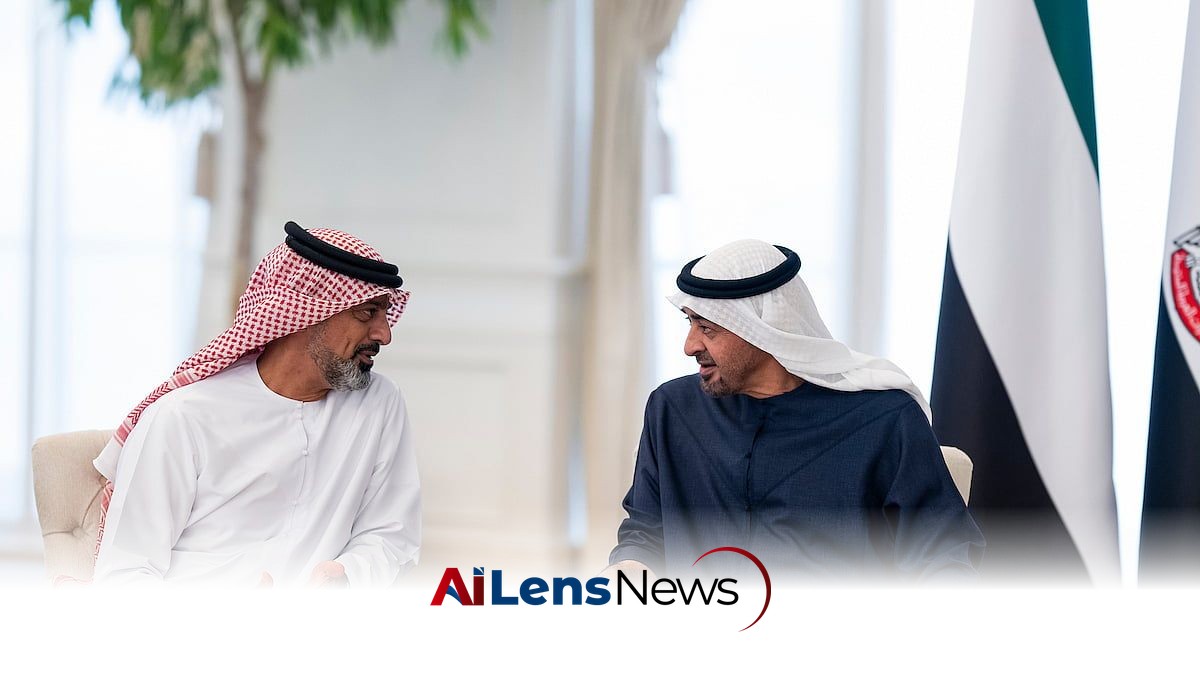


Sheikh Mohamed bin Zayed Al Nahyan received Sheikh Ammar bin Humaid Al Nuaimi, discussing national issues and the UAE's development vision.
Doha, Qatar Jul 28, 2026 ALN: Abu Dhabi, the capital of the United Arab Emirates (UAE), was the venue for a significant meeting today as His Highness Sheikh Mohamed bin Zayed Al Nahyan, the President of the UAE, welcomed Sheikh Ammar bin Humaid Al Nuaimi, the Crown Prince of Ajman. This meeting reflects the ongoing commitment of the UAE’s leadership to engage in dialogue and collaboration on matters that affect the nation and its citizens.
The gathering took place in a traditional majlis setting, a cultural practice in the UAE where leaders and citizens can come together to discuss important issues. The majlis serves as a vital social institution in Emirati culture, symbolizing hospitality and respect. This particular meeting was characterized by warm greetings and cordial conversations among the attendees, which included prominent Sheikhs and guests. Such interactions are not only a hallmark of Emirati culture but also serve to strengthen the bonds between the different emirates of the UAE.
During their discussions, Sheikh Mohamed and Sheikh Ammar addressed a variety of national issues, with a strong emphasis on the wellbeing of the UAE’s people. The leadership's focus on the welfare of its citizens is a central theme in the UAE’s development vision, which aims to foster an environment where all citizens can thrive. This vision aligns with the broader goals of the UAE government to enhance quality of life, promote economic diversification, and ensure sustainable development across the nation. The leadership's approach reflects an understanding of the interconnectedness of social, economic, and environmental factors in achieving holistic progress.
The meeting was attended by an array of high-ranking officials, showcasing the collaborative spirit of the UAE’s leadership. Notable attendees included Sheikh Khaled bin Mohamed bin Zayed Al Nahyan, the Crown Prince of Abu Dhabi, and Lt. General Sheikh Saif bin Zayed Al Nahyan, who serves as the Deputy Prime Minister and Minister of the Interior. Their presence underscores the importance of unity and cooperation among the emirates in addressing both current challenges and future opportunities. This kind of high-level engagement illustrates the UAE's commitment to a cohesive governance structure that leverages the strengths of each emirate.
Sheikh Hamdan bin Mohamed bin Zayed Al Nahyan, the Deputy Chairman of the Presidential Court for Special Affairs, and other prominent figures such as Sheikh Zayed bin Mohamed bin Zayed Al Nahyan and Sheikh Nahyan bin Mubarak Al Nahyan, the Minister of Tolerance and Coexistence, also participated in the discussions. Their involvement highlights the inclusive approach that the UAE takes in governance, where various perspectives are considered in the decision-making process. This inclusivity is essential in a nation characterized by a diverse population and multiple cultural influences.
The UAE has a long history of prioritizing the welfare of its citizens, which is evident in its policies and initiatives aimed at enhancing social services, healthcare, education, and economic opportunities. The leadership’s commitment to these areas is crucial, especially in a rapidly changing global environment where nations face new challenges such as economic fluctuations, climate change, and social cohesion. The UAE has consistently ranked high in global indices measuring quality of life, healthcare, and education, reflecting the effectiveness of its governance model.
In recent years, the UAE has made significant strides in diversifying its economy away from oil dependency. This transition is vital not only for economic stability but also for ensuring job creation and sustainable growth. The discussions between Sheikh Mohamed and Sheikh Ammar may have touched upon strategies to further this economic diversification, particularly in the context of Ajman's development plans and the emirate's role within the larger framework of the UAE. Ajman, while smaller than some of its counterparts, has been focusing on enhancing its economic landscape through various initiatives aimed at attracting investment and fostering entrepreneurship.
The Crown Prince’s engagement in such high-level discussions indicates a proactive approach to aligning Ajman’s goals with the national agenda, thereby contributing to the collective progress of the UAE. Ajman has been working on several projects aimed at improving its infrastructure and business environment, making it an attractive destination for both local and foreign investors. The emirate's focus on tourism, real estate, and small and medium-sized enterprises (SMEs) is part of a broader strategy to create a more resilient economy.
Moreover, the emphasis on tolerance and coexistence, championed by figures like Sheikh Nahyan bin Mubarak Al Nahyan, reflects the UAE’s commitment to promoting a harmonious society. This is particularly important in a multicultural nation like the UAE, where a diverse population coexists. The leadership's focus on these values is critical in maintaining social stability and fostering a sense of belonging among all residents. The UAE's model of tolerance is recognized globally and serves as an example of how diverse communities can thrive together.
The majlis serves as a platform for dialogue not just among leaders but also between the leadership and the public. It is an opportunity for citizens to voice their concerns and aspirations, ensuring that the government remains attuned to the needs of the populace. This participatory governance model is a key aspect of the UAE’s approach to leadership. By fostering open communication channels, the UAE aims to build trust and transparency between the government and its citizens, which is essential for effective governance.
As the UAE continues to evolve and adapt to global trends, the discussions held today between Sheikh Mohamed and Sheikh Ammar will likely have far-reaching implications. The outcomes of such meetings can influence policy directions, resource allocation, and strategic initiatives that ultimately shape the future of the UAE. The leadership's ability to remain responsive to both domestic and international developments is crucial for maintaining the UAE's position as a leading nation in the region.
In conclusion, the meeting between the UAE President and the Crown Prince of Ajman highlights the importance of collaboration and dialogue in governance. It reflects the UAE's commitment to the welfare of its citizens and its dedication to a united approach in addressing national issues. As the UAE moves forward, such engagements will be crucial in navigating the complex challenges and opportunities that lie ahead, ensuring that the nation remains a beacon of progress and stability in the region. The ongoing commitment to dialogue and cooperation among the emirates is a testament to the UAE's unique governance model, which prioritizes unity, inclusivity, and sustainable development for all its citizens.
To learn more about the latest developments in Politics, stay updated with our exclusive reports and analyses on AiLensNews.

