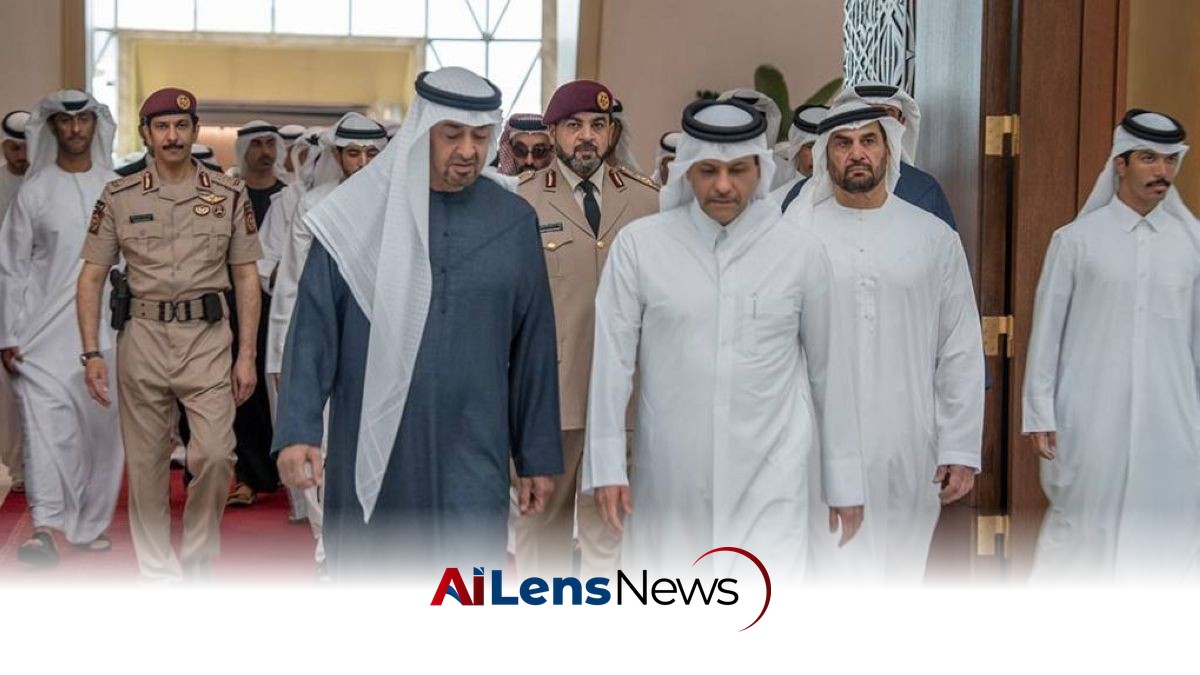


Sheikh Mohamed bin Zayed Al Nahyan of the UAE arrives in Doha to express condolences on the passing of HH the late Father Amir Sheikh Hamad bin Khalifa Al-Thani.
Doha, Qatar Jul 16, 2026 ALN: The President of the United Arab Emirates, Sheikh Mohamed bin Zayed Al Nahyan, arrived in Doha on Wednesday to offer condolences on the passing of HH the late Father Amir Sheikh Hamad bin Khalifa Al-Thani. This visit signifies a gesture of solidarity and respect from the UAE towards its neighbor, Qatar, during a time of mourning. Sheikh Hamad bin Khalifa Al-Thani, who served as the Emir of Qatar from 1995 until his abdication in 2013, was a pivotal figure in shaping modern Qatar and its foreign relations.
Sheikh Mohamed's visit is not only a personal gesture but also reflects the broader diplomatic ties between the UAE and Qatar. The relationship between these two Gulf nations has experienced fluctuations over the years, particularly during the Gulf crisis that began in 2017. However, recent developments in the region have indicated a thawing of relations, with both countries seeking to reinforce their diplomatic and economic partnerships.
Upon arrival at Hamad International Airport, Sheikh Mohamed was received by HE Deputy Prime Minister and Minister of State for Defence Affairs Sheikh Saoud bin Abdulrahman bin Hassan Al-Thani, alongside HE Ambassador of the United Arab Emirates to the State of Qatar Saeed Abdullah Al Qamzi. The warm reception underscores the importance of this visit and the respect held for the late Father Amir within the Qatari leadership. Sheikh Saoud's role as a senior official in Qatar's government highlights the significance of military and defense relations between the two nations, which have historically been strong.
The late Sheikh Hamad bin Khalifa Al-Thani was instrumental in transforming Qatar into a significant player on the global stage. His reign saw substantial economic growth, largely fueled by the country’s vast natural gas reserves. Under his leadership, Qatar pursued an independent foreign policy, which included the establishment of Al Jazeera, a media network that has had a profound impact on the Arab world and beyond. Sheikh Hamad’s efforts in diplomacy and regional cooperation have left a lasting legacy that continues to influence Qatar’s international relations.
In addition to his economic achievements, Sheikh Hamad was known for his investments in education and healthcare, which have contributed to the development of a knowledge-based economy in Qatar. His commitment to modernization and reform has been recognized as a driving force behind the country’s rapid development during the late 20th and early 21st centuries.
The passing of Sheikh Hamad has been met with widespread condolences from leaders across the region and beyond, reflecting his impact and the respect he garnered throughout his life. Sheikh Mohamed’s visit is part of a broader pattern of regional leaders expressing their sympathies, which also serves to strengthen ties and demonstrate unity within the Gulf Cooperation Council (GCC).
In recent years, the GCC has faced challenges, including the blockade imposed on Qatar by several member states, including the UAE. This blockade, which began in June 2017, was a significant geopolitical event that strained relationships within the Gulf region. The UAE, Saudi Arabia, Bahrain, and Egypt cut diplomatic ties with Qatar, accusing it of supporting terrorism and fostering relationships with Iran. The blockade led to significant economic ramifications for Qatar, which was forced to find alternative trade routes and partners. However, the diplomatic landscape has evolved, with efforts towards reconciliation and unity becoming increasingly prominent. The visit by Sheikh Mohamed may be viewed as a step towards further diplomatic engagement and cooperation between the UAE and Qatar.
The implications of this visit extend beyond mere condolences. It represents an opportunity for dialogue and the potential for renewed collaboration in various sectors, including trade, security, and cultural exchange. Both nations share common interests in maintaining stability in the region and addressing challenges such as security threats and economic diversification. As both countries work towards achieving their national visions—Qatar's National Vision 2030 and the UAE's Vision 2021—there is a mutual recognition of the benefits of collaboration in sectors such as education, health, and technology.
As the region continues to navigate complex geopolitical dynamics, the role of influential leaders like Sheikh Mohamed and the late Sheikh Hamad will be crucial in shaping the future of Gulf relations. The visit may also inspire other nations to engage in similar gestures of goodwill, fostering an environment of cooperation and mutual respect. The symbolic nature of such visits cannot be underestimated, as they serve to remind both leaders and citizens of the importance of unity and collaboration in a region often characterized by division.
In conclusion, Sheikh Mohamed bin Zayed Al Nahyan’s visit to Doha to offer condolences on the passing of HH the late Father Amir Sheikh Hamad bin Khalifa Al-Thani is a significant event that underscores the importance of diplomatic relations in the Gulf region. This act of solidarity not only honors the legacy of Sheikh Hamad but also paves the way for continued dialogue and cooperation between the UAE and Qatar, reflecting the evolving nature of their relationship in the context of regional politics. As both nations look towards the future, this visit may serve as a catalyst for further strengthening their ties, ultimately benefiting both countries and the broader Gulf Cooperation Council.
To learn more about the latest developments in World News & International Affairs, stay updated with our exclusive reports and analyses on AiLensNews.

