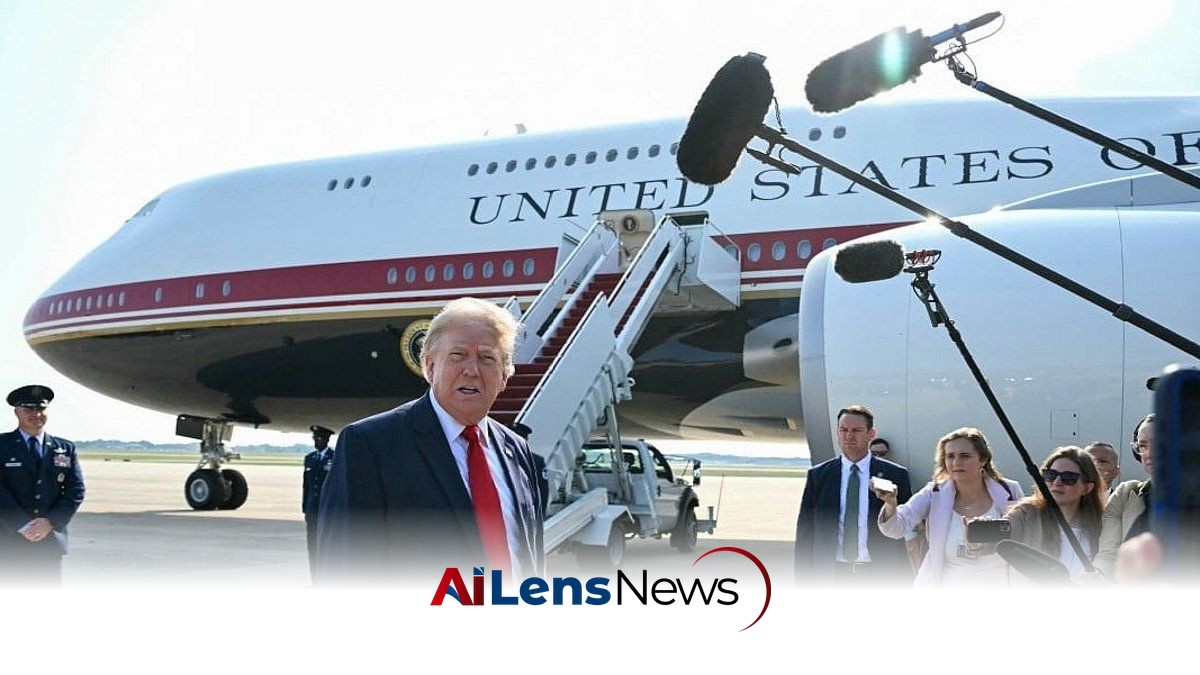


US intelligence warned of a potential Iran-linked attack, prompting Donald Trump to switch from a new Boeing 747-8 to the traditional Air Force One during his Turkey visit.
Doha, Qatar Jul 25, 2026 ALN: US President Donald Trump switched from a newly acquired Boeing 747-8 aircraft to the traditional Air Force One before leaving Turkey earlier this month after US intelligence agencies detected what officials described as a credible threat linked to Iranian proxy forces, according to media reports.
The security alert emerged while Trump was attending the NATO summit in Ankara, The New York Times reported. Trump had arrived in Turkey aboard the Boeing 747-8, a plane gifted by Qatar that is being prepared for future presidential use but does not yet have all the advanced security systems fitted on the existing Air Force One fleet.
This incident underscores the complexities and challenges that accompany presidential travel, particularly in regions where geopolitical tensions are high. The Boeing 747-8 is a significant upgrade in terms of size and efficiency compared to older models, but it has not yet been fully outfitted with the comprehensive security measures that characterize the current Air Force One fleet. This includes advanced communication systems, defensive countermeasures, and secure transport capabilities that are crucial for protecting the President of the United States.
Citing people familiar with the matter, the newspaper reported that the US Secret Service advised Trump to change aircraft before his departure after receiving intelligence about a potential threat. The warning was reportedly focused on a possible attack targeting Trump rather than the aircraft itself, but officials considered the newer jet’s limited defensive capabilities a concern. The decision to switch aircraft highlights how the security of the President is paramount, and how intelligence assessments can lead to rapid changes in travel plans.
The implications of this threat are significant, especially in light of the ongoing tensions between the United States and Iran. The relationship has been fraught with conflict, particularly since the US withdrew from the Joint Comprehensive Plan of Action (JCPOA) in 2018 and reimposed sanctions on Iran. This has led to increased hostilities, including military engagements and proxy conflicts throughout the region. Iranian proxy forces, which operate in various countries including Iraq and Syria, have been known to target US interests and personnel, making any credible threat particularly alarming.
CBS News later reported that the aircraft swap was approved after intelligence pointed to a possible plan involving a missile attack on the plane. Such threats are not unprecedented; there have been numerous instances of attacks on aircraft, particularly in conflict zones. The decision to switch to the older Air Force One, which is equipped with robust security features, reflects the administration's commitment to ensuring the safety of the President, particularly when credible threats arise.
Trump had travelled to Ankara on the $400 million Boeing 747-8, which the US accepted from Qatar last year and has been undergoing modifications for presidential travel. The aircraft is intended to serve as an interim solution until it is fully equipped and operational for presidential use. After the NATO summit, he flew from Turkey to the UK on the older Air Force One before returning to the Qatari-donated aircraft for his trip back to the US. This series of travel changes illustrates the logistical challenges of presidential travel, especially when security concerns necessitate immediate adjustments.
The aircraft switch has raised fresh questions over the security readiness of the new jet. Earlier this month, Trump did not mention security concerns when explaining the change, saying he chose the older aircraft “for old time’s sake.” This comment, while seemingly lighthearted, reflects a deeper sentiment that many leaders may feel regarding the traditional symbols of power and authority that accompany the presidency. Air Force One has become an iconic representation of the office, and many presidents have a personal connection to the aircraft they use.
He added that the newer plane already had “a lot of capability” and would receive further upgrades in the coming weeks. This statement suggests that the administration is committed to ensuring that the Boeing 747-8 will eventually meet the high standards expected of a presidential aircraft. The process of outfitting such a plane with the necessary security and communication systems is complex and can take time, especially given the unique requirements of presidential travel.
The broader implications of this incident extend beyond the immediate security concerns surrounding Trump's travel. It raises questions about the preparedness of the US government to respond to threats against its leaders, especially in volatile regions. As geopolitical tensions continue to evolve, the ability of the Secret Service and military to adapt to new threats will be critical in ensuring the safety of the President and, by extension, the integrity of the US government.
Moreover, the incident highlights the ongoing challenges faced by the US in its foreign policy dealings, particularly in the Middle East. The relationship with Iran remains a focal point of tension, and incidents like this serve as reminders of the precarious balance that must be maintained in international relations. The US must navigate its interests in the region while also ensuring the safety of its leaders and personnel abroad.
In conclusion, President Trump's decision to switch aircraft amid credible threats linked to Iranian proxy forces illustrates the complexities of presidential security and the evolving nature of international threats. As the geopolitical landscape continues to shift, ensuring the safety of the President will remain a top priority for US intelligence and security agencies. The incident serves as a reminder of the delicate balance between maintaining an effective foreign policy and safeguarding the leaders who represent the United States on the global stage.
This situation also raises discussions about the ongoing investment in security technology for the President's aircraft. While the Boeing 747-8 is a modern aircraft with many advancements, the speed of technological change means that security measures must continually evolve to meet emerging threats. The US government has a long history of prioritizing the protection of its leaders, reflecting the importance of maintaining stability and confidence in the nation's leadership.
Furthermore, the incident may prompt reviews of existing protocols regarding the assessment of threats during international travel. The Secret Service, in conjunction with intelligence agencies, will likely analyze the circumstances that led to the decision to switch aircraft, seeking to improve their response to potential threats in the future.
In a broader context, this incident serves as a reminder of the interconnectedness of global politics and security. The actions of one nation can have far-reaching implications, influencing the safety and security of leaders across the world. As the US continues to navigate its role on the international stage, incidents such as these will be closely monitored by both allies and adversaries alike.
Ultimately, the ability of the US government to effectively manage security threats will be crucial for maintaining its standing in the world. As tensions with Iran and other nations persist, the need for robust security measures for the President and other high-ranking officials will remain a critical focus of US policy and operational planning.
To learn more about the latest developments in Politics, stay updated with our exclusive reports and analyses on AiLensNews.

