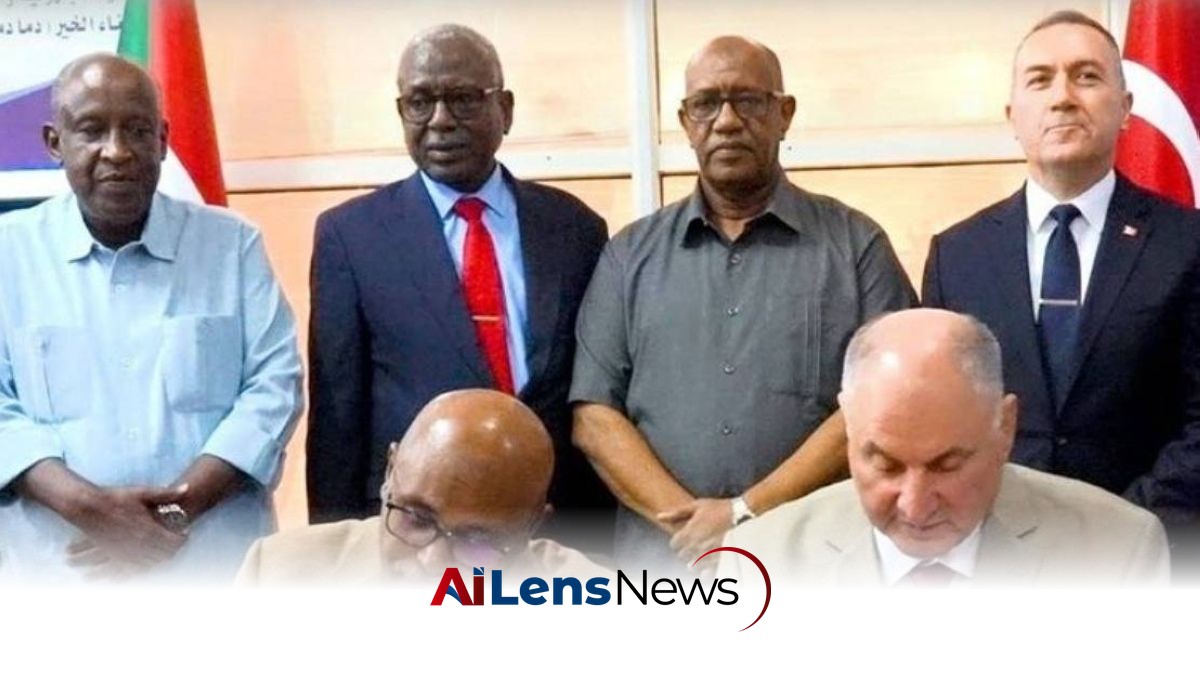


Sudan's Sea Ports Corporation and Turkiye's Argaz energy company have signed a memorandum of understanding to establish a gas berth at Suakin Port, enhancing gas supply.
Doha, Qatar Jul 17, 2026 ALN: Sudan's Sea Ports Corporation and Turkiye's Argaz energy company signed a memorandum of understanding (MOU) on Wednesday to build a gas berth at Suakin Port. This initiative marks a significant step in Sudan's efforts to enhance its energy infrastructure and address its growing energy needs. The project aims to supply Sudan with large quantities of gas, which is crucial for both residential and industrial consumption, and is expected to provide the gas at affordable prices.
Suakin Port, located on the Red Sea, has a rich history and has been an important trading hub for centuries. Historically, it served as a port for pilgrims traveling to Mecca and has been a center of commerce between Africa and the Arabian Peninsula. However, in recent years, the port has faced challenges, including infrastructure decay and a lack of investment. The development of a gas berth is part of broader efforts to revitalize Suakin Port and enhance its operational capacity.
The agreement was announced by Sudanese Minister of Transport Eng. Saif Al Nasr Al Tijani, who emphasized the long-standing cooperation between Sudan and Turkiye. This partnership has been characterized by various collaborative efforts across different sectors, including trade, investment, and infrastructure development. Al Tijani's remarks highlight the importance of this MOU as a testament to the enduring relationship between the two nations, which has been strengthened by shared interests in economic development and energy security.
In addition to the immediate benefits of the gas berth, Al Tijani indicated that this collaboration is expected to expand further. He mentioned the potential for additional MOUs and agreements that could lead to significant achievements in the near future. Such developments may involve further investment in energy projects, infrastructure improvements, and other sectors that could enhance Sudan's economic landscape.
Argaz Representative Mohamed Dabbagh confirmed that the company will supply substantial quantities of gas to Sudan at competitive prices. This aspect of the agreement is particularly significant given Sudan's ongoing energy challenges. The country has faced energy shortages that have impacted both residential life and industrial productivity. The introduction of a reliable gas supply could alleviate some of these issues and contribute to more stable energy availability.
Furthermore, Dabbagh stated that the project is set to commence operations within a year to a year and a half. This timeline is crucial as it indicates a relatively swift implementation of the project, which could lead to immediate benefits for the Sudanese population and economy. The timely execution of this project will be closely monitored, as it could serve as a model for future energy initiatives in the region.
The implications of this MOU extend beyond just energy supply. The partnership between Sudan and Turkiye could lead to increased foreign investment in Sudan, particularly in the energy sector. As Turkiye seeks to expand its influence in Africa and secure energy partnerships, Sudan may benefit from technology transfer, expertise, and additional financial resources. This could pave the way for further development of Sudan's energy infrastructure, which is critical for its economic recovery and growth.
Moreover, the development of the gas berth at Suakin Port aligns with Sudan's broader energy strategy, which aims to diversify its energy sources and reduce reliance on traditional fuels. By investing in gas infrastructure, Sudan can move towards cleaner energy options and potentially attract investments in renewable energy projects in the future. This shift could have positive environmental implications and contribute to global efforts to combat climate change.
In the context of regional dynamics, the cooperation between Sudan and Turkiye also reflects a growing trend of partnerships between African nations and countries in the Middle East. As both regions seek to strengthen economic ties, initiatives like the gas berth project at Suakin Port exemplify the potential for mutually beneficial collaborations. This could lead to enhanced trade relations, improved infrastructure, and greater economic stability in both regions.
In conclusion, the signing of the MOU between Sudan's Sea Ports Corporation and Turkiye's Argaz energy company represents a pivotal moment for Sudan's energy sector. With the promise of affordable gas supply and the revitalization of Suakin Port, this initiative has the potential to significantly impact Sudan's energy landscape and economic development. As the project progresses, it will be essential to monitor its implementation and the broader implications for Sudan-Turkiye relations and regional energy cooperation.
Understanding the broader context of this agreement requires an exploration of Sudan's current energy landscape, which has been characterized by a series of challenges. Historically reliant on hydroelectric power and traditional fuels, Sudan has faced significant energy shortages exacerbated by political instability and economic sanctions. The lack of investment in the energy sector has hindered the country's ability to meet the demands of its growing population and industrial base.
The gas berth project at Suakin Port is not just a response to these challenges but also an opportunity for Sudan to leverage its geographical advantages. Suakin Port's strategic location along major shipping routes in the Red Sea positions it as a potential energy hub for the region. By developing this facility, Sudan aims to attract not only domestic but also international investment, which could further stimulate economic activity and job creation.
The collaboration with Turkiye is particularly noteworthy given Turkiye's aspirations to strengthen its presence in Africa. As part of its broader foreign policy, Turkiye has been actively seeking partnerships in various sectors, including energy, construction, and agriculture. The MOU with Sudan is consistent with this strategy and reflects Turkiye's commitment to fostering closer ties with African nations. This partnership could serve as a model for future collaborations between Turkiye and other African countries, potentially leading to a network of energy projects across the continent.
In addition to the direct economic benefits, the gas berth project has the potential to enhance energy security in Sudan. By diversifying its energy sources and reducing dependence on imported fuels, Sudan can improve its resilience to external shocks. This is particularly important in a global context where energy prices can be volatile and geopolitical tensions can affect supply chains. A stable and reliable gas supply will not only benefit households but also support industrial growth, enhancing Sudan's competitiveness in regional and global markets.
Furthermore, the environmental implications of shifting towards gas as a primary energy source cannot be overlooked. Natural gas is often viewed as a cleaner alternative to coal and oil, producing fewer emissions when burned. By investing in gas infrastructure, Sudan could make significant strides towards reducing its carbon footprint and aligning with international climate commitments. This is especially relevant as countries worldwide increasingly prioritize sustainable energy solutions in the face of climate change.
As the project progresses, it will be critical for both parties to ensure transparency and accountability in its implementation. Engaging local communities and stakeholders in the development process will be essential to build trust and ensure that the benefits of the gas berth are widely shared. Additionally, addressing potential environmental impacts during the construction and operation phases will be vital to mitigate any adverse effects on the surrounding ecosystems.
In summary, the signing of the MOU for the gas berth at Suakin Port represents a significant development in Sudan's energy strategy and its relationship with Turkiye. The project holds promise for addressing pressing energy needs, stimulating economic growth, and fostering regional cooperation. As Sudan navigates the complexities of its energy landscape, the successful implementation of this initiative could serve as a benchmark for future energy projects in the region, potentially transforming Sudan into a key player in the energy sector of East Africa.
To learn more about the latest developments in World News & International Affairs, stay updated with our exclusive reports and analyses on AiLensNews.

