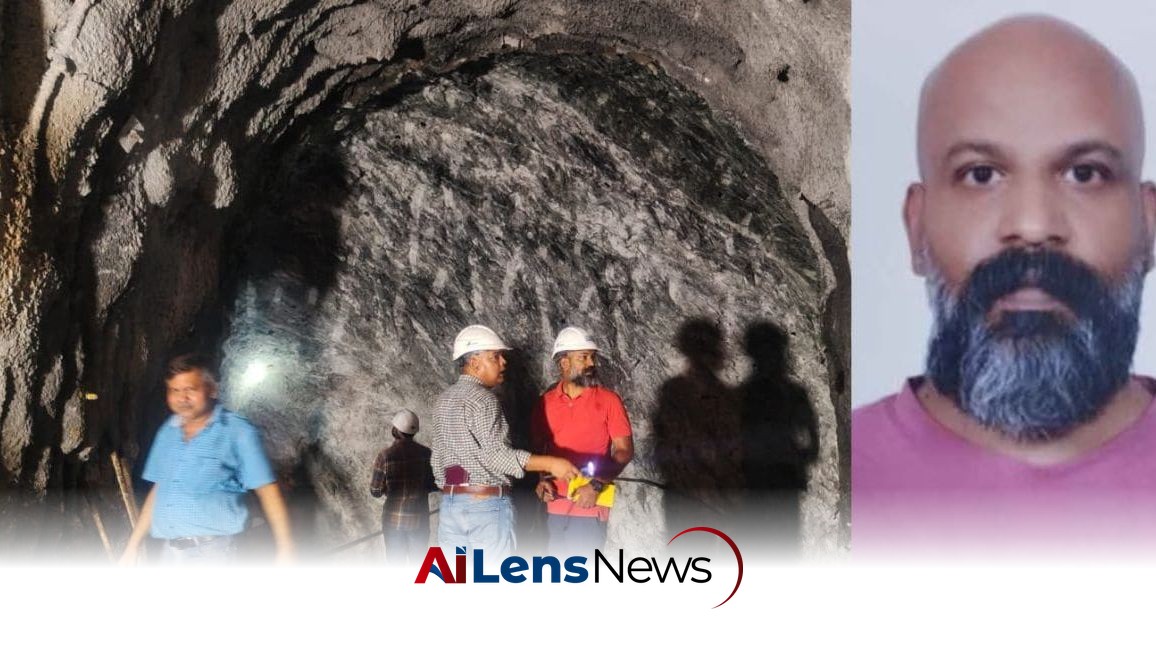


Rescue teams are working tirelessly to locate Kerala geologist Anish Mohan and others trapped in a collapsed tunnel in South Sikkim. Three bodies have been recovered.
Doha, Qatar Jul 23, 2026 ALN: Rescue teams continued their efforts on Wednesday to trace the individuals, including Kerala geologist Anish Mohan, who remain missing inside the collapsed tunnel of the NHPC Teesta Stage-IV hydroelectric project in South Sikkim following an explosion. The incident has garnered significant attention not only due to the tragic nature of the accident but also because of the critical role that such infrastructure plays in India's energy landscape.
Meanwhile, the bodies of three consultants who had entered the under-construction tunnel along with Anish were recovered and identified on Wednesday, Anish’s brother Binish told. He said waterlogging inside the tunnel following the landslide has severely hampered rescue operations. The challenge of accessing the site and the conditions within the tunnel highlight the dangers associated with construction projects, especially those involving heavy machinery and geological assessments.
Anish Mohan, 43, is a Senior Geologist (Remote Sensing) with NHPC and a native of Illivalavu in Manarcad, Kottayam. He has been working with NHPC since 2011, and his expertise in geology and remote sensing would have been vital for the safe execution of the project. His professional background underlines the importance of skilled personnel in ensuring the safety and efficiency of large-scale infrastructure projects.
According to Binish, Anish was not originally scheduled to enter the tunnel. He was asked to accompany a four-member team of NTPC consultants and civil engineers who wanted to inspect the site on Monday, when the collapse occurred. "We were told that a team of four, consultants and engineers, wanted to visit the tunnel, and Anish was asked to take them inside," Binish said. This unexpected request raises questions about safety protocols and decision-making processes in high-risk environments, where the presence of experienced personnel is essential.
According to national media reports, at least 20 people have died in the incident. "However, it is yet to be confirmed how many ordinary workers engaged in the tunnel project remain trapped in the debris," Binish added. The uncertainty regarding the total number of casualties adds to the urgency of the rescue operations, as families await news of their loved ones.
Binish said two photographs received from the authorities at the site helped rescue officers identify the five-member team, including Anish, who had entered the tunnel before the accident. In one photograph, Anish was seen with the consultants and engineers during their tunnel inspection, while another showed him in a discussion with the team hours before they entered the site. These images not only provide a glimpse into the moments leading up to the tragedy but also serve as a poignant reminder of the human stories behind such disasters.
A team of the National Disaster Response Force (NDRF) joined the rescue operation on Wednesday, while assistance from the Air Force has also been sought, Binish said. The involvement of specialized teams indicates the severity of the situation and the complex nature of the rescue efforts, which require both technical expertise and logistical support.
Meanwhile, NHPC announced a compensation of ₹5 lakh to the next of kin of each person who died in the incident. In a statement, the company said rescue operations at the Head Race Tunnel (HRT) of the Teesta Stage-IV hydroelectric project were continuing round the clock with the coordination of the district administration, NDRF, SDRF, NHPC, Patel Engineering, Eastern Coalfields, Western Coalfields, local authorities and other agencies. This coordinated response underscores the importance of inter-agency collaboration in emergency situations, where multiple organizations must work together effectively to mitigate the impact of such disasters.
According to NHPC Limited, the incident occurred around 1.04 pm on July 20 inside the under-construction Head Race Tunnel at Samardung in South Sikkim. A sudden release of suspected methane gas trapped inside the rocks is believed to have triggered an explosion, causing dense fumes and toxic gases inside the tunnel. The nature of the explosion and the presence of hazardous gases highlight the risks involved in tunneling projects, particularly in areas where geological conditions can be unpredictable.
Binish, who works as an engineer in Dubai, reached the accident site soon after learning about the incident. He said rescue teams have identified the possible location of the trapped, but toxic gases and accumulated water have made access difficult. The challenges faced by the rescue teams reflect the broader risks associated with infrastructure development in challenging terrains, where the interplay of natural elements can significantly complicate operations.
"The rescue operation is highly complicated. They are trying all possible methods, including pumping out water. Toxic gas has filled the tunnel, and the oxygen supply line has also been damaged," Binish said. The technical difficulties encountered in the rescue efforts serve as a stark reminder of the inherent dangers faced by workers in the construction and engineering sectors.
Anish and his wife Sangeetha had recently moved from Haryana to Sikkim following his transfer. Sangeetha later returned to Tripunithra, Kerala, for the birth of their second child. Anish had visited his wife and newborn earlier this year in February. His parents, Mohanan and Amminikutty, live at Illivalavu in Kottayam. This personal context adds emotional weight to the story, as families grapple with the uncertainty of their loved ones' fates in the wake of such a disaster.
"The exact time of the first photograph is not known, but the other picture was reportedly taken only hours before they entered the tunnel. These images helped officials identify those who were missing," Binish said. The use of technology, such as photographs, in identification processes is becoming increasingly important in emergency response scenarios, as it can provide critical information that aids in rescue efforts.
In summary, the ongoing rescue operations for the missing geologist and his colleagues highlight not only the immediate human tragedy but also the broader implications for safety protocols in construction projects. The incident raises questions about risk management, emergency preparedness, and the need for stringent safety measures in high-risk environments. As the rescue operations continue, the focus remains on the safe recovery of those trapped and the support for the families affected by this unfortunate event.
To learn more about the latest developments in Crime & Law, stay updated with our exclusive reports and analyses on AiLensNews.

