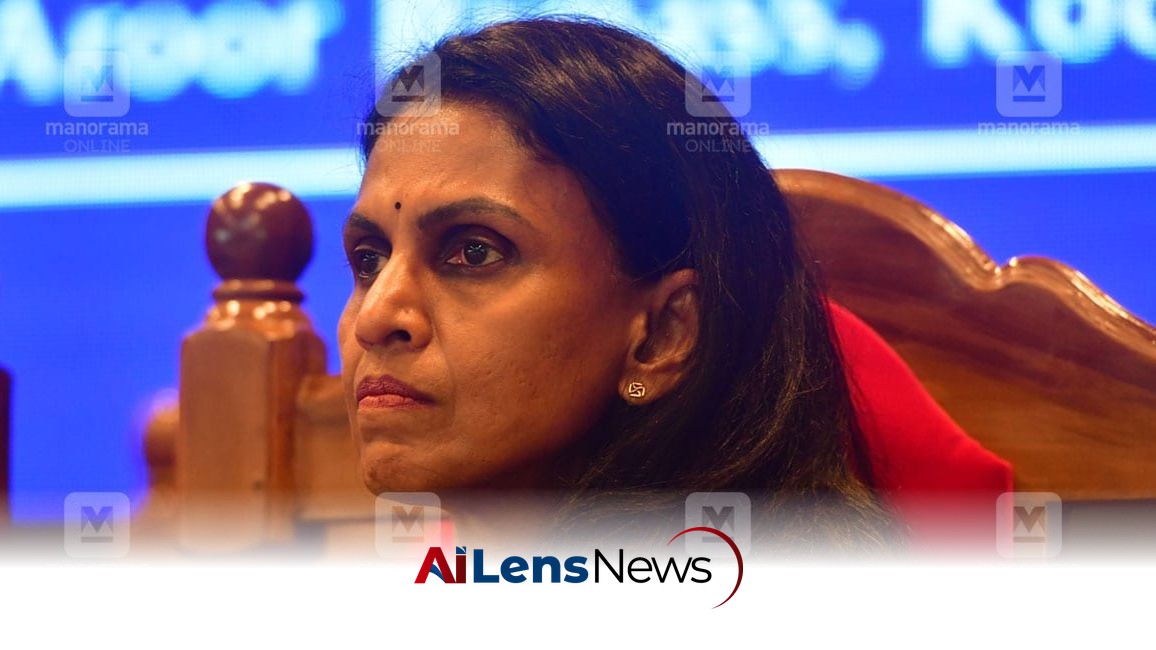


The Kerala High Court has granted interim relief to former DGP R. Sreelekha, restraining police from taking coercive action against her in a case involving the disclosure of sexual assault survivors' identities.
Doha, Qatar Jul 21, 2026 ALN: The Kerala High Court's recent decision to grant interim relief to former Director General of Police (DGP) R. Sreelekha has attracted significant attention, not only due to her prominent position in law enforcement but also because of the serious nature of the allegations against her. The court's ruling restrains the police from taking coercive action against Sreelekha, who faces accusations of disclosing the identities of survivors in three sexual assault cases, a violation of the Protection of Children from Sexual Offences (POCSO) Act and other legal provisions.
The ruling was made by Justice Jobin Sebastian in response to a petition filed by Sreelekha, who is also a councillor in the Thiruvananthapuram Corporation. The court's interim order highlights the legal principle that individuals should be given a fair chance to defend themselves before any punitive actions are taken against them. This principle is enshrined in the legal system to ensure that justice is not only done but is seen to be done.
In this case, the Museum Police initiated an investigation based on a Magistrate's order, which was prompted by a private complaint from a social worker. The complaint alleged that Sreelekha had disclosed sensitive information regarding the identities of survivors through her YouTube channel, "Sasneham Sreelekha," and her personal blog. The legal framework governing such disclosures is critical, as it aims to protect the privacy and dignity of victims, particularly in cases involving sexual offenses.
According to the charges, Sreelekha is the sole accused and faces legal action under Section 72 of the Bharatiya Nyaya Sanhita (BNS), which addresses the unauthorized disclosure of identities in certain offenses, and Section 23 of the POCSO Act, which specifically regulates the publication of information related to child victims of sexual offenses. The implications of these sections are profound, as they serve to safeguard vulnerable individuals from further trauma and societal stigma that can arise from public exposure.
The legal proceedings against Sreelekha raise several important questions regarding the jurisdiction of the Magistrate's Court and the interpretation of the laws in question. Sreelekha's petition argues that the Magistrate's order was issued without providing her an opportunity to present her side, a procedural misstep that could undermine the legitimacy of the entire process. Ensuring that all parties have the right to be heard is a fundamental aspect of the justice system, and any failure in this regard can lead to significant legal repercussions.
Furthermore, Sreelekha's petition challenges the applicability of the POCSO Act to the cases referenced in the complaint. She contends that the POCSO Act, which was enacted in 2012, cannot be applied retroactively to cases that occurred prior to its implementation. The Kiliroor and Kaviyoor cases, which date back to 2004, are particularly relevant in this context. Sreelekha argues that since the law was not in effect at the time of these incidents, invoking its provisions is legally unsound.
Additionally, Sreelekha asserts that the victim mentioned in the Kuruppampady case, which is also part of the allegations against her, was not a minor. This assertion is critical because it directly impacts the applicability of the POCSO Act, which is designed specifically to protect children. If the individuals involved were not minors at the time of the incidents, then the legal basis for the charges against her may be significantly weakened.
In her defense, Sreelekha has taken to social media, specifically Facebook, to articulate her position and argue against the legal actions taken against her. In her posts, she has emphasized the importance of clarity and accuracy in the application of laws, particularly those surrounding sensitive issues such as sexual assault. Her public statements reflect a broader concern about the potential misuse of legal provisions, particularly when they intersect with the rights of individuals to express opinions and share information in public forums.
The implications of this case extend beyond Sreelekha herself and touch upon larger societal issues regarding the treatment of sexual assault survivors, the responsibilities of public figures, and the interpretation of laws designed to protect vulnerable populations. The balance between freedom of expression and the right to privacy is a contentious issue, particularly in the context of high-profile cases involving sexual offenses. As public figures navigate these complex waters, the potential for legal repercussions looms large.
As the case unfolds, it will be essential to observe how the legal system addresses the questions raised by Sreelekha's petition. The outcome could set important precedents regarding the interpretation of the POCSO Act, the rights of individuals to share their views publicly, and the procedural safeguards that are necessary to ensure a fair judicial process. The Kerala High Court's interim order provides a temporary reprieve for Sreelekha, but the final resolution of her case will likely have lasting implications for both legal practitioners and the public at large.
In summary, the Kerala High Court's decision to grant interim relief to R. Sreelekha in the ongoing POCSO case underscores the complexities of legal proceedings involving allegations of sexual assault. The court's ruling not only protects Sreelekha from immediate coercive action but also opens the door for a thorough examination of the legal principles at play. As the case progresses, it will be essential to consider the broader ramifications for victims' rights, the responsibilities of public figures, and the integrity of the legal system.
To fully understand the implications of this case, it is important to consider the broader context of the POCSO Act itself. Enacted in 2012, the Protection of Children from Sexual Offences Act was designed to provide a robust framework for the protection of children from sexual offenses. It includes stringent provisions for the reporting of offenses, the investigation process, and the trial of such cases, aiming to create a child-friendly judicial process. The Act also emphasizes the need for confidentiality concerning the identities of child victims, recognizing the potential harm that public exposure can cause to their psychological well-being and future prospects.
Given the sensitive nature of sexual offenses, the POCSO Act has been a significant legal tool in the fight against child sexual exploitation and abuse in India. However, its application has also sparked debates about the balance between protecting victims and ensuring the rights of individuals accused of violations. The case against Sreelekha highlights these tensions, particularly as it involves a public figure and the potential for public discourse surrounding the allegations.
Moreover, the role of social media in legal matters has become increasingly prominent in recent years. Sreelekha's use of her YouTube channel and personal blog to discuss her views on the allegations against her raises questions about the intersection of social media, public opinion, and legal proceedings. While social media can serve as a platform for individuals to express their perspectives, it can also complicate legal matters, especially in cases involving sensitive topics like sexual offenses. The public discourse surrounding such cases can influence perceptions and potentially affect the judicial process, making it essential to navigate these waters carefully.
As the legal proceedings continue, it is essential for all stakeholders to approach the situation with sensitivity and a commitment to justice. The rights of the accused must be upheld alongside the imperative to protect victims of sexual offenses. The outcome of this case will likely resonate beyond the immediate parties involved, shaping public discourse around the responsibilities of public figures, the use of social media in legal contexts, and the ongoing efforts to safeguard the rights of vulnerable populations in society.
In conclusion, the Kerala High Court's interim relief to R. Sreelekha serves as a pivotal moment in a case that raises significant legal and ethical questions. The balance between protecting the identities of sexual assault survivors and ensuring fair legal processes for the accused is a complex issue that requires careful consideration. As the case unfolds, it will be crucial to monitor its developments and the broader societal implications that arise from it, particularly regarding the ongoing discourse surrounding sexual offenses, victims' rights, and the responsibilities of public figures in the legal landscape.
To learn more about the latest developments in Crime & Law, stay updated with our exclusive reports and analyses on AiLensNews.

