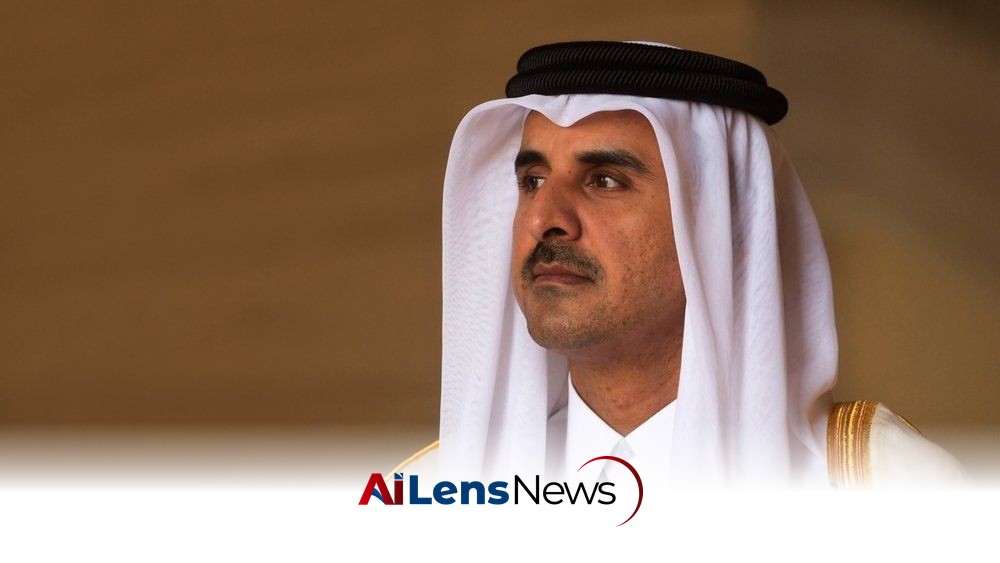


HH the Amir Sheikh Tamim bin Hamad Al Thani received HE Dr Faiq Zaidan, President of Iraq’s Supreme Judicial Council, offering condolences for the late Father Amir.
Doha, Qatar Jul 26, 2026 ALN: HH the Amir Sheikh Tamim bin Hamad Al Thani received HE Dr Faiq Zaidan, President of the Supreme Judicial Council of the Republic of Iraq, at his office in Lusail Palace on Sunday morning, July 26, 2026. This meeting is significant not only for its context in extending condolences but also for the broader implications it has on the diplomatic relations between Qatar and Iraq.
During the meeting, Dr Zaidan offered his condolences to HH the Amir on the passing of the late HH the Father Amir Sheikh Hamad bin Khalifa Al Thani. Sheikh Hamad, who ruled Qatar from 1995 until his abdication in 2013, is remembered for his transformative leadership that set the stage for Qatar's rapid development and its emergence as a significant player on the global stage. His passing marks a period of mourning for the nation, and condolences from international leaders signify the respect and recognition he garnered during his lifetime.
Dr Zaidan's prayers to Allah Almighty to grant the late Father Amir His vast mercy and a place in Paradise reflect the deep cultural and religious ties that bind the Arab nations, where expressions of sympathy and solidarity are often rooted in shared values and beliefs. Such gestures are particularly meaningful in the context of the Arab world, where the loss of a leader is felt deeply and often prompts a collective mourning process. The Arab culture places great emphasis on the importance of condolences, viewing them as a fundamental part of social etiquette and a way to honor the deceased while supporting the bereaved.
In response, HH the Amir expressed his thanks and appreciation to the President of Iraq’s Supreme Judicial Council for his sincere sentiments and kind condolences. This exchange highlights the importance of personal diplomacy in fostering strong bilateral relations. Acknowledging condolences publicly serves not only to honor the deceased but also strengthens the ties between the nations involved. Such interactions are crucial in a region where personal relationships often play a significant role in diplomacy.
The meeting formed part of the continued condolences extended to Qatar’s leadership following the passing of HH the Father Amir. Since the announcement of his passing, HH the Amir has received condolences from leaders, senior officials, and representatives from countries across the region and beyond. This outpouring of support is indicative of the late Father Amir's influence and the relationships he built during his reign, which were characterized by a focus on modernization, international diplomacy, and economic diversification.
Mourners have paid tribute to the late Father Amir and expressed solidarity with Qatar’s leadership, the Al Thani family, and the people of Qatar. The official condolence gatherings held at Lusail Palace have become a focal point for expressing grief and support, where HH the Amir received visiting dignitaries and members of the public. Such gatherings not only serve to honor the memory of the late leader but also reinforce the social fabric of the nation, bringing together citizens and leaders in shared mourning. These moments foster a sense of community and unity among the populace, which is especially important during times of national grief.
The visit by Dr Zaidan reflects the close relations between Qatar and Iraq and the solidarity shown by Iraqi officials following the loss. Historically, Qatar and Iraq have maintained a complex relationship, characterized by periods of tension and cooperation. In recent years, both nations have made strides towards strengthening diplomatic ties, particularly in the realms of trade, security, and cultural exchange. Iraq's political landscape has seen significant changes, particularly following the fall of Saddam Hussein in 2003, and Qatar has played a role in supporting Iraq's stability and development. This evolving dynamic is crucial as both nations seek to address common challenges in a rapidly changing geopolitical environment.
This meeting, therefore, not only serves as a moment of condolence but also as a reaffirmation of the commitment to fostering a collaborative relationship moving forward. The presence of Dr Zaidan, a key judicial figure in Iraq, underscores the importance of legal and institutional frameworks in both countries as they navigate their respective paths towards progress and stability. The judiciary is a vital component of governance, and strengthening judicial ties can lead to improved legal cooperation and mutual understanding of law and order.
Moreover, the condolences from Iraq's leadership can be seen as a gesture of goodwill that may pave the way for enhanced cooperation on various fronts, including economic partnerships and regional security initiatives. In a region often marked by geopolitical tensions, such diplomatic engagements are vital for building trust and understanding. The shared history of both nations, along with their current aspirations, creates a fertile ground for dialogue and collaboration on pressing regional issues.
Looking ahead, the implications of this meeting could extend beyond mere condolences. As both nations reflect on their histories and shared challenges, opportunities for collaboration in areas such as counterterrorism, humanitarian assistance, and economic development may arise. Qatar's strategic position and resources, coupled with Iraq's need for reconstruction and stability, create a potential for mutually beneficial partnerships. This could lead to joint initiatives that not only bolster their respective economies but also contribute to regional stability and prosperity.
In summary, the meeting between HH the Amir and Dr Zaidan is emblematic of the broader context of regional diplomacy, where expressions of sympathy serve to strengthen ties amidst loss. The ongoing condolences from various leaders signify a collective acknowledgment of the late Father Amir's impact and the importance of solidarity in the Arab world. As Qatar and Iraq navigate their future together, this moment of mourning may very well act as a catalyst for renewed cooperation and understanding between the two nations. The ability to transform grief into a foundation for future collaboration exemplifies the resilience and shared aspirations of both countries, paving the way for a more unified approach to regional challenges.
To learn more about the latest developments in Politics, stay updated with our exclusive reports and analyses on AiLensNews.

