

A report by Amicus Curiae Renjith Thampan highlights serious oversights in awarding the Kalladi-Meppadi tunnel project to Dilip Buildcon, urging a probe into the contractor's past failures.
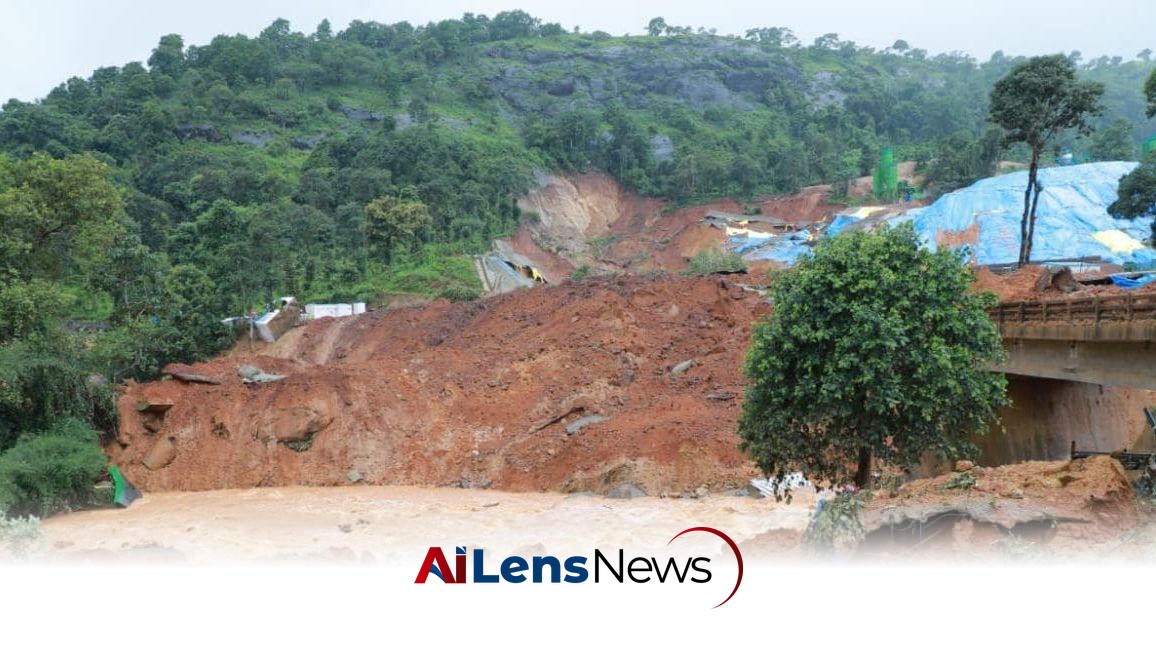
Doha, Qatar Jul 19, 2026 ALN: The report submitted by Senior Advocate Renjith Thampan, Amicus Curiae to the Kerala High Court's suo motu case on the 2024 Wayanad landslides, has called for the need to probe the pre-qualification process for the selection of contractor in the wake of recent slope failure at the twin-tunnel project site at Kalladi, Wayanad. This report emerges in a context of increasing scrutiny over infrastructure projects in India, particularly in disaster-prone regions where the stakes are high for both public safety and environmental sustainability.
Renjith Thampan submitted a report on his findings into the July 7 Wayanad landslip, flagging serious oversight in the award of the contract for the Kalladi–Meppadi twin tunnel project to Dilip Buildcon. The company, which has been engaged in various infrastructure projects across India, has faced criticism in the past regarding its construction practices and safety protocols. The report raises alarms about the adequacy of the contractor's qualifications and the thoroughness of the vetting process that led to its selection for such a critical project.
The report points to two major infrastructure projects undertaken by Dilip Buildcon that had suffered serious structural defects, raising questions over the 'pre-qualification, due diligence and supervision of contractors executing high-hazard works in disaster-prone terrain'. This aspect is particularly significant in the context of Wayanad, a region that has historically faced challenges related to landslides and other natural disasters, exacerbated by heavy rainfall and geological instability.
One such instance cited is the 2021 collapse of the Anakapalle flyover in Visakhapatnam, where two girders of an under-construction flyover on the Anandapuram–Pendurthi–Anakapalle stretch of NH-16 collapsed, killing two people and injuring three others. The report notes that an expert committee appointed by the National Highways Authority of India (NHAI) had prima facie attributed the collapse to poor and inadequate anchorage of the girders after launching and had also flagged lapses on the part of key officials of the concessionaire. This incident illustrates the potential consequences of inadequate oversight and raises concerns about the systemic issues within the contracting process for infrastructure projects in India.
The report also refers to the company's disqualification from the Bengaluru tunnel road project tender in 2026. It notes that the tender conditions excluded firms with a history of structural collapses involving bridges, flyovers or tunnels. This raises further questions about how such criteria were overlooked in the case of the Kalladi–Meppadi project and whether a more stringent evaluation process could have prevented the recent landslip disaster.
Based on these findings, the report cites that the state may be directed to give a response on the pre-qualification and due diligence process followed before awarding the EPC contract for the project. The report questions whether the contractor's antecedents were disclosed and considered during the evaluation and whether any enhanced supervision was mandated in light of its past record. This inquiry is crucial for understanding the regulatory framework that governs infrastructure projects and ensuring that lessons are learned to prevent future tragedies.
It also sought the state's response on whether tender frameworks for projects in hazard-prone areas should incorporate explicit eligibility criteria similar to those adopted in the Bengaluru tunnel road tender. The implications of such recommendations could lead to a significant overhaul of how contracts are awarded in high-risk areas, potentially enhancing public safety and accountability in the construction industry.
The report further states that the Contractor's All Risk (CAR) insurance—intended to provide immediate compensation to the families of those killed, injured and others who suffered losses in the landslip—could be denied if it is established that there was a wilful breach of statutory directions or a conscious disregard of repeated warnings, such as the five letters issued by the Wayanad District Disaster Management Authority (DDMA) and inspection findings. This highlights the importance of compliance with safety regulations and the need for contractors to prioritize risk management in their operations.
In light of this, the Amicus argues that victims should not be left to await the outcome of insurance proceedings. Instead, the report recommends that the state provide interim compensation, while retaining the right to recover the amount later from the contractor or the insurer. This approach underscores the urgent need for a responsive mechanism to support victims of infrastructure failures, ensuring that they receive timely assistance in the wake of disasters.
The report also calls on Konkan Railway Corporation Ltd. (KRCL), the Kerala Public Works Department (KPWD) and the contractor to produce the CAR insurance policy and all related insurance documents, confirm that the insurer has been notified, submit details of all claims filed, including third-party claims, and ensure that no material evidence at the site is disturbed except where necessary for rescue and safety operations. This request for transparency and accountability is essential for a thorough investigation and for restoring public trust in the management of infrastructure projects.
The July 7 landslip occurred nearly two years after the devastating 2024 Wayanad landslides and claimed seven lives while leaving several others injured. The disaster was attributed to the unscientific accumulation of excavated earth at the Kalladi–Meppadi twin tube tunnel road project site. As part of the suo motu case initiated by the High Court following the 2024 landslides, the court had appointed Renjith Thampan as Amicus Curiae to examine the incident and submit a report. This legal framework reflects the judiciary's proactive role in addressing public safety concerns and holding accountable those responsible for infrastructure projects.
The report, submitted on Thursday, contends that the disaster was not unforeseen and notes that the tragedy 'was foreseen, in writing, five times over,' referring to repeated warnings issued before the landslip. This assertion raises critical questions about the effectiveness of communication between regulatory bodies, contractors, and the local community, as well as the mechanisms in place to act on warnings regarding potential hazards. The need for effective risk communication strategies and timely intervention in response to identified risks is paramount in preventing future incidents.
To learn more about the latest developments in Local & Regional, stay updated with our exclusive reports and analyses on AiLensNews.

