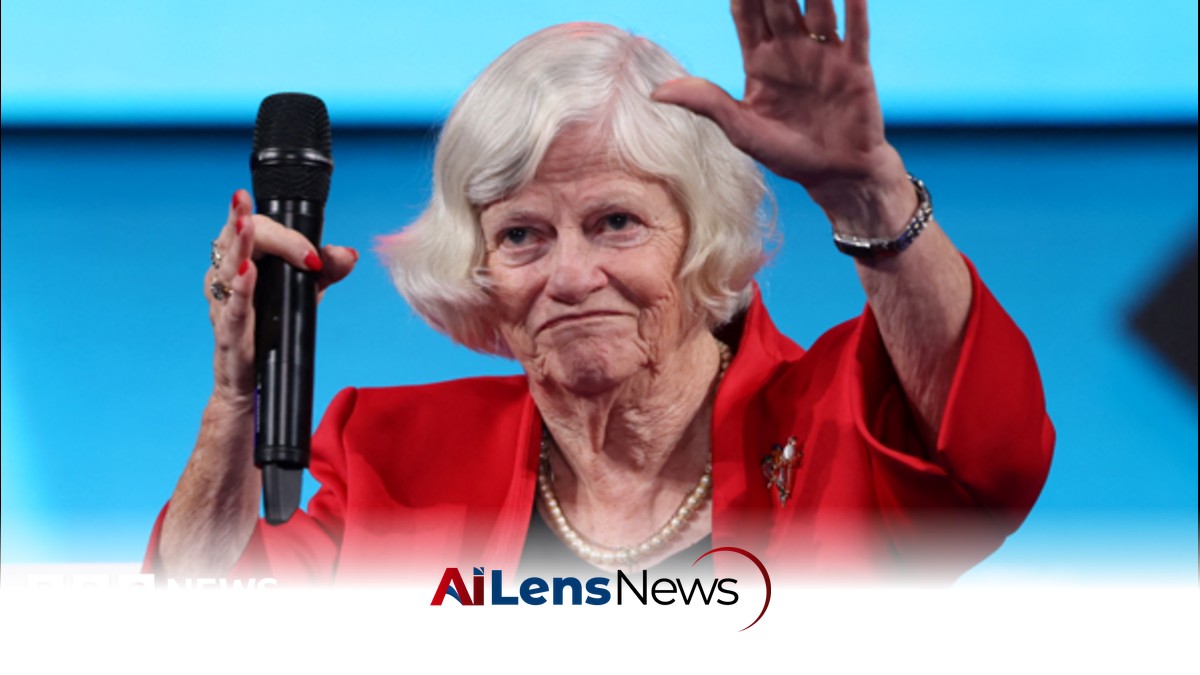


The political world mourns the loss of Ann Widdecombe, remembered for her pugnacious spirit and engaging presence. Chris Mason reflects on her impact.
New Delhi, India Jul 11, 2026 ALN: You can see it in the facial expressions of our political leaders and hear it in the tenor and tone of their voices.
People across Westminster and beyond are stunned at the murder investigation into the death of Ann Widdecombe. The sadness at the loss of a friend to many is magnified by the horror of what we are learning about its circumstances.
The police have stated they have "no information" to believe it is a "politically motivated crime." Nonetheless, in moments like this, those in public life are reminded of their prominence and sense of vulnerability, especially after the murders of Labour MP Jo Cox and Conservative MP Sir David Amess in the last decade. These tragic events have left an indelible mark on the political landscape of the United Kingdom, highlighting the often perilous intersection of public service and personal safety.
Ann Widdecombe was an extraordinary character in British politics. Born on October 4, 1947, she served as a Conservative Member of Parliament from 1987 to 2005 and was known for her strong opinions on a range of social issues. People had strong views about her opinions—some strongly agreed, while others vehemently disagreed. Her tenure in office was marked by her unabashed stance on social conservatism, which often put her at odds with the more liberal elements of her party and the broader public discourse.
When I presented "Any Questions" on Radio 4, which, alongside my current role, was the biggest privilege I have ever had professionally, she was one of my favourite panellists. Her presence on the panel was always a highlight, as she brought a unique blend of wit and conviction that captivated audiences. Every weekend, in front of a live audience in various venues, I could sense which guests could connect with the audience; those who could provoke, challenge, engage, and occasionally enrage. They compelled people in the room to sit up and hold their gaze.
In other words, they were skilled in articulating what public life in a democracy is all about: clearly and convincingly stating what they stand for. Ann Widdecombe was pugnacious, charismatic, and yes, had a sense of silliness too. And she answered the question. I couldn't honestly credit every guest with doing that.
To stand for public office and lead a public life is a noble calling, and one should not underestimate the courage it takes to hold views that divide. It is the nature of political life that this is inevitable and necessary, and no one is forced to do it. But in an era of anti-politics, corrosive cynicism, and a social media environment where motives and character are often maligned, spare a thought on a human level—whether you agree with them or not—for all those willing to stride onto that noisy, contested, sometimes angry public stage.
Ann Widdecombe revelled in debate, particularly when articulating positions as a lifelong social conservative that were no longer fashionable to many. Some of her views wouldn't even curry favour with all those in her own party. Her outspoken nature often led to polarizing opinions about her, but it is undeniable that she was a figure who made people think, whether they supported her views or not.
She was the author of one of contemporary politics' most withering putdowns when she described Michael, now Lord Howard, as having "something of the night about him," a description so vivid and original he is destined never to escape it. This remark is emblematic of her sharp wit and ability to deliver criticism in a memorable way, a skill that endeared her to some and alienated others.
The former Conservative leader magnanimously reflected that he and she had their "ups and downs" but had made up. This acknowledgment speaks to the complex relationships often found in politics, where personal and professional lines can blur, yet mutual respect can still be fostered despite ideological differences.
Let's be clear—some of her views were regarded by many as deeply offensive. Others cheered what they saw as her uncompromising bravery in maintaining those convictions and expressing them publicly. A robust but civilised public debate can respect both stances. This dichotomy in public perception illustrates the challenges faced by politicians who dare to voice controversial opinions in an increasingly polarized society.
Ann Widdecombe was sharp but warm, serious but self-deprecating, kind but fearsome. Her multifaceted personality made her a compelling figure in the political arena, and her ability to connect with people on a personal level, regardless of their political affiliations, contributed to her enduring popularity among her supporters.
It is for you, as a reader, to come to your own view about her opinions. What I can tell you is that plenty who knew her, whether they agreed with her or not, found her immensely likeable. This affection for her character underscores the importance of recognizing the humanity behind political figures, especially in a climate where public discourse can often become hostile and dehumanizing.
In reflecting on Ann Widdecombe's legacy, it is essential to consider the broader implications of her career and the conversations she sparked. Her presence in British politics served as a reminder of the diverse spectrum of beliefs that exist within society and the necessity for open dialogue, even when opinions clash. In a world where political polarization seems to be at an all-time high, her example encourages a more nuanced understanding of differing viewpoints.
As we mourn the loss of Ann Widdecombe, we must also celebrate her contributions to the political landscape and the conversations she ignited. Her life and career serve as a testament to the power of conviction and the importance of engaging in meaningful discourse, regardless of whether we agree with one another. The legacy she leaves behind is one that challenges us to reflect on our own beliefs and the ways in which we engage with those who hold differing views.
In conclusion, Ann Widdecombe was not just a political figure; she was a vibrant personality who left an indelible mark on British politics. Her courage to stand by her convictions, her ability to engage in lively debate, and her unique charm made her a memorable character in the annals of political history. As we process the of her untimely death, it is crucial to remember the lessons her life teaches us about the importance of dialogue, respect, and understanding in the realm of public discourse.
To learn more about the latest developments in Politics, stay updated with our exclusive reports and analyses on AiLensNews.

