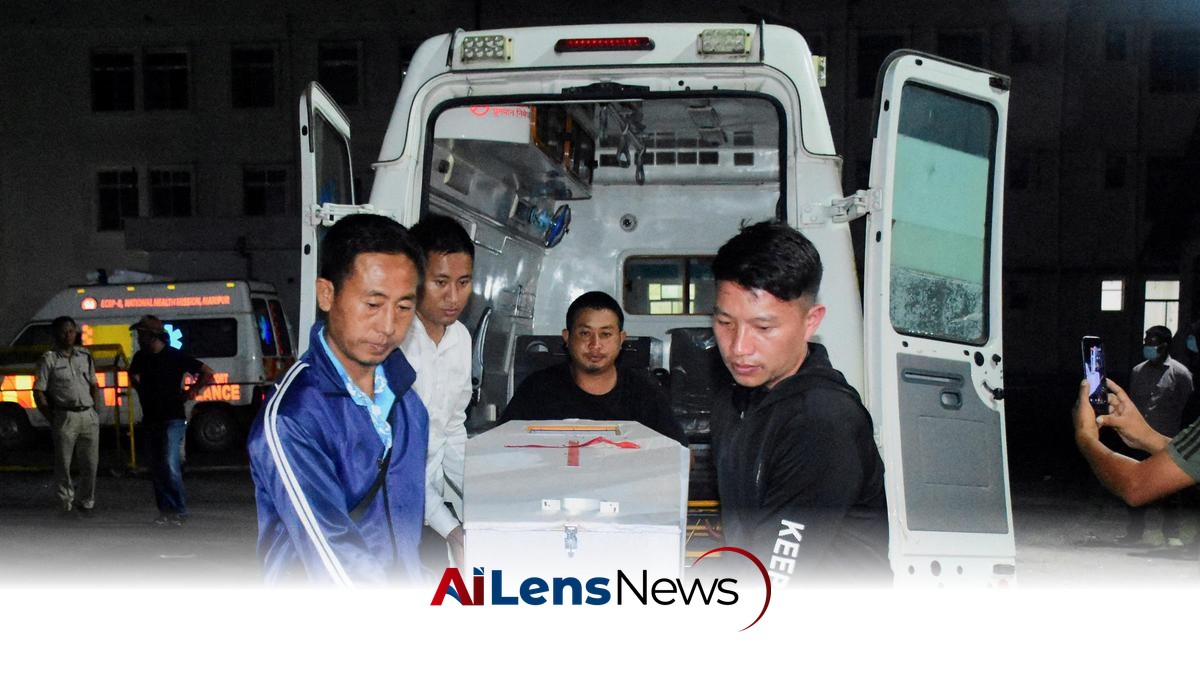


A Kangpokpi policeman is under investigation for involvement in the abduction and murder of six Naga men in Manipur.
New Delhi, India Jul 6, 2026 ALN: A police personnel from Kangpokpi in Manipur has been interrogated by the police authorities in connection with the abduction and killing of six Naga men, whose mutilated bodies were recovered by the police on June 10, 2026, a senior government official confirmed. This incident has raised significant concerns regarding law enforcement's involvement in the ongoing ethnic violence that has plagued the region.
The police official was recently interrogated by the Kangpokpi police amid indications that he could have played a role in the abduction of the six Naga men, including two pastors, on May 13 from Leilon Vaiphei village. This incident occurred shortly after the killing of three Thadou-Kuki church leaders in the vicinity on the same day, suggesting a troubling cycle of violence that has escalated tensions between various ethnic groups in Manipur.
“The investigation is still ongoing; the police personnel’s exact role in the crime is yet to be ascertained. The Naga women who were held hostage and later released had mentioned the policeman in their statement to the police,” the official stated. This revelation raises questions about the integrity of local law enforcement and its potential complicity in the violence that has characterized the region.
Following public outrage over the killings, the State government handed over the case to the Investigation Agency (NIA), which is yet to make any arrests. The involvement of the NIA signifies the seriousness of the situation, as it is typically called upon to investigate cases that have broader implications for security. The NIA's involvement also underscores the urgency of addressing the systemic issues that have allowed such violence to occur.
The six men and their family members were taken hostage, while 12 individuals, including women and children, were released later. Reports indicate that at least 44 civilians were taken hostage by Kuki and Naga groups in Kangpokpi and Senapati districts on May 13. Although several of those abducted had been released earlier, 14 members of the Kuki community, who remained in captivity, were released on June 9, and the bodies of the six missing Naga men were recovered by the security forces on June 10. This pattern of abduction and violence highlights the deteriorating security situation in Manipur, where ethnic tensions have reached a boiling point.
On Saturday, July 4, 2026, Union Home Minister Amit Shah reviewed the security situation in Manipur, directing security agencies and the NIA to intensify efforts against suspects and armed militants from Naga, Kuki, and Meitei groups. The Minister expressed concern over the slow pace of investigations in recent and past cases of violence, including those between the Naga and Kuki communities, and called for the arrest of all suspects involved in the crimes. He emphasized the need to dismantle the narcotics trade in the region. The intertwining of drug trafficking with ethnic violence complicates the situation further, as criminal enterprises often thrive in environments of instability.
Following the Taliban-imposed ban on drugs in Afghanistan in 2022, Myanmar has emerged as an alternative source of global opium supply, with consequences already visible along India’s eastern borders, particularly through the Manipur corridor, as noted by the Narcotics Control Bureau in its 2025 annual report. This shift in the dynamics of drug trafficking has not only exacerbated the existing ethnic conflicts but has also provided financial resources to various armed groups, thereby fueling further violence.
While Chief Minister Y. Khemchand Singh joined virtually from Imphal, a recent meeting in Delhi was attended by the Manipur government’s Security Advisor Kuldiep, State Director General of Police Mukesh Singh, and Director General of Military Operations Lieutenant General Abhijit S. Pendharkar, among others. Such high-level meetings indicate the gravity of the situation and the need for coordinated efforts to restore peace and order in the region. However, the effectiveness of these meetings and decisions will depend on their implementation on the ground.
The ethnic violence, which first erupted between the Kuki and Meitei communities on May 3, 2023, has now expanded to include Kuki and Naga communities, claiming the lives of 300 people so far. At least 40 individuals have been killed since February 4, following the revocation of President’s Rule in the State and the restoration of an elected government. The resurgence of violence following the establishment of an elected government raises questions about the effectiveness of political leadership in addressing the underlying issues that have led to conflict.
Due to Kangpokpi’s location—surrounded by the Naga-dominated Senapati district in the north and the Meitei-dominated valley districts in the south—the transportation of essential items on Highway 2 has been severely affected. Naga village volunteers have imposed a blockade on goods entering from Nagaland and Assam. This blockade not only affects the daily lives of residents but also exacerbates existing tensions, as communities are pitted against one another over limited resources.
Security agencies are ensuring the supply of essential items to Kangpokpi, and recently, six individuals from the Naga community were arrested for blocking vehicles towards the Kuki-dominated district, as reported by officials. The arrests highlight the ongoing struggles for control and influence among the various ethnic groups in the region, and the challenges faced by law enforcement in maintaining order amidst such complex dynamics.
The situation in Manipur serves as a microcosm of broader issues affecting many regions in India where ethnic and communal tensions exist. The interplay between local grievances, politics, and external influences such as drug trafficking creates a volatile environment that is difficult to navigate. As the investigation into the abduction and killing of the six Naga men continues, it remains to be seen how the government will address the root causes of the violence and whether meaningful steps will be taken to restore peace and stability in the region.
To learn more about the latest developments in Crime & Law, stay updated with our exclusive reports and analyses on AiLensNews.

