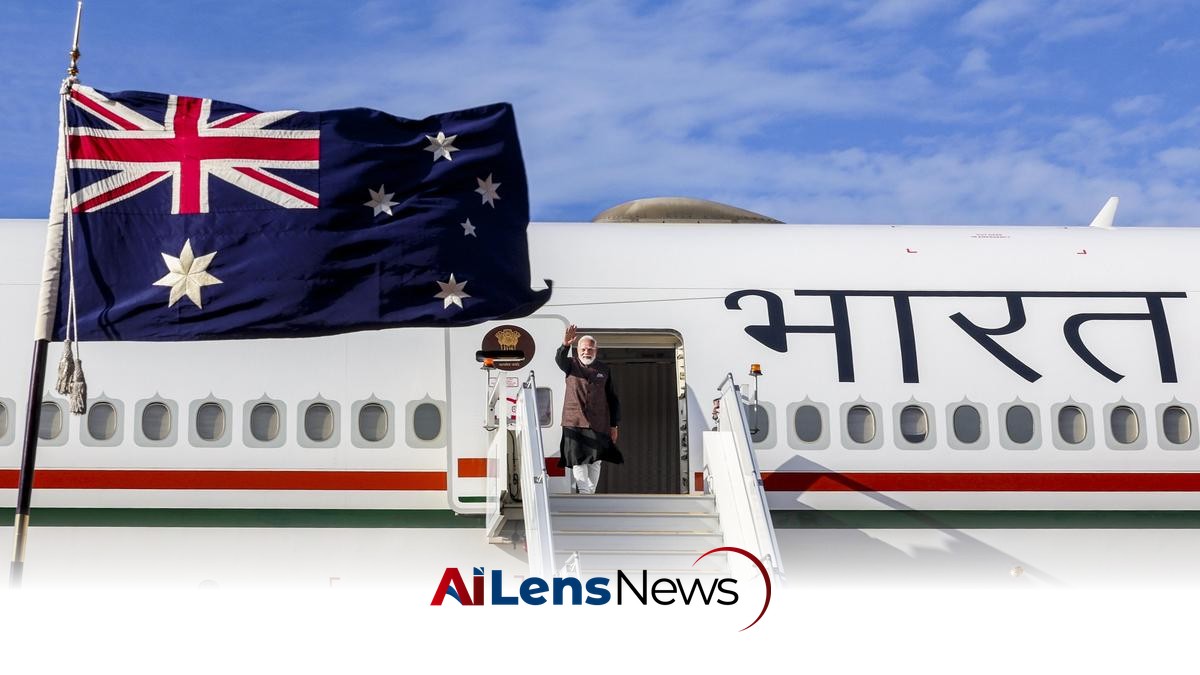


PM Modi's visit to New Zealand focuses on strengthening economic ties and trade relations with Prime Minister Christopher Luxon.
New Zealand, New Zealand Jul 10, 2026 ALN: Prime Minister Narendra Modi arrived in New Zealand on July 10, 2026, marking the final leg of his significant three-nation tour, which also included stops in Indonesia and Australia. This visit is particularly noteworthy as it comes at a time of evolving geopolitical dynamics in the Indo-Pacific region, where nations are increasingly seeking to strengthen their partnerships to address shared challenges and opportunities.
Upon his arrival, Mr. Modi was warmly welcomed by New Zealand Prime Minister Christopher Luxon at the airport, reflecting the cordial relations between the two countries. In a statement made prior to his departure from New Delhi, Mr. Modi emphasized the importance of his visit, stating that it would "meaningfully build" upon the strong momentum in India-New Zealand relations that began with Prime Minister Luxon's visit to India in March 2025. This reciprocal nature of visits underscores the commitment of both nations to deepen their bilateral engagement.
One of the central themes of Mr. Modi's visit to New Zealand is the strengthening of economic ties. In his remarks, the Prime Minister noted that his tour of Indonesia, Australia, and New Zealand is aimed at further bolstering India’s Act East Policy and the MAHASAGAR Vision, which focuses on enhancing India’s maritime capabilities and partnerships in the Indo-Pacific region. These initiatives are crucial as they align with India's broader strategic objectives of maintaining a free and open Indo-Pacific, a goal shared by many nations in the region.
During his two-day stay in New Zealand, Mr. Modi is expected to engage in discussions with Prime Minister Luxon on various issues, including ways to enhance economic, trade, and commercial engagements between the two nations. This dialogue is particularly timely given the global economic landscape, which has been significantly affected by recent geopolitical tensions and the ongoing effects of the COVID-19 pandemic. Strengthening trade ties can help both countries navigate these challenges more effectively.
Mr. Modi's visit follows a productive three-day engagement in Australia, where he held summit talks with Prime Minister Anthony Albanese. The discussions between the two leaders highlighted the critical role of the India-Australia partnership in ensuring stability and security in the Indo-Pacific. A key outcome of the talks was an agreement to significantly ramp up defense ties, particularly in maritime security, which is increasingly vital given the rising tensions in the South China Sea and other strategic waterways.
Furthermore, during his visit to Australia, Mr. Modi and Mr. Albanese finalized an agreement regarding civil nuclear energy, which will facilitate the commercial supply of uranium from Australia to India. This agreement, reached after two years of negotiations, is expected to play a crucial role in supporting India’s nuclear power projects, thereby contributing to the country's energy security and its commitments to sustainable development.
Before arriving in Australia, Mr. Modi was in Indonesia, where he signed 14 agreements aimed at enhancing cooperation in critical sectors such as minerals and maritime security. These agreements are indicative of India's strategic pivot towards Southeast Asia, a region that is becoming increasingly significant in global trade and geopolitical affairs. By strengthening ties with Indonesia, India is not only enhancing its economic prospects but also solidifying its role as a key player in regional security dynamics.
As Mr. Modi embarks on the final leg of his tour in New Zealand, he is set to address the Indian diaspora, which plays a vital role in fostering people-to-people connections between India and New Zealand. The Indian community in New Zealand is one of the fastest-growing ethnic groups, contributing significantly to the cultural and economic fabric of the nation. Engaging with this community is crucial for building stronger bilateral ties and enhancing mutual understanding.
In his pre-departure remarks, Mr. Modi reiterated the importance of the Free Trade Agreement (FTA) between India and New Zealand, which both countries are committed to strengthening. The FTA is expected to facilitate increased trade and investment flows, benefiting both economies. By reducing tariffs and enhancing market access, the agreement aims to create a more favorable environment for businesses and investors from both nations.
New Zealand has increasingly recognized India as an important partner in the Indo-Pacific, particularly as both countries share common democratic values and a commitment to a rules-based inter order. The relationship has been marked by growing trade, with India emerging as one of New Zealand's largest trading partners in recent years. In 2025, bilateral trade reached approximately NZD 2.2 billion, with significant exports from New Zealand including dairy products, meat, and wine, and imports from India comprising pharmaceuticals, textiles, and machinery.
In addition to economic ties, cultural exchanges have also been a cornerstone of India-New Zealand relations. The Indian community in New Zealand, which numbers over 200,000, has enriched the cultural landscape of the country. Festivals such as Diwali and Holi are celebrated with great enthusiasm, fostering greater understanding and appreciation between the two cultures. The Indian diaspora also plays a crucial role in business, innovation, and technology sectors, contributing to the economic growth of New Zealand.
Moreover, the collaboration in education has been a significant aspect of the bilateral relationship. New Zealand is a popular destination for Indian students, with thousands pursuing higher education in various fields. This educational exchange not only enhances people-to-people connections but also promotes academic collaboration and research partnerships between institutions in both countries.
Mr. Modi's visit is also set against the backdrop of broader regional security concerns. The Indo-Pacific region has seen increased military activities and strategic competition, particularly involving China. In this context, New Zealand's role as a stable and democratic partner becomes even more critical for India. Both nations have expressed a desire to work together to address shared security challenges, including counter-terrorism, cyber security, and climate change, which are increasingly viewed as integral to security.
In summary, Prime Minister Modi's visit to New Zealand represents a significant step in enhancing India’s relations with key partners in the Indo-Pacific region. The discussions with Prime Minister Luxon and engagements with the Indian diaspora are expected to yield fruitful outcomes that will not only benefit India and New Zealand but also contribute to broader regional stability. As global dynamics continue to evolve, the importance of such diplomatic engagements cannot be overstated, as they pave the way for future cooperation in various sectors, including trade, defense, and cultural exchange. The commitment to deepening ties reflects a shared vision for a prosperous and secure Indo-Pacific, underscoring the significance of multilateral partnerships in addressing contemporary challenges.
To learn more about the latest developments in World News & International Affairs, stay updated with our exclusive reports and analyses on AiLensNews.

