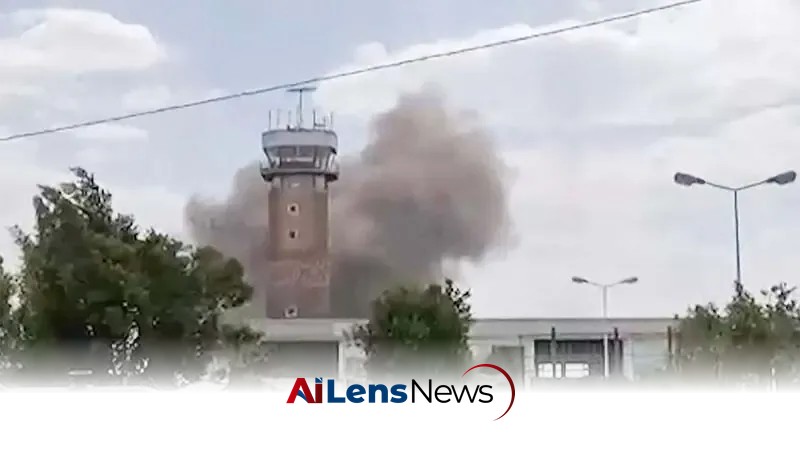


Yemen's Houthis launched attacks on Saudi Arabia following a government strike on Sanaa airport, marking a significant escalation in the ongoing conflict.
Islamabad, Pakistan Jul 13, 2026 ALN: The conflict in Yemen has been ongoing since 2014, when the Iran-aligned Houthi movement seized control of the capital, Sanaa, and later expanded its influence across large parts of the country. This move prompted a military intervention by a Saudi-led coalition, which aimed to restore the internationally recognized government of President Abdrabbuh Mansur Hadi. The war has since spiraled into a complex proxy conflict involving regional powers, including Iran and Saudi Arabia, leading to one of the world's most severe humanitarian crises.
On Monday, the situation escalated dramatically as the Houthis launched attacks on Saudi Arabia, claiming retaliation against what they described as Saudi aggression, particularly an airstrike on Sanaa airport. This airport is a critical hub for the Houthis, and accusations of a Saudi attack on it represent a significant escalation in hostilities. The Saudi-backed Yemeni government confirmed its involvement in the strike, asserting that it was an attempt to prevent an Iranian aircraft from landing. This strike highlights the ongoing tensions surrounding airspace control and the Houthis' increasing ability to challenge Saudi dominance in the region.
The Houthis' military spokesman, Yahya Saree, accused Saudi Arabia of abandoning the de-escalation efforts that had been observed in recent months, warning that the group would respond to what they termed Saudi aggression. The remarks reflect the fragile nature of the truce that had been in place since 2022, which, despite having expired, had managed to keep large-scale hostilities at bay for a time.
Coalition spokesman Turki al-Maliki reported that Saudi air defenses intercepted a ballistic missile launched by the Houthis, indicating that the conflict could escalate into a broader military confrontation. The Houthi missile strikes on Saudi territory are not new but have been relatively rare in recent months, suggesting a potential shift in their military strategy or capabilities.
Iran's condemnation of the Saudi strike on Sanaa airport underscores the geopolitical dimensions of the conflict. Iran has been a staunch supporter of the Houthis, providing them with military and logistical support. The Iranian Foreign Ministry characterized the attack as a violation of international law, which adds another layer of complexity to the already tense situation in the region. The involvement of Iran further exacerbates the Saudi-Iranian rivalry, which has significant implications for stability in the Gulf region.
Experts, such as Mohammed al-Basha from the Basha Report, have warned that the cycle of retaliation between the Houthis and Saudi Arabia could lead to the collapse of the 2022 ceasefire framework, potentially plunging Yemen back into a more intense phase of conflict. The fragile peace that had allowed for a reduction in hostilities is now at risk, with both sides seemingly unwilling to back down. The next moves by both the Houthis and the Saudi coalition will be crucial in determining whether the situation will escalate further or if there will be a return to negotiations.
The Houthis' ability to conduct direct flights from Iran to Sanaa without prior clearance from the Saudi-led coalition has raised alarms within the Yemeni government. This development indicates a challenge to the coalition's longstanding control over Yemeni airspace, which has been a point of contention throughout the conflict. The Houthis' actions could embolden them and signal a shift in the balance of power, potentially leading to more aggressive military actions from both sides.
The recent tensions were preceded by accusations from the Houthis against Saudi Arabia regarding an attack on an Iranian plane that had landed in Sanaa. The rebels had issued threats to target Saudi airports and vital assets in response to any perceived violations of their airspace. This escalation of threats and counter-threats underscores the volatile nature of the conflict and the potential for miscalculations that could lead to a broader war.
Since the Saudi-led coalition's intervention in 2015, they have predominantly conducted air strikes against Houthi targets, often resulting in significant civilian casualties and contributing to the humanitarian disaster in Yemen. The coalition's air capabilities have been a critical component of their military strategy, but analysts note that the Yemeni government’s ability to conduct such strikes independently may be limited, particularly given the state of their military assets.
In the wake of these developments, Rashad al-Alimi, the head of Yemen’s Presidential Leadership Council, stated that he had ordered a measured response, aiming to avoid further escalation. This approach reflects the delicate balance the Yemeni government must maintain as it navigates the pressures from both the Houthis and the Saudi coalition, as well as the international community's concerns regarding the ongoing humanitarian crisis.
The humanitarian situation in Yemen remains dire, with millions of people facing famine and a lack of basic services. The conflict has resulted in the deaths of hundreds of thousands of individuals and has displaced millions more. The International Committee of the Red Cross (ICRC) has been actively involved in providing aid, but recent accusations from the Yemeni government that the Houthis held ICRC staff hostage at Sanaa airport highlight the challenges faced by aid organizations in operating in such a volatile environment.
A homemaker from Hodeida, a city under Houthi control, expressed her fears about the potential for renewed conflict, emphasizing the cyclical nature of violence in Yemen. Many civilians are caught in the crossfire of this protracted war, with little hope for resolution as both sides remain entrenched in their positions. The international community continues to call for a negotiated settlement to the conflict, but with rising tensions and a lack of trust between the parties, the path to peace appears increasingly fraught.
As the situation develops, analysts and observers will closely monitor the actions of both the Houthis and the Saudi-led coalition. The potential for renewed hostilities could not only affect Yemen but also have broader implications for regional stability, particularly as other nations in the Gulf remain on high alert. The ongoing conflict serves as a reminder of the complex interplay of local, regional, and international factors that continue to shape the landscape of war in Yemen.
To learn more about the latest developments in World News & International Affairs, stay updated with our exclusive reports and analyses on AiLensNews.

