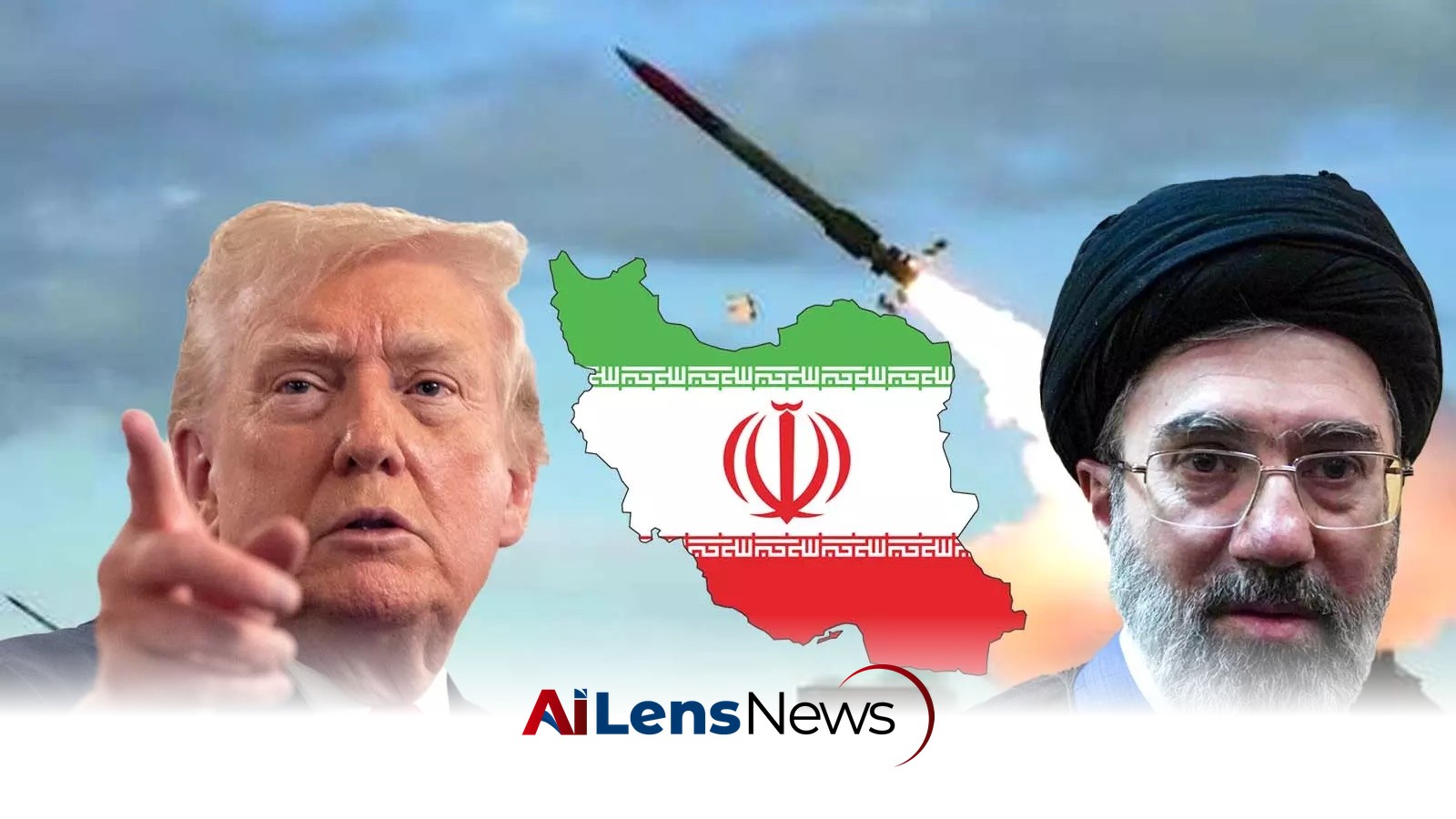


The US launched air strikes against Iranian targets as Iran's IRGC claimed attacks on American-linked assets in Bahrain and Jordan, escalating regional tensions.
Islamabad, Pakistan Jul 14, 2026 ALN: The conflict between the United States (US) and Iran intensified sharply on Tuesday as Washington launched a third consecutive night of air strikes against Iranian targets, while Iran’s Islamic Revolutionary Guard Corps (IRGC) claimed retaliatory attacks on American-linked assets in Bahrain and Jordan.
According to the US military, its latest five-hour operation targeted coastal defense systems, missile sites, drone facilities, and maritime capabilities in Bushehr and Bandar Abbas. US Central Command stated that the strikes were aimed at reducing Iran’s ability to threaten commercial shipping in the Strait of Hormuz, where more than 50,000 American troops remain deployed across the wider Middle East. The Strait of Hormuz is a vital waterway for global oil shipments, with about 20% of the world’s oil passing through it. This makes the region a focal point for international maritime security, and any disruption can have far-reaching implications for global energy markets.
In response, the IRGC announced that it had launched missiles and drones at facilities linked to US forces in Bahrain, including military infrastructure, weapons depots, and communications centers near the Juffair naval base. The Juffair base is strategically important as it hosts the US Fifth Fleet, which plays a critical role in maintaining naval presence and security in the Persian Gulf. The group also claimed to have damaged radar systems and fuel storage facilities. However, neither US nor Bahraini authorities immediately confirmed the reported damage, highlighting the fog of war that often accompanies military engagements and the challenges of verifying claims in real-time.
Jordan also reported intercepting four missiles that entered its airspace from Iranian territory. This incident underscores the broader regional implications of the conflict, as Jordan has historically maintained a delicate balance in its foreign relations, particularly with both the US and Iran. Later, the IRGC stated that it had targeted an air base in Jordan hosting US personnel, while insisting its operations were directed solely at American military interests in the region. This marks a significant escalation, as it suggests that Iran is willing to extend its military operations beyond its immediate borders, potentially drawing in more countries into the conflict.
The renewed fighting followed President Donald Trump’s announcement that the United States would reimpose a naval blockade on Iranian ports and introduce a 20 percent cargo fee for vessels using the Strait of Hormuz. This blockade aims to exert economic pressure on Iran, which has been struggling with sanctions and economic hardships exacerbated by the COVID-19 pandemic. Tehran condemned the move, calling it unlawful, while Iranian Foreign Minister Abbas Araghchi criticized the proposal and accused Washington of escalating tensions. The Iranian government has long maintained that such actions violate international laws and norms governing maritime navigation and trade.
Despite the military confrontation, President Trump maintained that a negotiated settlement with Iran remained possible. This reflects a complex strategic calculus within the US administration, balancing military action with diplomatic overtures. Iranian officials also confirmed that diplomatic contacts through mediators, including Pakistan, Qatar, and Oman, were continuing in an effort to prevent the conflict from expanding further. The involvement of these mediators highlights the intricate web of relationships in the region and the varying interests of different countries in a stable Middle East.
The latest escalation has heightened concerns over regional security, global energy supplies, and the prospects for reviving a lasting peace agreement. The potential for miscalculations and unintended consequences remains high, as both sides engage in a tit-for-tat strategy that could spiral out of control. Analysts warn that continued military engagements could lead to a broader confrontation, drawing in other regional players and further destabilizing an already volatile area.
Historically, US-Iran relations have been fraught with tension, particularly since the 1979 Iranian Revolution, which led to the overthrow of the US-backed Shah and the establishment of the Islamic Republic. The subsequent decades have seen a series of confrontations, including the Iran-Iraq War, the 1980s tanker wars, and more recently, disagreements over Iran's nuclear program. The 2015 Joint Comprehensive Plan of Action (JCPOA), which aimed to curb Iran's nuclear ambitions in exchange for sanctions relief, was a significant diplomatic achievement but has been unraveling since the US withdrawal from the agreement in 2018.
The implications of the current escalation are profound. For the US, maintaining a strong military presence in the region is seen as essential for protecting its interests and allies, particularly Israel and Saudi Arabia. For Iran, demonstrating its military capabilities and willingness to retaliate is crucial for maintaining its influence in the region and deterring further US aggression. The situation is further complicated by the involvement of proxy groups and militias that Iran supports across the Middle East, which can act independently and escalate tensions without direct Iranian command.
As the situation develops, international observers will be closely monitoring the responses from both nations, as well as the reactions of other global powers. The potential for a diplomatic resolution remains, but it will require significant concessions and trust-building measures from both sides. The ongoing conflict not only threatens regional stability but also poses risks to global economic stability, particularly in energy markets that are sensitive to any disruptions in supply.
In conclusion, the recent military actions and subsequent retaliatory strikes mark a significant escalation in the US-Iran conflict, with far-reaching implications for regional and global security. The international community must remain engaged and seek avenues for de-escalation to prevent a wider conflict that could have devastating consequences for millions in the region and beyond.
To learn more about the latest developments in World News & International Affairs, stay updated with our exclusive reports and analyses on AiLensNews.

