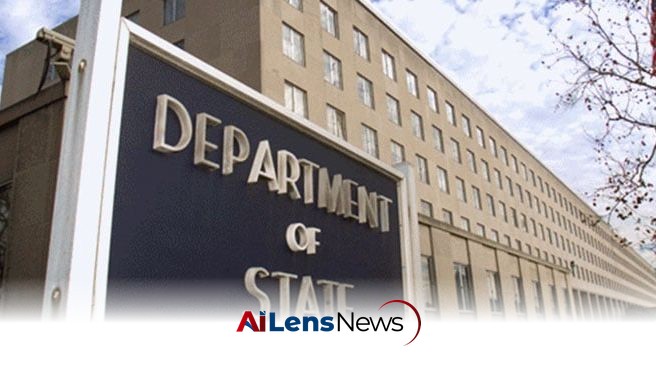


The US State Department has authorized a significant arms sale to Saudi Arabia, aimed at enhancing its air defenses amidst escalating conflicts in the Middle East.
Islamabad, Pakistan Jul 16, 2026 ALN: The US State Department announced on Wednesday the approval of an estimated $1.96 billion in weapons sales to strengthen Saudi Arabia’s air defenses as tensions rise in the Middle East.
The State Department emphasized that this proposed sale aligns with the foreign policy and national security objectives of the United States, aiming to enhance the security of a Major non-NATO Ally that contributes to political stability and economic progress in the Gulf Region. Saudi Arabia has long been considered a key partner for the US in the Middle East, particularly in terms of countering Iranian influence and maintaining the stability of global oil markets.
Included in the sale are up to 20,000 Advanced Precision Kill Weapon Systems along with their warheads. The US Navy describes these systems as an economical solution for destroying targets while minimizing collateral damage during close combat. This capability is particularly important in urban environments where civilian populations may be at risk. The precision of these weapons is designed to enhance the effectiveness of Saudi military operations, particularly in the context of ongoing conflicts in the region.
The principal contractor for this sale will be BAE Systems, based in Nashua, New Hampshire. BAE Systems is one of the largest defense contractors in the world and has a long history of providing military equipment to both the US and its allies. The involvement of such a prominent contractor underscores the significance of this arms deal, not only for Saudi Arabia but also for the US defense industry, which relies heavily on international sales to sustain its operations and workforce.
The State Department stated, “The proposed sale will improve Saudi Arabia’s capability to deter current and future threats by strengthening its homeland defense and enhancing interoperability with US forces, as well as other regional and NATO forces.” This interoperability is crucial in a region where multiple nations are engaged in complex military operations, often with overlapping interests and objectives. The ability for Saudi forces to work seamlessly with US and allied forces can be a decisive factor in addressing threats posed by adversaries in the region.
This arms deal comes at a time when Saudi Arabia is facing renewed threats from Yemen’s Iran-backed Houthi rebels, who recently launched missiles at an airport in the southern Saudi city of Abha. The attack on Abha airport is part of a broader pattern of Houthi aggression, which has included drone strikes and missile attacks targeting Saudi infrastructure and military installations. These actions are often viewed as a direct response to the Saudi-led coalition’s ongoing military campaign against the Houthis in Yemen, which has been marked by significant violence and humanitarian crises.
The Houthi attack followed a strike by the Yemeni government on Sanaa airport, aimed at diverting a flight returning from the Iranian supreme leader’s funeral that was carrying a Houthi delegation. The Houthis have accused Riyadh of being responsible for the attack. This incident highlights the intricate web of alliances and hostilities in the region, where actions taken by one party can provoke retaliatory measures from another, further escalating tensions. The ongoing conflict in Yemen, which has resulted in a humanitarian disaster, continues to be a focal point of regional instability.
Additionally, the United States has intensified its military actions against Iran, reinstating a naval blockade as hostilities escalate. This blockade is part of a broader strategy to contain Iranian influence in the region, particularly in light of Iran's support for proxy groups such as the Houthis, Hezbollah in Lebanon, and various militia groups in Iraq. The US has expressed concerns that Iran's activities threaten not only regional stability but also the security of international shipping routes in the Persian Gulf, which are vital for global trade and energy supplies.
The State Department reassured that “there will be no adverse impact on US Defense readiness as a result of this proposed sale.” This statement is particularly significant as it reflects the US administration’s commitment to maintaining its military capabilities while simultaneously supporting its allies. The US military presence in the region is a key element of its strategy to deter aggression from Iran and to reassure allies like Saudi Arabia, who may feel vulnerable amidst rising tensions. The balance of power in the Gulf is delicate, and the US aims to prevent any single nation from dominating the region.
The approval of this arms sale also comes amid a backdrop of complex geopolitical dynamics in the Middle East. The relationship between the US and Saudi Arabia has been historically strong, although it has faced challenges in recent years due to concerns over human rights issues, particularly in relation to Saudi actions in Yemen. Critics of arms sales to Saudi Arabia often point to the humanitarian crisis in Yemen, which has been exacerbated by the ongoing conflict and the Saudi-led blockade. The situation in Yemen has drawn international condemnation, and many humanitarian organizations have called for an end to the arms trade with Saudi Arabia until the conflict is resolved.
Moreover, the sale is likely to draw scrutiny from human rights organizations and some members of the US Congress, who may question the implications of providing advanced weaponry to a country involved in a protracted conflict that has resulted in significant civilian casualties. The humanitarian situation in Yemen is dire, with millions facing food insecurity and lack of access to basic healthcare services. As such, the arms sale could spark renewed debate over the US's role in the conflict and the ethical considerations of supporting a military that is engaged in operations that have been widely criticized. The moral implications of military sales are increasingly becoming a point of contention in US foreign policy discussions.
In conclusion, the US's approval of a $1.96 billion arms sale to Saudi Arabia reflects a strategic decision to bolster the defenses of a key ally in a region fraught with instability and conflict. While the sale is framed as a measure to enhance security and deter threats, it also raises important questions about the humanitarian implications of such support and the broader geopolitical ramifications of US military involvement in the Middle East. As tensions continue to rise, the effectiveness of these weapons systems and the impact of US policy in the region will be closely monitored by both allies and adversaries alike. The unfolding situation in Yemen and the broader Middle East will likely influence future US foreign policy decisions and arms sales, as the US grapples with balancing national security interests with humanitarian considerations.
To learn more about the latest developments in World News & International Affairs, stay updated with our exclusive reports and analyses on AiLensNews.

