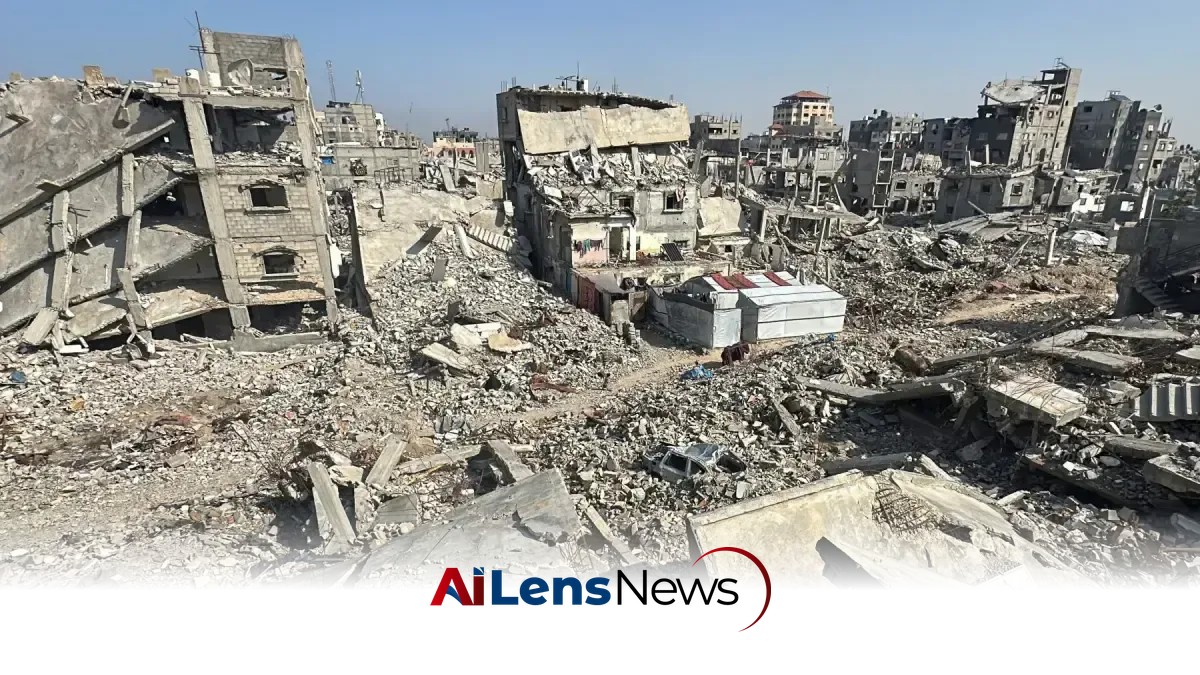


The Gaza reconstruction initiative under Trump's Board of Peace has been reduced to a small pilot project, focusing on temporary housing for a fraction of the population.
Islamabad, Pakistan Jul 17, 2026 ALN: The recovery plan for Gaza, which has been devastated by years of conflict, has undergone significant changes under the leadership of US President Donald Trump’s Board of Peace (BoP). Initially envisioned as a comprehensive reconstruction initiative for the entire territory, the plan has now been scaled back to focus on a small pilot project in the southern region of Gaza. This shift in strategy was reported by the British publication The Guardian on Thursday, highlighting the challenges faced in implementing a broader recovery effort.
The Board of Peace was first proposed in September 2025 and officially established in January of the following year. Its charter designates the US government as the official depository, with the Donald J Trump Institute of Peace in Washington serving as the Board’s headquarters. This initiative aims to provide a structured approach to rebuilding and stabilizing Gaza following decades of conflict and humanitarian crises.
In mid-November of last year, a UN Security Council resolution was adopted, granting authority to the BoP and cooperating states to establish an international stabilization force in Gaza. This development came in the wake of a ceasefire that began in October, which was facilitated by a Trump-backed plan that received acceptance from both Israel and Hamas. The establishment of this stabilization force is seen as a crucial step in ensuring security and facilitating reconstruction efforts in the region.
According to The Guardian, the new pilot project aims to construct a temporary camp for a limited number of Gaza’s population. This camp is expected to include a Palestinian administration, local police, and a small contingent of the International Security Force (ISF) to maintain order and security. However, the timeline for the realization of this project remains uncertain, with expectations that it will not take shape before the end of 2026.
Despite the delays, some preliminary steps have been initiated in recent weeks. Reports indicate that officers from Morocco and Kosovo have arrived in Israel to help form the ISF, which is intended to protect the pilot camp. Additionally, a logistics base is reportedly under construction near Kerem Shalom to accommodate the ISF’s vehicles and equipment. This logistical groundwork is essential for the eventual establishment of the pilot camp, which is planned to be located near Rafah.
However, construction of the camp itself has not yet commenced. Satellite imagery has revealed that while there has been some disturbance of the earth in the area, no new structures have been erected. Significant progress on the project is not anticipated before Israel's elections on October 27, which could potentially alter the political landscape and impact ongoing efforts in Gaza. The outcome of these elections may lead to shifts in policy and priorities regarding Gaza reconstruction.
An unnamed diplomat quoted in the report expressed concerns about the BoP’s current strategy, indicating that there is a pressing need to maintain momentum in the reconstruction process. The diplomat noted that any admission of failure could empower extreme factions within the Israeli government, which may advocate for more radical approaches to Gaza, including population transfers and colonization efforts. This highlights the precarious balance that the BoP must navigate in its attempts to stabilize the region.
There are escalating fears that Israeli Prime Minister Benjamin Netanyahu, facing potential electoral defeat, may resort to military action in Gaza before the upcoming vote. This concern is underscored by statements from Israeli officials who have suggested that a return to conflict is inevitable, primarily due to Hamas’s refusal to disarm. Conversely, Hamas has indicated a willingness to consider disarmament under specific conditions, and recent negotiations in Cairo have focused on potential mechanisms for achieving this goal.
Despite these discussions, Hamas's commitment to disarmament remains tenuous, particularly in light of ongoing Israeli military strikes and the continued occupation of significant portions of Gaza. The complex interplay of military and political dynamics in the region poses significant challenges to any reconstruction efforts.
In January, Jared Kushner, Trump’s son-in-law and senior advisor, made a bold pledge to expand aid access and restore essential infrastructure in Gaza, including water, sewage, and electricity systems, as well as healthcare facilities and food supplies, within a 100-day timeframe. However, the current pilot camp proposal appears to diverge significantly from these ambitious goals, focusing instead on providing temporary shelter for a fraction of the displaced population.
The pilot camp, as outlined in the current blueprint, is expected to consist of portable cabins designed to accommodate tens of thousands of displaced Palestinians. It will be established in the buffer zone along the ceasefire line near Rafah, with oversight from the ISF and a specially trained Palestinian police force. While the plan prioritizes the settlement of former Rafah residents, the criteria for vetting other Palestinians seeking to move into the camp remain unclear, raising questions about the inclusivity and fairness of the process.
The report also touches upon the financial aspects of the reconstruction effort, revealing that only a fraction of the $17 billion initially pledged for Trump’s 20-point peace plan has been realized. This shortfall in funding poses a significant obstacle to effective recovery and rebuilding efforts in Gaza, where the humanitarian situation remains dire.
Pakistan is among the 14 countries that signed the charter of the Board of Peace on January 22, becoming a founding member of the organization. Other founding members include a diverse array of nations from different regions, including Argentina, Armenia, Azerbaijan, and several countries from the Middle East and Asia. This broad coalition reflects the international community's recognition of the need for a coordinated approach to peace and reconstruction in conflict-affected areas.
Originally conceived to oversee the ceasefire and reconstruction of Gaza, the BoP's charter has since expanded its mandate to encompass peace-building efforts in all areas affected by or at risk of conflict. This broader focus underscores the complexity of the challenges facing Gaza and the necessity for a multifaceted approach to achieving lasting peace and stability in the region.
To learn more about the latest developments in World News & International Affairs, stay updated with our exclusive reports and analyses on AiLensNews.

