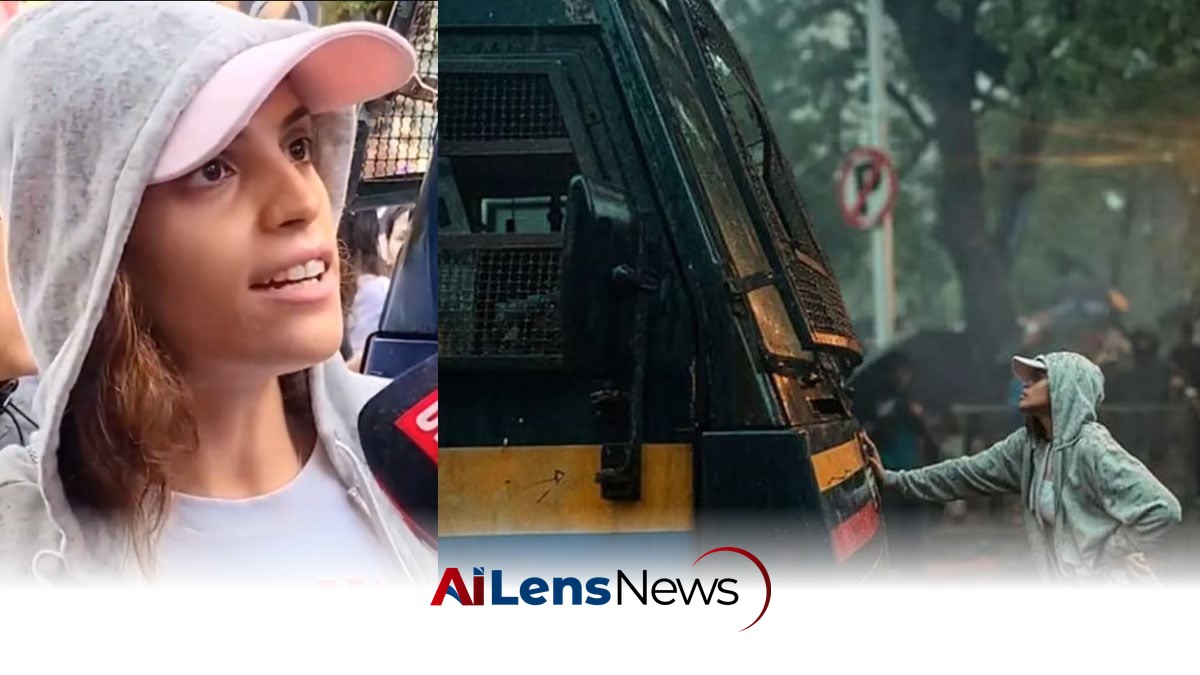


Rhiya Ahir, a model and entrepreneur, gained fame for blocking a police van during student protests in Mumbai, advocating for the release of detained protesters.
Islamabad, Pakistan Jul 26, 2026 ALN: One of the defining images to emerge from the ongoing student protests in India shows a Mumbai Police van packed with detained protesters—and a young woman standing directly in its path.
Rhiya Ahir, a model, actor and entrepreneur, has become one of the most recognisable faces of the demonstrations after she blocked a Mumbai Police vehicle near Shivaji Park and demanded the immediate release of the students inside. Her actions have sparked significant dialogue about civil rights, police accountability, and the role of individuals in social movements.
Videos and photographs of Ahir confronting the police quickly went viral on social media, amplifying her impact beyond the immediate scene of the protest. The moment encapsulated the growing frustration among students and activists regarding police actions during the protests, which have been marked by allegations of excessive force and wrongful detentions.
Convinced that the protesters were being detained unnecessarily, she ran towards the vehicle and stood in front of it to stop it from moving. The act of physically obstructing a police vehicle is not only a bold statement but also a risky one, as it can lead to direct confrontation with law enforcement. Ahir's decision to intervene was driven by a strong sense of justice and a belief in the right to protest.
Viral social media videos show that a bystander unlocked the police van and freed the detained students, highlighting the collective spirit of the protest and the community's willingness to stand up against perceived injustices. This spontaneous act of solidarity reflects a broader cultural shift among youth in India, who are increasingly vocal about their rights and the need for accountability from authorities.
“I couldn’t help myself. Their chants pulled me towards them,” she said, underscoring the emotional pull of the protest and the solidarity felt among the demonstrators. The chants of the students likely resonated with her own beliefs about freedom of expression and the importance of standing up for one another in times of crisis.
According to Ahir, the confrontation soon became heated. She said police officers told her the detainees would be released after the van had travelled some distance, but she refused to accept the explanation. This exchange reflects a common tactic used by law enforcement to diffuse situations, but Ahir's insistence on immediate action illustrates a growing impatience with such practices.
“If you’re going to release them anyway, release them now,” she recalled telling the officers. Her assertiveness in this moment not only highlights her personal bravery but also serves as a call to others to take action when they witness injustice. Ahir further alleged that police failed to provide a clear justification for the detentions, a claim that resonates with numerous reports of arbitrary arrests during protests across the country.
“They didn’t say anything. They knew that they were in the wrong,” she claimed, reflecting a sentiment echoed by many activists who have faced similar situations. The lack of transparency and accountability from law enforcement during protests raises significant concerns about civil liberties and the right to peaceful assembly, which are fundamental to democratic societies.
Despite appearing calm in the widely shared videos, Ahir said she was frightened throughout the encounter. “When I confronted them, I was shaking on the inside. I knew that what I was doing was right,” she said. This juxtaposition of fear and conviction illustrates the emotional complexity of activism, where individuals often grapple with their own safety while feeling compelled to advocate for others.
According to Ahir, she remained in front of the van until the detained protesters were released. Her determination to stand firm in the face of authority showcases the power of individual action in the context of collective movements. She said several students thanked her afterward, while some jokingly referred to her as “a baddie,” a term that reflects admiration for her bravery and willingness to challenge the status quo.
Ahir said she intervened because she feared the students could be formally detained and face criminal cases if they were taken away. “I knew that if they were taken away, they would be detained and FIRs would be registered against them. That’s something I had to step in for. I just knew that, as a citizen, I would fail if I didn’t do anything about it,” she said. Her perspective underscores a growing awareness among young people in India about the potential ramifications of police actions during protests, including the long-term impact on individuals' lives and futures.
Known on Instagram as Rhiya Ekousiya, Ahir works in acting, modelling, hosting and entrepreneurship. She is the founder of the luxury clothing brand Rhiyasat and has appeared in several dance projects. Her latest music video, Dilbara, was released in February 2025, showcasing her multifaceted career. However, her recent actions have positioned her as not just a public figure in the entertainment industry but also a symbol of resistance and empowerment.
Her intervention has drawn widespread attention on social media, with many users praising her actions and describing her as a symbol of courage and civil resistance. The viral nature of her confrontation with the police has sparked discussions about the role of social media in activism, allowing individuals to galvanize support and share their messages with a broader audience.
In another video shared online, Ahir said that while she understood police officers were carrying out their duties, she believed they had a responsibility to act more responsibly. “I understand that they are doing their job, but they are not doing it responsibly. If they don’t behave responsibly, we must take responsibility for our citizens. What they did with students in Delhi was wrong, and they have to own up,” she said. This statement reflects a growing demand for accountability from law enforcement agencies in India, particularly in light of recent incidents where police actions during protests have been criticized for being excessive or unjustified.
The incident occurred amid a broader police crackdown on the ongoing student protests, which have emerged as a significant movement in India, addressing issues such as educational reform, social justice, and governmental accountability. The protests have garnered support from various sectors of society, indicating a widespread discontent with the status quo and a desire for change.
According to Mumbai Police, 13 cases were registered and around 400 people were booked between July 18 and July 22 in connection with the demonstrations. The cases involve allegations including unlawful assembly and violations of prohibitory orders. This crackdown has raised concerns about the right to protest and the measures taken by authorities to suppress dissent. The implications of such actions extend beyond the immediate context of the protests, as they can have lasting effects on civil society and the willingness of individuals to engage in activism.
As the protests continue, the actions of individuals like Rhiya Ahir serve as a reminder of the power of individual agency in the face of systemic challenges. Her story has resonated with many, illustrating that courage can manifest in various forms and that standing up for what is right can inspire others to do the same. The ongoing dialogue surrounding these protests highlights the importance of civic engagement and the role of citizens in holding authorities accountable, ultimately shaping the future of democratic discourse in India.
To learn more about the latest developments in Crime & Law, stay updated with our exclusive reports and analyses on AiLensNews.

