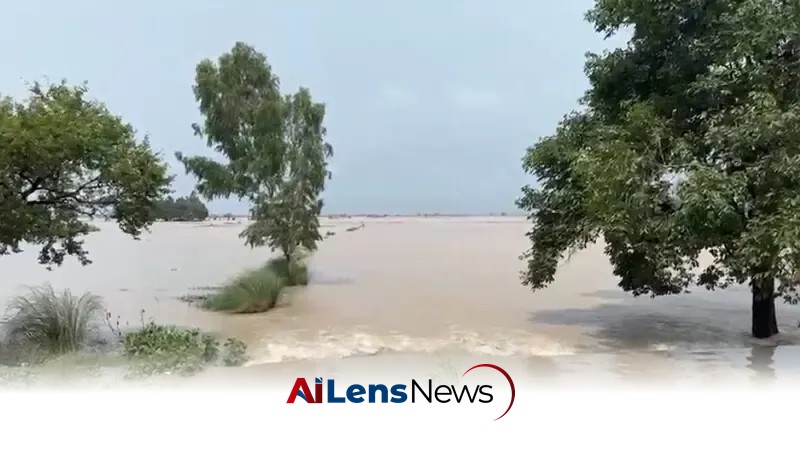


Punjab faces significant flooding, with the Chenab and Ravi rivers expected to reach medium to high flood levels, prompting urgent response measures.
Islamabad, Pakistan Jul 26, 2026 ALN: Severe flooding in Punjab has raised alarms as the Chenab and Ravi rivers approach medium to high flood levels, exacerbated by ongoing torrential rains. This situation has led to extensive inundation, affecting nearly 400 square kilometers of land and causing significant damage to crops, livestock, and infrastructure across the region. Local authorities are mobilizing resources to respond to this crisis, establishing relief camps to assist those affected.
The current flooding crisis in Punjab is not an isolated incident but part of a broader pattern of extreme weather events that have been observed in recent years. The monsoon season, traditionally a time for agricultural replenishment in the region, has increasingly been marked by unpredictable and severe weather, leading to devastating floods. The Punjab irrigation department has reported that the situation is particularly alarming this year, with vast expanses of water transforming areas in Sheikhupura, Muridke, Gujranwala, Narowal, Sambrial, and Pasrur into what resembles an inland sea.
According to a senior official from the Punjab irrigation department, the flow of water in the Ravi River at Shahdara, Lahore, currently stands at 22,000 cusecs, but downstream at Balloki, it has surged to 87,000 cusecs. This substantial increase raises concerns about the management of water flow and the capacity of drainage systems in place. The official pointed out that typically, one would expect the flow to decrease as it moves downstream, yet the opposite is occurring due to the influx of water from both rainfall and overflowing drains. The implications of this situation are dire, as it may take three to four days for conditions to normalize, assuming no additional rainfall occurs.
The Flood Forecasting Division (FFD) of the Pakistan Meteorological Department has issued warnings regarding the rising water levels in the Chenab and Ravi rivers. While both rivers are currently at medium to low flood levels, projections indicate that they may escalate to medium to high flood levels within the next 24 hours. Specifically, the Chenab River is expected to remain at medium to high levels at key monitoring points such as Marala, Khanki, and Qadirabad. Similarly, the Ravi is likely to reach concerning levels at Balloki (Kasur) and Sidhnai (Khanewal).
The FFD report has also noted that other major rivers, including the Indus and Kabul, are currently at low flood levels and flowing within their normal ranges, which provides a slight relief amidst the chaos. However, the anticipation of more rainfall on Sunday has prompted district administrations in Lahore, Gujranwala, Sheikhupura, Sialkot, Narowal, Khanewal, and other areas to heighten their flood monitoring and preparedness efforts.
In response to the flooding, local officials are actively assessing the situation and implementing emergency response measures. The Deputy Commissioner of Lahore and his team have been deployed to the affected areas, particularly around the Hudiara drain, where they are closely monitoring drainage operations and the flow of rainwater. Their efforts are crucial in managing the immediate impacts of the flooding and ensuring that the drainage systems are functioning effectively to mitigate further damage.
Additionally, the Lahore commissioner has taken proactive steps by visiting Nankana Sahib to review the flood situation and emergency response arrangements. His inspections included areas experiencing river erosion, where he was briefed on the ongoing evacuation and relief efforts. The directive to desilt choking points in the Nullah Dek is part of a broader strategy aimed at enhancing the region's resilience against flooding.
In Khanewal, District Commissioner Hena Arshad has been actively involved in inspecting flood protection measures at critical sites such as the Sidhnai headworks and various bunds. Her focus on preparedness underscores the importance of having robust flood defenses in place, especially as climate change continues to influence weather patterns and the frequency of extreme weather events.
This year's flooding crisis highlights the urgent need for improved infrastructure and disaster management systems in Punjab. The region has historically faced challenges related to water management, and the increasing severity of flooding events calls for a reevaluation of existing policies and strategies. Experts suggest that long-term solutions must include investments in drainage infrastructure, better land-use planning, and comprehensive flood management strategies that take into account the impacts of climate change.
As the situation develops, the immediate focus remains on providing relief to those affected by the floods. Relief camps have been set up to accommodate displaced individuals and families, offering them shelter and essential supplies. The humanitarian response is critical in alleviating the suffering of those impacted, as many have lost their homes and livelihoods due to the flooding.
In conclusion, the severe flooding in Punjab serves as a stark reminder of the vulnerabilities faced by the region in the face of changing climate dynamics. It underscores the necessity for both immediate action and long-term planning to safeguard communities from the devastating effects of such natural disasters. As authorities continue to respond to the current crisis, the lessons learned will be vital in shaping future preparedness and resilience efforts in Punjab and beyond.
The implications of this flooding crisis extend beyond the immediate humanitarian needs. The destruction of crops and livestock threatens the livelihoods of farmers and could lead to food shortages in the coming months, especially as the region relies heavily on agriculture for its economy. The loss of infrastructure, such as roads and bridges, may hinder access to markets and essential services, further exacerbating the economic impact of the floods.
Moreover, the psychological toll on affected communities cannot be overlooked. Many individuals and families face trauma from losing their homes and the uncertainty of their future. The need for mental health support and community rebuilding efforts will be essential as the recovery process begins.
In light of these challenges, the government and local authorities are under pressure to not only provide immediate relief but also to develop comprehensive strategies that address the root causes of flooding. This includes improving weather forecasting systems, investing in early warning systems, and enhancing community awareness about flood preparedness.
The ongoing crisis also highlights the importance of regional cooperation in managing water resources. Given that rivers like the Chenab and Ravi traverse multiple districts and provinces, collaborative efforts between various governmental bodies will be crucial in ensuring effective flood management and response strategies.
As the situation continues to unfold, it remains imperative for both local and national authorities to engage with experts, NGOs, and community leaders to create a unified approach to disaster management. The experiences from this flooding crisis should inform future policies and practices, aiming to build a more resilient Punjab capable of withstanding the challenges posed by climate change and extreme weather events.
To learn more about the latest developments in Crime & Law, stay updated with our exclusive reports and analyses on AiLensNews.

