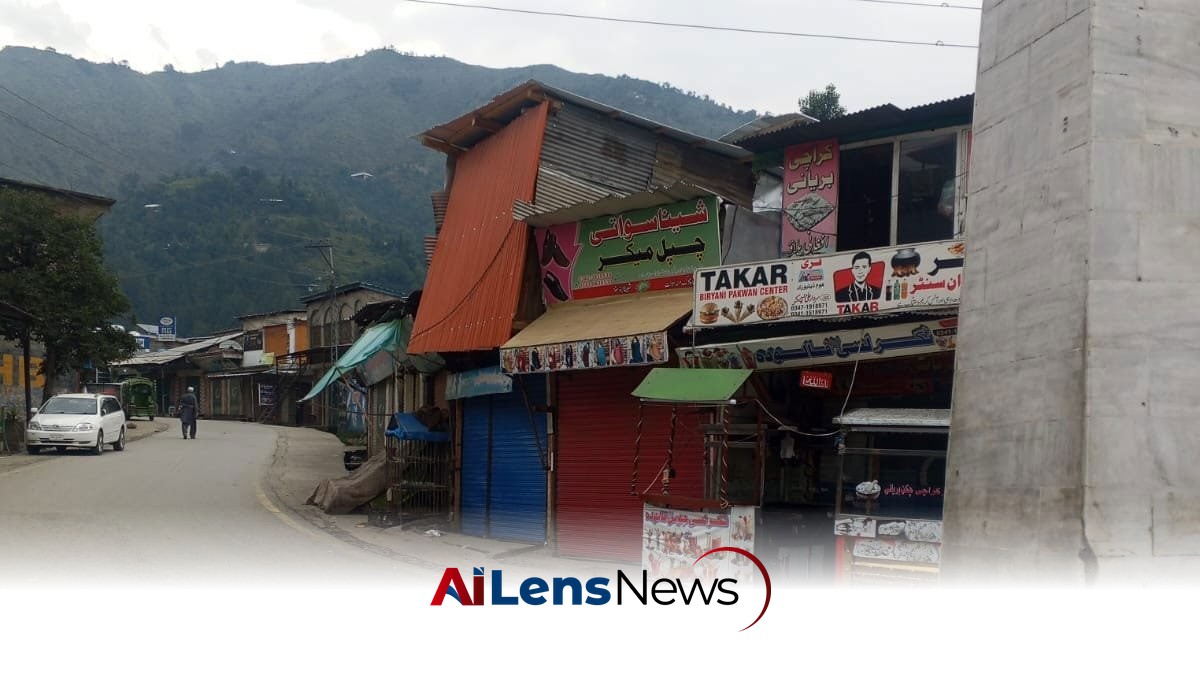


Traders in Malakand Division observed a complete strike to protest the proposed taxes, demanding their immediate withdrawal due to the region's tax-exempt status.
Islamabad, Pakistan Jul 21, 2026 ALN: LOWER DIR / UPPER DIR: Traders across Malakand Division, including the districts of Lower Dir, Upper Dir, and Malakand, observed a complete shutter-down and wheel-jam strike on Tuesday to protest the proposed imposition of taxes in the region.
Markets and commercial centres remained closed in Batkhela, Dargai, Sakhakot, Wari, Akhagram, Kumrat, Thal, Dir Khas, Jagam, Barawal, and Darora, while businesses across other parts of the division also suspended operations. This coordinated effort highlighted the unity among traders in expressing their discontent with the proposed taxation policies.
All business establishments, including medical stores, vegetable markets, butcher shops, and private clinics, remained closed. Most private schools in Upper Dir also remained shut in support of the strike. The impact of the strike was felt widely, with many residents unable to access essential goods and services due to the closure of shops and markets. This disruption not only affected traders but also the general populace, who rely on these businesses for daily necessities.
The strike call was given by the Malakand Trade Federation, an organization representing the interests of traders in the region. Traders’ leaders demanded the immediate withdrawal of the proposed taxes, arguing that Malakand Division enjoys a constitutionally and legally recognized tax-exempt status. This claim is rooted in the historical context of the region, which has long been considered economically disadvantaged compared to other parts of the country.
Malakand Division has faced numerous challenges over the years, including natural disasters such as floods and landslides, which have further hampered its development. The economic landscape of the region has been characterized by high unemployment rates and limited access to resources, making the imposition of additional taxes particularly burdensome for its residents. Traders argue that the proposed taxes would exacerbate these existing economic hardships, leading to a decline in business activity and, consequently, a deterioration in the overall quality of life for the local population.
The business community warned that the proposed taxes would negatively affect both traders and the general public. Many small business owners expressed fears that increased taxation would lead to higher prices for goods and services, thereby reducing consumer spending and harming the local economy. Furthermore, there are concerns that such measures could drive some businesses to closure, resulting in job losses and further economic decline.
Meanwhile, the Khyber Pakhtunkhwa Bar Council announced a boycott of court proceedings in protest against the proposed taxation. As a result, lawyers did not appear before subordinate courts across Malakand district during the day. This legal community's involvement in the protest underscores the widespread discontent with the proposed tax measures, as it highlights the potential implications for access to justice and legal representation in the region. The boycott serves as a reminder of the interconnectedness of economic and legal issues, particularly in a region that has historically faced challenges in both areas.
Earlier, Khyber Pakhtunkhwa Chief Minister Muhammad Sohail Afridi announced the abolition of all provincial taxes imposed in the merged districts (erstwhile FATA) and Malakand Division. This announcement was made during a consultative meeting on the taxation issue held at the Chief Minister’s House. The meeting, chaired by the chief minister, was attended by political leaders, representatives of the business community, and members of civil society. The decision to abolish these taxes was seen as a response to the mounting pressure from traders and residents, who have consistently voiced their opposition to taxation in a region already grappling with economic challenges.
The move comes amid growing opposition to the implementation of taxes in the merged districts and the Provincially Administered Tribal Areas (PATA), where traders and residents have expressed concerns over their potential economic impact. The historical context of tax exemptions in these regions has created a sense of entitlement among local communities, who feel that imposing new taxes would be unjust given their socio-economic conditions.
In addition to the immediate economic implications, the proposed tax imposition also raises broader questions about governance and representation in the region. Many residents feel that their voices are not adequately represented in provincial decision-making processes, leading to a sense of disenfranchisement. The protests and strikes reflect a growing desire among the people of Malakand Division to have a say in the policies that affect their lives and livelihoods.
The situation in Malakand Division is emblematic of larger trends in Pakistan, where issues of taxation, governance, and economic development are often intertwined. As the government grapples with the challenges of revenue generation and economic growth, it must also consider the unique circumstances of regions like Malakand, where the imposition of taxes could have disproportionate effects on vulnerable populations.
The ongoing protests and strikes in Malakand Division serve as a reminder of the importance of inclusive dialogue and consultation in the policymaking process. As the provincial government navigates the complexities of taxation and economic development, it will be crucial to engage with local communities and stakeholders to ensure that policies are equitable and responsive to the needs of the people.
As the situation develops, it will be important to monitor the responses from both the government and the business community. The outcome of this conflict could set a precedent for future taxation policies in similar regions, influencing the balance between revenue generation and economic sustainability. The stakes are high, not only for the traders and residents of Malakand Division but also for the broader economic landscape of Khyber Pakhtunkhwa and Pakistan as a whole.
To learn more about the latest developments in Politics, stay updated with our exclusive reports and analyses on AiLensNews.

