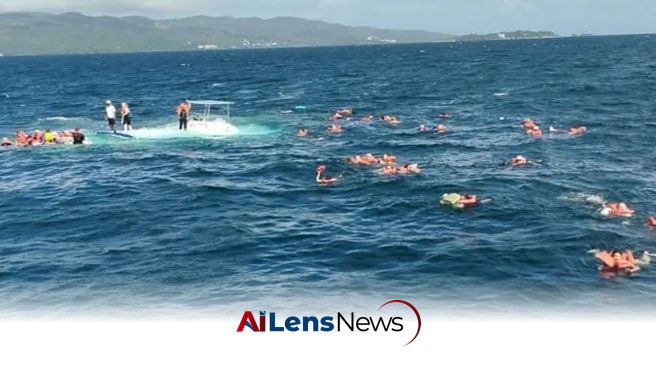


Five survivors, including a young girl, were rescued after their boat sank near Selayar, Indonesia, leading to a three-day ordeal at sea.
Islamabad, Pakistan Jul 19, 2026 ALN: JAKARTA, Indonesia: Five survivors from a passenger boat that sank off eastern Indonesia, including a seven-year-old girl, have been rescued after floating at sea for three days, a rescue official said on Sunday.
The vessel, which was carrying more than 70 people, sank on Wednesday as it sailed near Selayar, a small island south of the larger Sulawesi. The incident has raised significant concerns regarding maritime safety in Indonesia, a nation comprised of over 17,000 islands and heavily reliant on boats for transportation. The geography of Indonesia, characterized by its extensive coastline and numerous islands, makes maritime travel a vital component of daily life for many citizens. Ferries and small boats serve as lifelines for isolated communities, connecting them to larger urban centers for trade, education, and healthcare.
Survivors reported that they were part of a group of 25 people earlier thought to be missing. They became separated from the others due to heavy winds that made navigation treacherous. Local search-and-rescue official Muhammad Arif Anwar explained the desperate measures taken by the survivors: “After the ship sank, each of them saved themselves using whatever equipment or makeshift flotation they could find.” This included rigging together jerry cans and pieces of cork tied up with rope, which they used to keep afloat in the open sea. Such resourcefulness is a testament to the survival instincts that kick in during emergencies, but it also raises questions about the adequacy of safety equipment and training provided to passengers and crew on Indonesian vessels.
The group was ultimately rescued on Saturday afternoon by local fishermen, who spotted them and promptly radioed for help. The survivors appeared exhausted and weak after enduring days at sea without adequate food or water. However, they managed to sustain themselves with packets of instant noodles and biscuits, highlighting their resourcefulness in a dire situation. Their survival story has drawn attention not only to their personal ordeal but also to the broader issues of maritime safety and preparedness that affect countless others who travel by boat in the region.
In the aftermath of the sinking, search efforts intensified, with five large ships, a reconnaissance aircraft, and a helicopter deployed to locate the remaining individuals who are still unaccounted for. This multi-faceted approach underscores the urgency and importance of finding those missing, as hopes for their survival diminish with each passing hour. The search and rescue operations were complicated by the challenging weather conditions typical of the region, which can shift rapidly and create dangerous sea states.
Initial reports indicated that the vessel had only 50 people on board, but further verification revealed that there were actually 78 passengers. This discrepancy is not uncommon in Indonesia, where it is often the case that the number of actual passengers on a boat does not match the manifest. Such inconsistencies can complicate rescue operations and highlight the challenges faced in ensuring maritime safety. The lack of accurate passenger manifests can hinder rescue efforts, as search teams may not know how many people are missing or where they might be located.
Accidents at sea are a frequent occurrence in Indonesia, largely due to lax safety standards and the unpredictable nature of weather conditions in the region. The Indonesian archipelago is prone to sudden storms and rough seas, which can quickly make navigation perilous. The government has faced criticism for its failure to enforce stricter safety regulations on passenger vessels, which often operate without adequate oversight. Many boats lack essential safety features, such as life jackets, emergency beacons, and communication devices, which are critical for ensuring passenger safety in emergencies.
This incident is not the first of its kind. In January, three Spanish tourists tragically lost their lives when their boat sank off eastern Indonesia, and a 10-year-old boy was reported missing after authorities concluded their search efforts. Such incidents have raised alarms about the overall safety of maritime travel in Indonesia, prompting calls for reform and stricter enforcement of safety protocols. Each tragedy serves as a reminder of the vulnerabilities faced by travelers in this archipelago, where maritime accidents can lead to loss of life and devastating consequences for families and communities.
In response to these recurring tragedies, some advocacy groups have urged the Indonesian government to take immediate action to improve safety measures on passenger vessels. Proposals include mandatory safety drills for crew members, regular inspections of vessels, and the implementation of stricter penalties for operators who do not adhere to safety regulations. Furthermore, there is a growing demand for public awareness campaigns to educate passengers about safety practices while traveling by boat. These initiatives could empower travelers to take responsibility for their safety and make informed choices when selecting transportation options.
As the search continues for those still missing, the hope remains that more survivors will be found. The resilience demonstrated by the five individuals rescued serves as a testament to the human spirit's ability to endure even in the most challenging circumstances. However, this incident also serves as a somber reminder of the need for systemic changes to prevent future tragedies at sea. The government, maritime authorities, and operators must work together to create a safer environment for all who travel by sea.
In conclusion, the sinking of the passenger boat near Selayar is a stark illustration of the risks associated with maritime travel in Indonesia. It highlights the urgent need for enhanced safety standards, better enforcement of regulations, and increased public awareness to ensure the safety of passengers in this vast archipelago. As rescue operations continue, the focus must also shift towards preventing such incidents from occurring in the future, ensuring that the waters surrounding Indonesia are safe for all who travel upon them. The ongoing dialogue surrounding maritime safety in Indonesia is crucial not only for the immediate response to this tragedy but also for the long-term protection of countless lives that depend on safe and reliable maritime transportation.
To learn more about the latest developments in World News & International Affairs, stay updated with our exclusive reports and analyses on AiLensNews.

