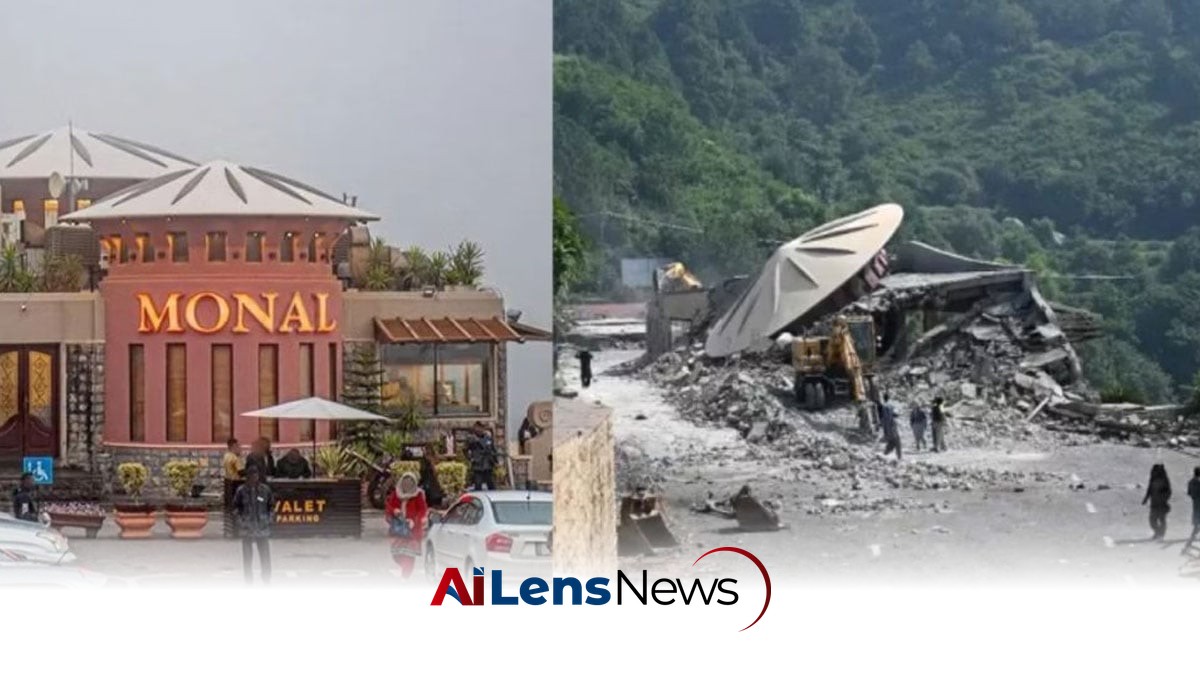


The Federal Constitutional Court has annulled the demolition order for Monal Restaurant, reinstating the case for trial court review.
Islamabad, Pakistan Jul 13, 2026 ALN: The Federal Constitutional Court (FCC) has set aside the order directing the demolition of the Monal Restaurant at Pir Sohawa, allowing appeals filed by the Capital Development Authority (CDA) and the Metropolitan Corporation to succeed.
The Monal Restaurant, a popular dining destination located in the picturesque Margalla Hills National Park, has been at the center of a significant legal battle over its status and operation within the national park's boundaries. The recent ruling by the FCC marks a pivotal moment in this ongoing dispute, which has implications for environmental regulations, urban development, and commercial activities in protected areas.
On June 11, 2024, the Supreme Court (SC) ordered the closure of Monal Restaurants and all other eateries operating within the Margalla Hills National Park in Islamabad. This decision was based on environmental concerns and the preservation of natural habitats, as the Margalla Hills National Park is recognized for its biodiversity and scenic landscapes. The Supreme Court bench, led by Chief Justice of Pakistan (CJP) Justice Qazi Faez Isa, emphasized the need to protect the ecological integrity of the national park.
The Supreme Court's ruling mandated that the administration close all restaurants in the Margalla Hills National Park within a 90-day timeframe, a move that was met with significant public and media attention. The court's decision also vacated a previous stay order that had allowed Monal Restaurant to continue operations while the legal proceedings unfolded. Furthermore, the Supreme Court instructed that the question of ownership and operational legality should be determined by the relevant trial courts, independent of previous judicial observations.
The Federal Constitutional Court's recent decision to overturn the demolition order has reignited discussions about the balance between development and environmental conservation. The FCC directed the trial courts to expedite the resolution of pending cases related to the restaurant, emphasizing that administrative matters should be resolved by the appropriate regulatory authorities. This ruling reflects a nuanced approach to the legal complexities surrounding the case, taking into account various factors that may have been overlooked in previous judgments.
During the hearing, Justice Hassan Azhar Rizvi raised concerns regarding the Supreme Court's earlier judgment, noting that several critical aspects had not been adequately considered. His comments suggest that the FCC is committed to ensuring that judicial decisions are grounded in comprehensive legal analysis rather than emotional or arbitrary reasoning. Justice Rizvi's remarks highlight the importance of thorough legal scrutiny in cases involving significant public interest, such as environmental protection and urban planning.
Justice Rizvi further criticized the earlier Supreme Court ruling for including matters that had not been formally presented before the court, reinforcing the principle that judicial decisions should be based on the arguments and evidence provided during proceedings. He asserted that the FCC would not issue a verdict that reads like a narrative, indicating a commitment to legal clarity and precision.
The implications of this legal battle extend beyond the Monal Restaurant itself. The outcome of this case could set a precedent for how similar establishments are treated within protected areas across Pakistan. It raises critical questions about the role of regulatory bodies like the Capital Development Authority and the Metropolitan Corporation in managing commercial activities in environmentally sensitive regions.
As urban areas continue to expand and the demand for recreational spaces increases, the tension between development and conservation becomes increasingly pronounced. The Margalla Hills National Park serves as a vital green space for the residents of Islamabad and visitors alike, offering recreational opportunities and contributing to the city's overall quality of life. However, the challenges of balancing commercial interests with environmental stewardship are evident in this ongoing legal saga.
The Monal Restaurant, known for its stunning views and diverse menu, has become a symbol of the struggle between development and environmental conservation. Its fate may influence other businesses operating in similar contexts, prompting a reevaluation of how commercial activities are permitted in national parks and protected areas throughout the country.
In light of the FCC's ruling, stakeholders, including environmentalists, business owners, and regulatory authorities, will need to engage in constructive dialogue to address the complexities of managing development in protected areas. This may involve revisiting existing policies, enhancing regulatory frameworks, and fostering collaborative approaches that prioritize sustainability while accommodating economic growth.
As the legal proceedings continue, the case of Monal Restaurant serves as a reminder of the intricate relationship between human activities and the natural environment. The decisions made in this context will have lasting effects on how Pakistan navigates the challenges of urbanization, conservation, and the rights of businesses operating within protected landscapes.
The ongoing debate surrounding the Monal Restaurant also reflects broader societal attitudes toward environmental conservation in Pakistan. As the country grapples with rapid urbanization and the impacts of climate change, the need for sustainable development practices has become increasingly urgent. This case could serve as a catalyst for change, prompting a reevaluation of how urban planning integrates environmental considerations.
The Margalla Hills National Park itself has a rich ecological heritage, home to numerous species of flora and fauna, some of which are endemic to the region. The park's preservation is critical not only for biodiversity but also for the ecosystem services it provides, such as air purification, carbon sequestration, and recreational opportunities for the public. The juxtaposition of commercial interests against these ecological imperatives raises important questions about the future of such protected areas in Pakistan.
In conclusion, the recent overturning of the demolition order for Monal Restaurant by the Federal Constitutional Court represents a significant development in an ongoing legal dispute that touches upon critical issues of environmental law, urban planning, and commercial regulation in Pakistan. As the case unfolds, it will be essential for all parties involved to consider the broader implications of their actions and decisions, ensuring that the interests of both the environment and the community are adequately addressed.
To learn more about the latest developments in Local & Regional, stay updated with our exclusive reports and analyses on AiLensNews.

