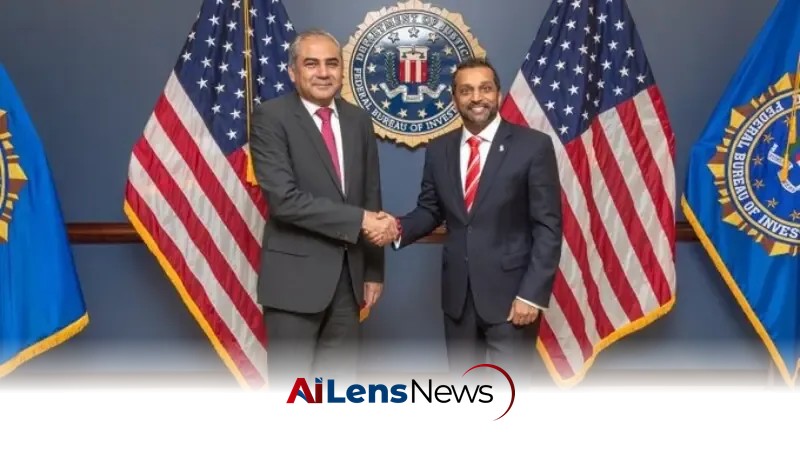


Kash Patel welcomed Mohsin Naqvi at the FBI headquarters, emphasizing the critical partnership between the US and Pakistan in counterterrorism efforts.
Islamabad, Pakistan Jul 14, 2026 ALN: Kash Patel, the director of the US Federal Bureau of Investigation (FBI), recently hosted Mohsin Naqvi, the Interior Minister of Pakistan, at the agency’s headquarters in Washington, D.C. This meeting underscores the importance of the relationship between the United States and Pakistan, particularly in the realms of security and counterterrorism. Patel characterized the ties between the two nations as "critical," reflecting the ongoing collaboration on various issues that impact both countries.
In a post shared on X, Patel expressed his gratitude for the opportunity to host Naqvi, emphasizing the significance of Pakistan's role in supporting US interests in the region. The United States has long viewed Pakistan as a key ally in South Asia, especially in the context of counterterrorism and regional stability. Patel stated, "The FBI deeply appreciates their support as we protect US interests in the region," highlighting the mutual benefits derived from this partnership.
The discussions between Patel and Naqvi were reported to focus on several crucial topics, including the facilitation of resources and specialized training aimed at combating counterterrorism financing and enhancing cyber investigations, both domestically and internationally. This emphasis on counterterrorism financing is particularly relevant given the increasing complexity of global terrorism financing mechanisms, which often transcend national borders. By collaborating on these issues, the FBI and the Pakistani government aim to strengthen their capabilities to tackle such challenges effectively.
Naqvi's visit to Washington was part of a broader diplomatic engagement, as he had recently represented Pakistan at the Fifth United Nations Chiefs of Police Summit held in New York. This summit serves as a platform for police leaders from around the world to share best practices, discuss challenges, and foster international cooperation in policing and security. On the sidelines of the summit, Naqvi met with various regional and international officials, indicating Pakistan's proactive approach to enhancing its global partnerships.
This meeting between Patel and Naqvi is not the first time the two officials have convened. Naqvi had previously met Patel in Washington in September 2025, a meeting he described as "excellent." During that earlier encounter, they discussed a range of cooperative efforts, including illegal immigration, counter-terrorism initiatives, and officer exchange programs. Naqvi praised Patel's professionalism and vision, stating that it made him a valuable partner in their collaborative efforts. Such exchanges are vital for fostering trust and understanding between law enforcement agencies from different countries, particularly in the context of shared security concerns.
The implications of these discussions are significant, especially as both countries navigate a complex geopolitical landscape. Pakistan has faced numerous challenges related to terrorism and extremism within its borders, while the United States continues to grapple with the evolving nature of threats posed by various extremist groups. By working together, both nations can leverage their respective strengths to enhance security and stability in the region.
Moreover, the cooperation between the FBI and Pakistan's Interior Ministry is indicative of a broader trend where countries are increasingly recognizing the need for collaborative approaches to tackle transnational threats. With the rise of cybercrime and the growing sophistication of terrorist financing networks, it is essential for countries to share intelligence, resources, and best practices to effectively combat these issues.
The partnership also holds potential for economic implications. Security and stability are crucial for fostering economic development, and by addressing security concerns through cooperation, both nations can create an environment conducive to trade and investment. The FBI's collaboration with Pakistani authorities may also open avenues for American businesses looking to operate in Pakistan, thereby strengthening economic ties between the two countries.
As the global environment continues to evolve, the relationship between the United States and Pakistan will likely remain a focal point of interest for policymakers and analysts alike. The ongoing dialogues and partnerships in law enforcement and counterterrorism not only serve immediate security needs but also lay the groundwork for a more stable and prosperous future for both nations.
In conclusion, the recent meeting between FBI Director Kash Patel and Pakistan's Interior Minister Mohsin Naqvi highlights the critical nature of US-Pakistan relations, particularly in the context of counterterrorism and security cooperation. As both nations continue to face complex challenges, their partnership will be essential in addressing these issues effectively. The discussions surrounding resource sharing and specialized training indicate a commitment to enhancing capabilities on both sides, ultimately contributing to a safer and more secure global landscape.
Historically, the relationship between the United States and Pakistan has been characterized by periods of cooperation and tension, shaped by various geopolitical events. After the September 11 attacks in 2001, Pakistan became a crucial ally in the US-led War on Terror, providing logistical support and intelligence sharing. However, over the years, differences have emerged regarding counterterrorism strategies, with the US often criticizing Pakistan for its alleged support of certain militant groups.
In recent years, both nations have sought to recalibrate their partnership, focusing on mutual interests in combating terrorism and ensuring regional stability. The evolving landscape of global terrorism, marked by the rise of groups such as ISIS and the persistent threat from al-Qaeda, has necessitated a more coordinated response from both the US and Pakistan. The FBI's engagement with Pakistani authorities is a testament to this renewed focus on collaboration.
Furthermore, the implications of this partnership extend beyond security. As both countries work together to combat terrorism and enhance law enforcement capabilities, they also contribute to broader regional stability. A stable Pakistan is essential for the security of South Asia, particularly given its proximity to India and Afghanistan. The US has a vested interest in ensuring that Pakistan remains a stable and cooperative partner in addressing regional challenges.
In addition to counterterrorism efforts, the discussions between Patel and Naqvi may also touch upon issues related to drug trafficking, human trafficking, and organized crime, all of which pose significant threats to both nations. By addressing these interconnected challenges, the FBI and Pakistan's Interior Ministry can develop a more comprehensive approach to security that encompasses a wide range of threats.
As technology continues to evolve, the focus on cyber investigations becomes increasingly critical. Cybercrime has emerged as a significant concern for law enforcement agencies worldwide, with criminals exploiting the internet for various illicit activities. The collaboration between the FBI and Pakistan in enhancing cyber investigations reflects a recognition of the need for a united front against cyber threats. This partnership may involve sharing intelligence on cyber threats, developing joint training programs, and enhancing technical capabilities to respond to cyber incidents.
Ultimately, the meeting between Patel and Naqvi signifies a commitment to a collaborative approach in addressing shared security challenges. As both nations work together, they not only enhance their own security but also contribute to global efforts to combat terrorism and transnational crime. The ongoing dialogue between the FBI and Pakistan's Interior Ministry serves as a reminder of the importance of international cooperation in an increasingly interconnected world.
In summary, the recent meeting between FBI Director Kash Patel and Pakistan's Interior Minister Mohsin Naqvi represents a significant step in the ongoing collaboration between the United States and Pakistan. The discussions surrounding counterterrorism financing, cyber investigations, and law enforcement cooperation reflect a commitment to addressing shared challenges in an evolving geopolitical landscape. As both countries navigate these complexities, their partnership will be critical in fostering security, stability, and mutual prosperity.
To learn more about the latest developments in Politics, stay updated with our exclusive reports and analyses on AiLensNews.

