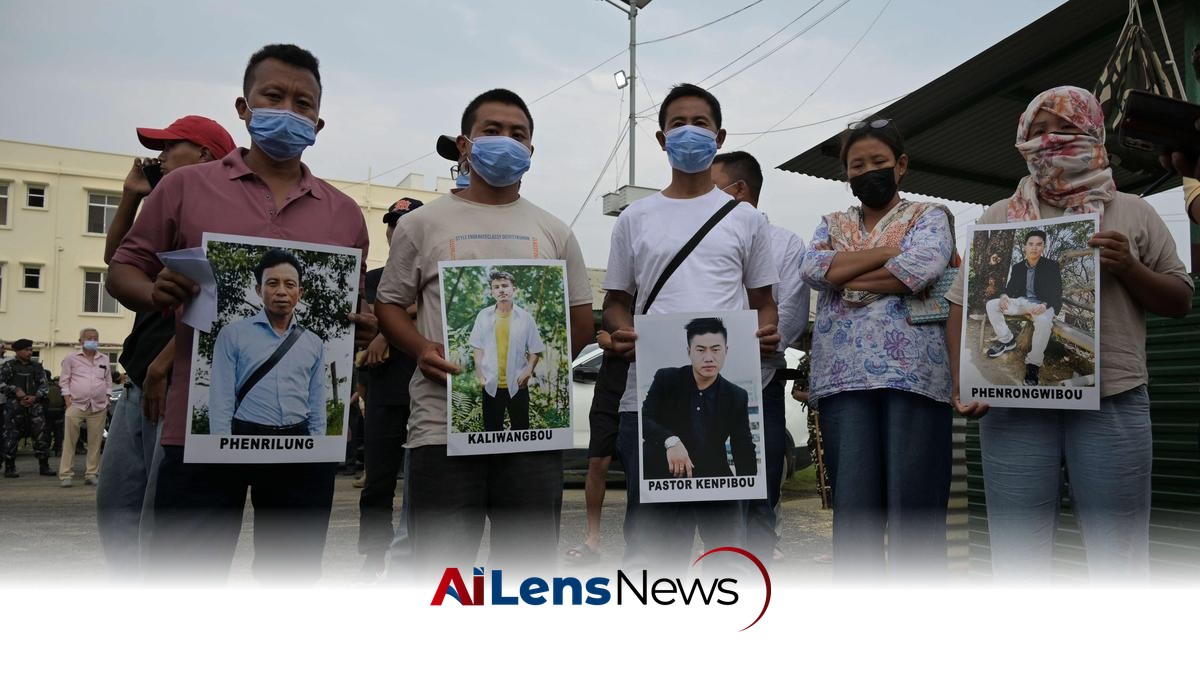


Investigation Agency arrests two suspects in the killing of six Naga civilians in Manipur, sparking community protests and calls for investigation.
New Delhi, India Jul 10, 2026 ALN: The recent arrest of two individuals in connection with the killing of six Naga civilians in Manipur has drawn significant attention to the ongoing ethnic tensions in the region. This incident, which occurred on May 13, 2026, has highlighted the complex dynamics between the Naga and Kuki communities, as well as the challenges faced by law enforcement in addressing violence linked to longstanding ethnic strife.
The arrests took place in the Kangpokpi district on July 10, 2026, as a result of a coordinated operation involving the Investigation Agency (NIA), Manipur Police, and the Central Reserve Police Force (CRPF). This joint effort was initiated based on credible intelligence regarding the whereabouts of the suspects, identified as Ayingbi and Pradip, who were apprehended in the Kuki-Zo village of Leilon Vaiphei. The involvement of multiple law enforcement agencies underscores the seriousness of the case and the potential implications for security in the region.
The discovery of the bodies of the six Naga civilians on June 10, 2026, marked a critical turning point in the ongoing conflict. The incident not only sparked outrage among the Naga community but also led to widespread protests demanding justice and accountability. The unrest was further exacerbated by the blockade of all routes to Kangpokpi district, which is predominantly inhabited by the Kuki-Zo community. This blockade resulted in a severe increase in the prices of essential goods, impacting everyday life and commerce in the area. The economic ramifications of the blockade highlight the interconnectedness of ethnic tensions and the daily lives of the residents, emphasizing how violence can disrupt not only social harmony but also economic stability.
The ethnic violence in Manipur is rooted in historical grievances and competition for resources and political representation. The Naga and Kuki communities have experienced tensions for decades, often manifesting in violent clashes. The killing of the six Naga civilians was perceived as a particularly egregious act, prompting various civil society organizations and community leaders to call for an investigation and justice for the victims. The incident has rekindled discussions about the need for a comprehensive approach to address the underlying issues that fuel such violence, including land disputes, political representation, and access to resources.
In the aftermath of the killings, Henlienthang Thanglet, the chairman of the Kuki Zo Council (KZC), publicly expressed remorse for the incident, acknowledging the emotional turmoil that led to the violence. His apology was significant, as it reflected an attempt to take responsibility and promote healing among the communities. However, the KZC later clarified that Thanglet's remarks were not meant to imply collective guilt for the actions of individuals within the Kuki community. This clarification was necessary following backlash from Naga student organizations, which interpreted the apology as an admission of culpability. The sensitivity surrounding Thanglet's comments illustrates the precarious nature of inter-community relations, where even well-intentioned statements can be misinterpreted and lead to further discord.
The reaction to Thanglet's apology underscores the sensitivity surrounding issues of accountability and collective responsibility in the context of ethnic violence. For many in the Naga community, the acknowledgment of wrongdoing is a crucial step toward reconciliation, while others view it as an inadequate response to the gravity of the situation. The differing interpretations of the apology highlight the complexities of inter-community relations in Manipur, where historical grievances and contemporary political dynamics intersect.
In addition to the immediate implications of the arrests and the community responses, the broader context of ethnic conflict in Manipur must be considered. The region has a history of violence, particularly between the Naga and Kuki communities, which has been fueled by political, economic, and social factors. The state has witnessed numerous instances of violence, often triggered by disputes over land, resources, and political representation. The ongoing tensions have also been exacerbated by the presence of armed groups and differing affiliations to various regional political movements, complicating the landscape of conflict resolution.
The involvement of the NIA in this case is noteworthy, as it indicates the seriousness with which the Indian government is treating the violence in Manipur. The NIA is typically tasked with investigating offenses that have ramifications beyond local jurisdictions, and its engagement in this case suggests that the killings of the six Naga civilians are viewed not just as a local issue, but one that could have broader implications for security and communal harmony. This heightened scrutiny may also serve as a deterrent to further violence, signaling that the government is committed to addressing the underlying causes of ethnic strife.
As the investigation continues and more details emerge regarding the circumstances surrounding the killings, it is essential for all stakeholders to engage in dialogue aimed at addressing the root causes of the conflict. Community leaders, civil society organizations, and government representatives must work collaboratively to foster an environment of trust and understanding, which is crucial for the restoration of peace in Manipur. Building such dialogue may require establishing platforms for communication where grievances can be aired, and solutions can be collaboratively sought.
The situation in Manipur serves as a reminder of the fragility of communal harmony in regions marked by ethnic diversity and historical grievances. The path forward requires a commitment to justice, accountability, and reconciliation, as well as a recognition of the shared humanity that transcends ethnic identities. Only through such efforts can the cycle of violence be broken, and a more peaceful and inclusive future be envisioned for all communities in Manipur. This necessitates a multi-faceted approach that includes not only law enforcement but also social and economic initiatives aimed at fostering community development and integration.
In conclusion, the arrests of Ayingbi and Pradip represent a significant development in the ongoing investigation into the tragic killing of six Naga civilians. However, the broader implications of these events underscore the urgent need for sustained dialogue and efforts to address the underlying issues contributing to ethnic strife in the region. The response from the Kuki community, the Naga community, and the government will play a crucial role in shaping the future of inter-communal relations in Manipur. The potential for reconciliation exists, but it will require concerted efforts from all parties involved to navigate the complexities of the situation and work towards a peaceful resolution.
To learn more about the latest developments in Crime & Law, stay updated with our exclusive reports and analyses on AiLensNews.

