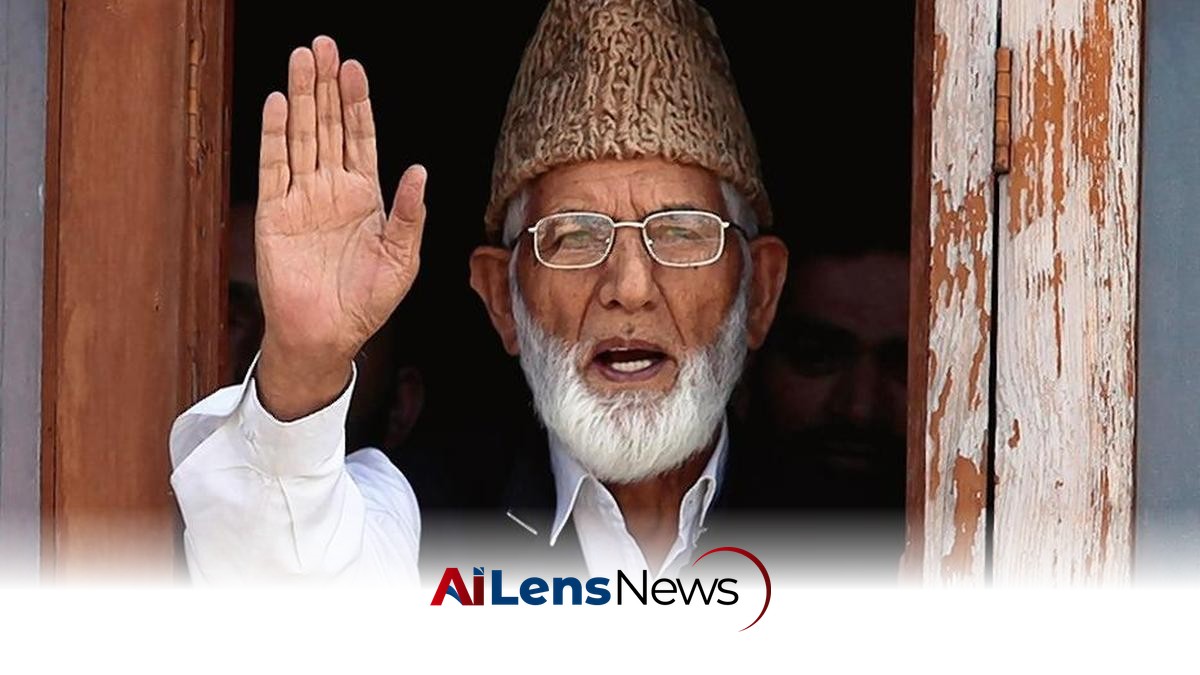


NIA charges six separatist leaders for their roles in a 1996 mob violence case during a funeral procession in Srinagar.
New Delhi, India Jul 11, 2026 ALN: The Investigation Agency (NIA) has recently filed a charge sheet against six prominent leaders of the separatist Hurriyat Conference in connection with a significant case of mob violence that occurred in 1996 in Srinagar, Jammu and Kashmir. This development marks a notable moment in the long-standing and complex conflict in the region, which has witnessed numerous instances of violence and unrest over the decades. The case in question revolves around an incident that unfolded on July 17, 1996, during the funeral procession of a slain militant, Hilal Ahmad Beigh, where a violent confrontation erupted between the police and a mob allegedly incited by separatist leaders.
The six leaders named in the charge sheet include notable figures such as Shabir Ahmad Shah, the chief of the Democratic Freedom Party; Syed Ali Shah Geelani, a prominent leader of Tehreek-e-Hurriyat; Abdul Ganie Lone, the founder of J&K People’s Conference; Javid Ahmad Mir of the J&K Liberation Front; Shakeel Ahmad Bakshi, chairman of the Islamic Students League; and Mohammad Yaqoob Wakeel. It is important to note that three of these individuals—Geelani, Lone, and Wakeel—are deceased, and the NIA has indicated that the charges against them have been abated due to their passing. However, the agency has asserted that the charge sheet provides substantial evidence of their involvement in the alleged criminal conspiracy.
The NIA has charged the remaining leaders under various sections of the Ranbir Penal Code, 1989, which governs criminal offenses in Jammu and Kashmir, as well as under Section 13 of the Unlawful Activities (Prevention) Act, 1967. The charges include serious offenses such as criminal conspiracy, attempt to murder, rioting, and assault on public servants. These charges reflect the severity of the actions taken during the funeral procession, where armed militants reportedly mingled with the crowd and opened fire on police personnel, resulting in injuries to several officers and damage to government property.
The events of that day were characterized by chaos and violence, with the NIA stating that the accused leaders played a pivotal role in instigating the mob. Eyewitness accounts and investigative findings suggest that the leaders delivered inflammatory speeches, inciting the crowd with slogans that were anti-India, pro-Pakistan, and separatist in nature. This aligns with a broader pattern observed in Kashmir, where funeral processions of militants have often been used as platforms for political mobilization and expressions of dissent against the Indian state.
The NIA's investigation has brought to light the systematic nature of the violence that erupted during the procession. It is reported that the leaders aimed to leverage the emotional context of the funeral to galvanize public support for their separatist agenda and to provoke a confrontation with law enforcement. This incident is emblematic of the ongoing tensions in Jammu and Kashmir, where the line between political expression and violent insurrection has often been blurred.
In terms of the broader implications, the filing of this charge sheet by the NIA is part of a concerted effort by the Indian government to clamp down on separatist movements and related violence in Jammu and Kashmir. The region has been a flashpoint of conflict since the late 1980s, with various groups advocating for either independence from India or merger with Pakistan. The NIA's actions are indicative of a strategy to hold accountable those perceived as orchestrators of violence, thereby attempting to restore order and stability in a region that has seen decades of turmoil.
The NIA took over the investigation of this case in April 2026 after directives from the Union Home Ministry, reflecting the central government's increasing involvement in local matters of security and law enforcement. The agency's continued investigation signifies that authorities are committed to pursuing accountability for past violence, which could have a chilling effect on similar future gatherings and protests.
Shabir Ahmad Shah, one of the leaders named in the charge sheet, has a long history of political activism and legal troubles. He has spent a significant portion of his life in detention, with his family stating that he has been incarcerated for over three decades. His recent bail in a separate money laundering case highlights the precarious nature of legal proceedings against separatist leaders, who often find themselves entangled in multiple cases across various jurisdictions.
The charge sheet and the ongoing investigation into the 1996 mob violence serve as a reminder of the complex socio-political landscape of Jammu and Kashmir. The region remains a battleground of competing narratives, where issues of identity, ism, and political sovereignty are deeply intertwined. The actions of the NIA and the responses from separatist groups will likely continue to shape the discourse surrounding Kashmir, influencing both local and politics in the years to come.
As the situation evolves, it will be crucial to observe how these legal proceedings affect the sentiments of the local population, particularly in terms of their perceptions of justice and governance. The legacy of violence in Jammu and Kashmir is fraught with emotional and historical significance, and the outcomes of such cases may have lasting implications for the peace and stability of the region.
The 1996 incident is not an isolated event but part of a larger narrative of violence and political strife that has characterized Jammu and Kashmir since the late 20th century. The region has seen an influx of militancy since the late 1980s, leading to a sustained conflict that has resulted in thousands of deaths and a humanitarian crisis. The rise of separatist movements was largely fueled by a combination of local grievances, including political disenfranchisement, economic marginalization, and cultural suppression. These factors have created a fertile ground for radicalization and have led to a cycle of violence that continues to this day.
In the aftermath of such incidents, the Indian government has often responded with a heavy-handed approach, deploying security forces to maintain order. This has led to accusations of human rights abuses and further alienation of the local population. The NIA's charge sheet against the separatist leaders can be seen as part of this broader strategy of state control, aiming to dismantle the networks that support separatism while also attempting to legitimize its actions in the eyes of the Indian public.
Conversely, separatist leaders and their supporters argue that they are exercising their right to self-determination and political expression. They contend that the state’s actions are an infringement on their civil liberties and that the legal proceedings against their leaders are politically motivated. This ongoing struggle for legitimacy and recognition continues to complicate the peace process in the region.
The implications of the NIA's charge sheet extend beyond the immediate legal ramifications for the accused leaders. It raises questions about the future of the separatist movement in Jammu and Kashmir, the potential for further violence, and the role of external influences, particularly from Pakistan. The geopolitical dynamics of South Asia, including the historical rivalry between India and Pakistan, continue to impact the situation in Kashmir, making it a complex issue that is not easily resolved.
As the NIA moves forward with its investigations and prosecutions, the responses from both the separatist factions and the Indian government will be critical in shaping the future trajectory of Jammu and Kashmir. The inter community is also closely watching the developments, as the situation in Kashmir remains a key point of contention in India-Pakistan relations, with potential implications for regional stability and security.
In conclusion, the filing of the charge sheet against the six separatist leaders in connection with the 1996 mob violence case encapsulates the intricate and often contentious dynamics of Jammu and Kashmir. The interplay between law, politics, and social movements in the region continues to evolve, with each development having the potential to influence the broader narrative of conflict and resolution in this historically troubled area. The outcomes of such legal actions will undoubtedly resonate within the local populace and may have lasting effects on the quest for peace and stability in Jammu and Kashmir.
To learn more about the latest developments in Crime & Law, stay updated with our exclusive reports and analyses on AiLensNews.

