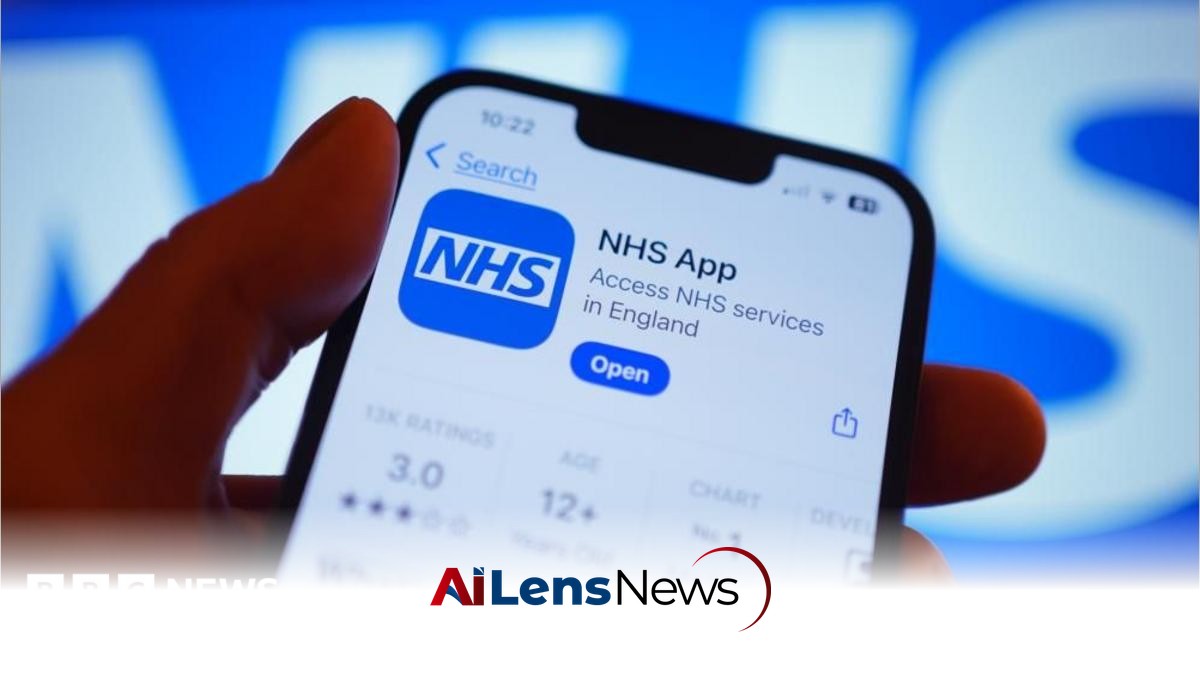


The NHS app will implement AI to guide patients to appropriate services, with a full rollout expected by April 2028.
New Delhi, India Jul 5, 2026 ALN: Artificial intelligence will be used on the NHS app to determine which service is most appropriate for patients in England, the health service has announced.
A new triage tool will ask patients a series of questions, and will use the responses to direct them to a GP appointment, pharmacy, A&E, community service, or offer self-care advice. This innovative approach aims to streamline the process of accessing healthcare services, which has historically been fraught with delays and inefficiencies.
NHS England stated that the update would reach more than 200,000 patients in the next 12 months and be available to all app users by April 2028 as part of a "major overhaul" of its technology. The NHS has been under increasing pressure to modernize its services, especially in the wake of the COVID-19 pandemic, which highlighted the need for more efficient healthcare delivery systems. By integrating AI into the NHS app, the organization hopes to reduce waiting times and improve patient outcomes.
The rollout has been largely welcomed, but some health bodies urged the NHS to prioritize patient safety, confidentiality, and inclusion as it grows more reliant on AI. The integration of AI into healthcare raises important questions about data privacy and the ethical implications of using machine learning algorithms to make recommendations about patient care. Ensuring that these systems are transparent and accountable will be crucial in maintaining public trust.
An initial trial of the tool at Wealden Ridge Medical Partnership in Sussex saw a 29% reduction in the number of people queuing on the phone for an appointment. This statistic underscores the potential of AI-driven solutions to alleviate some of the burdens on healthcare providers and improve the patient experience. Dr. Ragu Rajan, who works at the practice, stated that integrating the tool "means our patients can tell us what they need, when they need it, and be directed to the right care first time." He added, "It hasn't replaced our judgement – it's given us back the time to use it." This sentiment reflects a growing recognition among healthcare professionals that technology can enhance, rather than replace, the human element of patient care.
Sir Jim Mackey, chief executive of NHS England, remarked that the tool would "help get patients to the best service for their needs first time... so that clinicians can make sure those most in need of a GP appointment can get one sooner." This proactive approach to patient care is essential in a system that often struggles with resource allocation and prioritization of care based on urgency and need.
This initiative is part of a £10 billion investment allocated by the government in 2025 to overhaul the NHS's technology, digital, and data systems. This significant financial commitment signals a recognition at the highest levels of government that the NHS must adapt to the realities of 21st-century healthcare delivery, which increasingly relies on digital tools and data-driven decision-making.
Additionally, there will be an England-wide rollout of AI tools that record conversations between patients and NHS staff to generate real-time transcriptions and clinical summaries. This feature aims to enhance the accuracy of medical records and reduce the administrative burden on healthcare providers, allowing them to focus more on patient care rather than paperwork.
The rollout will begin with hospital appointments that do not require an overnight stay at four NHS trusts in and around London – St George's, Epsom and St Helier, Croydon, and Kingston and Richmond. By starting with these specific trusts, the NHS can monitor the implementation closely and make necessary adjustments before expanding to other regions.
Alder Hey Children's NHS Foundation Trust in Liverpool and Manchester University NHS Foundation Trust are also expanding their AI notetaking programs. These initiatives highlight the NHS's commitment to leveraging technology to improve pediatric care, which is often complex and requires detailed record-keeping to ensure continuity and quality of care.
A trial led by Great Ormond Street Hospital for Children and conducted across nine NHS sites in London found that NHS staff spent almost 25% more of their time interacting with patients when using the notetaking technology. This increase in patient interaction time is a promising indication that technology can indeed free up healthcare professionals to focus on direct patient care, rather than administrative tasks.
The Royal College of Nursing's chief nursing officer, Prof. Lynn Woolsey, stated that the rollout could mark "an important step in upgrading technology in the NHS" and "ease the administrative burden on nursing staff." However, she emphasized that patient safety and confidentiality must be at the "heart of any AI triage system, with a guarantee that a health professional will be the one making decisions at key points in that process." This statement reflects a broader concern within the healthcare community regarding the balance between technological innovation and the preservation of patient-centered care.
Pritesh Mistry, a fellow at the King's Fund think-tank, commented that the announcement "could help turbo-charge improvements in how [the] NHS uses modern technology to deliver better care for patients." He added, "People should find it easier to have support at the right time and in a way that best suits them, digitally or physically." This perspective emphasizes the importance of flexibility in healthcare delivery, allowing patients to access services in a manner that aligns with their preferences and needs.
He also noted that the NHS will need to maintain a strong focus on ensuring that people are not digitally excluded as clinical services become increasingly reliant on technology. This is a critical point, as disparities in access to technology can exacerbate existing inequalities in healthcare. The NHS must ensure that all patients, regardless of their socioeconomic status, have equal access to the benefits of digital health solutions.
Conservative shadow health secretary Stuart Andrew remarked, "Any innovation that improves patient care and helps the NHS work more effectively should be welcomed. But new technology must be introduced with a fully-funded plan that delivers value for taxpayers." This statement captures the dual challenge facing the NHS: the need for innovation and improvement in patient care, while also ensuring fiscal responsibility and accountability in the use of public funds.
As the NHS embarks on this ambitious journey to integrate AI into its services, the implications for patient care, healthcare delivery, and administrative efficiency are profound. The success of these initiatives will depend not only on the technology itself but also on how well the NHS can navigate the complexities of implementation, ensuring that patient safety, privacy, and equitable access remain at the forefront of its efforts.
To learn more about the latest developments in Technology in News, stay updated with our exclusive reports and analyses on AiLensNews.

