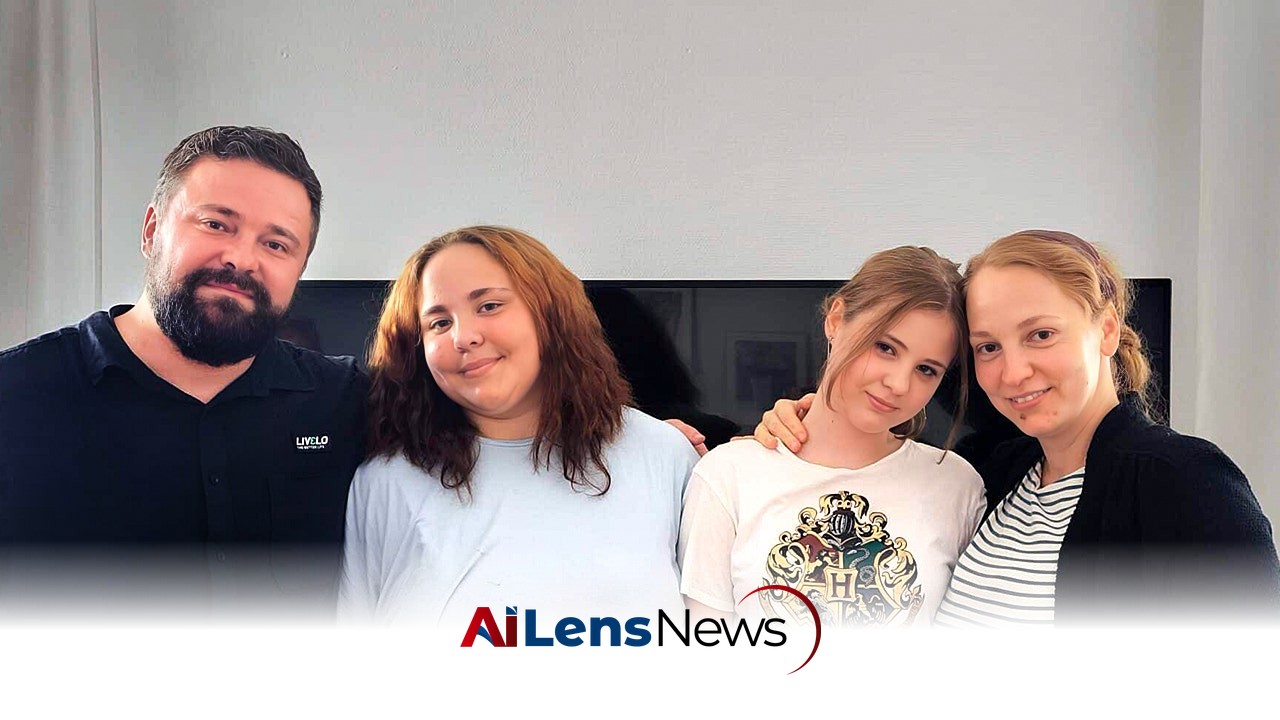


Daniel and Bianca Samson rally support in Washington, D.C., as they fight to regain custody of their daughters, taken by Swedish authorities over alleged 'religious extremism.'
Washington DC, United States Jul 12, 2026 ALN: WASHINGTON, D.C. — The ongoing custody battle of Daniel and Bianca Samson, a Romanian family whose two daughters were seized by the Swedish government over three years ago, has escalated into a significant international controversy. On Friday, a gathering of Romanian-Americans convened outside the Swedish Embassy in Washington, D.C., to demonstrate their support for the Samsons and to protest what they perceive as an egregious violation of parental rights and cultural values.
The case began in December 2020 when the couple's eldest daughter, Sara, then 11 years old, made a false allegation of abuse against her parents, which stemmed from a family dispute regarding restrictions on her use of makeup and smartphone access. Despite Sara's rapid retraction of her accusation, the Swedish social services intervened and removed both daughters from their home, a decision that has been met with widespread condemnation.
Subsequent investigations by prosecutors found no evidence of abuse. However, the Swedish authorities maintained their stance, citing the family's regular church attendance and specific parenting practices as indicators of what they termed "religious extremism." In court proceedings, Daniel Samson reported that officials labeled the couple as "religious extremists" to rationalize the separation from their daughters. The couple's decisions regarding their children's upbringing, including restrictions on nail painting and the absence of a television in their home, were criticized by authorities, with even the reading of Bible stories being described as "violent" by social services.
This situation has sparked outrage not only among Romanian-Americans but also within the Romanian government. Romanian Senator Titus Corlatean, who has been vocal in supporting the Samsons, attended the D.C. rally alongside Pastor Cristian Ionescu, a prominent figure in the Romanian Pentecostal community in the United States. Both expressed concerns about the implications of government overreach, drawing parallels between the current situation and their experiences with totalitarian regimes in Eastern Europe. Ionescu, who fled Romania nearly four decades ago, articulated fears regarding the rise of socialist ideologies in American politics, suggesting that such trends could lead to similar interventions in family matters.
In June, the Romanian Senate took a formal stance by unanimously passing a declaration calling for the immediate return of the Samson daughters to their family. Senator Corlatean, who spearheaded this initiative, criticized the Swedish government's lack of cooperation, stating that their response to Romania's diplomatic inquiries has been insufficient. He emphasized that the girls are Romanian citizens and accused Sweden of violating both international law and the diplomatic relationship between the two nations. Corlatean argued that the continued custody of the girls by Swedish authorities is an abuse of power, asserting that they are being held against the will of their home country.
The emotional and psychological toll on the children has been severe. Daniel Samson revealed that both Sara and her younger sister Tiana have attempted suicide multiple times while in state custody. The eldest daughter has been placed in an adult psychiatric facility, a situation that has raised alarms among family supporters and advocates. Corlatean described the circumstances as "horrible" and a "desperate situation," insisting that the girls repeatedly express their desire to return to their parents and Romania, contrary to claims made by social services that they are resisting such a return.
Since the family's story gained public attention, Daniel Samson has reported that the Swedish government has completely barred them from any contact with their daughters. There are fears that authorities may change the girls' names, a move that Samson interprets as a potential precursor to forced adoption, further complicating their chances of reunion. Over the past three years, the Samsons have faced significant legal challenges, losing 14 court cases in Sweden. Their final appeal was rejected in March, when the European Court of Human Rights deemed their case inadmissible.
Senator Corlatean has expressed hopes that the United States will extend its support to the Romanian family, citing shared cultural and Christian values as a foundation for solidarity. He referenced the 2015 case of the Bodnariu family, a Romanian-Norwegian couple whose children were temporarily taken by Norwegian authorities due to allegations of child abuse, which included claims of physical discipline. In that instance, there was significant political pressure from U.S. lawmakers, including members of Congress and the Senate, which ultimately helped the family reunite. Corlatean believes a similar coordinated effort could benefit the Samsons.
In response to inquiries regarding the case, Swedish social services have stated that they cannot comment on individual cases due to privacy laws. The Swedish Embassy in Washington also declined to engage in specific cases, emphasizing their commitment to upholding constitutional rights and freedoms for all individuals, regardless of background. They reiterated that Swedish social services employ trained professionals who focus on ensuring children's safety and well-being within the community.
This incident highlights broader issues surrounding parental rights, cultural differences in child-rearing practices, and the role of government in family matters. The case of the Samsons raises critical questions about the balance between state intervention in cases of alleged abuse and the rights of parents to raise their children according to their beliefs and values. As the situation continues to unfold, it remains a focal point of international scrutiny and discussion, reflecting the complexities of cross-cultural family dynamics in a globalized world.
The implications of this case extend beyond the immediate concerns of the Samson family. It reflects a growing tension between individual rights and state authority, particularly in Western nations where secularism often clashes with religious and cultural traditions. The outcome of the Samsons' struggle may set a precedent for similar cases in the future, potentially influencing how governments navigate the delicate balance between protecting children and respecting familial and cultural rights.
To learn more about the latest developments in World News & International Affairs, stay updated with our exclusive reports and analyses on AiLensNews.

