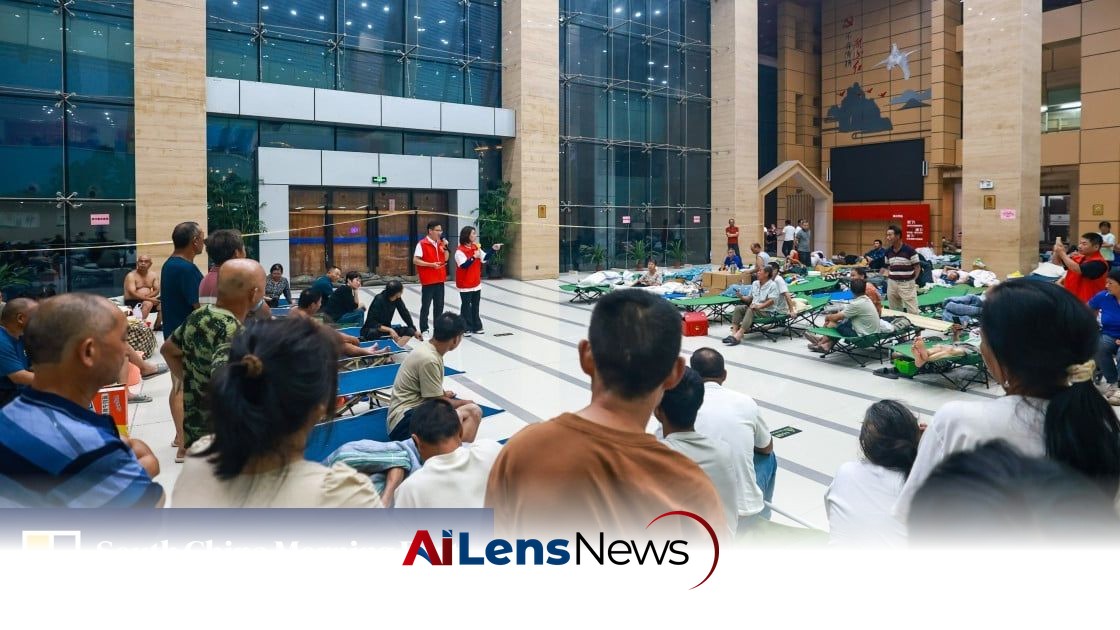


Typhoon Bavi causes major disruptions in eastern China, leading to flight cancellations and evacuations, but alerts are downgraded further south.
London, United Kingdom Jul 12, 2026 ALN: Typhoon Bavi made landfall in eastern China on Saturday night, marking the second major storm to hit the country in just a week. The storm has resulted in thousands of flight and train cancellations, with over 2.4 million people evacuated from areas directly in its path. This situation has created significant travel chaos, particularly in major urban centers like Shanghai and Hangzhou, where the impact of the storm was acutely felt.
As of 8 PM on Saturday, more than 2,800 flights were reported to be canceled by Chinese airlines, according to the state news agency Xinhua. Shanghai’s Pudong and Hongqiao airports alone were set to cancel over 650 flights, which accounts for about 30 percent of their total capacity. The cancellations not only disrupted travel plans for tourists and residents alike but also had a ripple effect on local businesses dependent on travel and tourism. The immediate economic impact of such cancellations can be profound, particularly in a region where tourism plays a vital role in the local economy. Local restaurants, hotels, and transportation services often rely on a steady flow of visitors, and such disruptions can lead to significant financial losses.
In addition to flight cancellations, Hangzhou Xiaoshan Airport reported the cancellation of 296 flights on Sunday but planned to resume operations after noon as the storm's influence began to weaken. This highlights the operational challenges faced by airports during severe weather events, where safety must be prioritized over regular schedules. Two of the four main train stations in Shanghai—the southern and western stations—canceled all services for the day, while several other train services were also suspended. The disruptions in rail services compounded the travel chaos, leaving many individuals stranded and in need of alternative arrangements. The sudden cancellation of public transport options can lead to overcrowding in remaining services and increased demand for taxis and rideshare services, further complicating the travel landscape.
Typhoon Bavi, which spanned approximately 1,000 kilometers (600 miles) at its widest point—roughly the width of mainland France—first made landfall in the coastal city of Taizhou, Zhejiang, at 11:12 PM before making a second landfall in Wenzhou city around midnight. The storm brought maximum sustained winds near its center of around 108–117 km/h (67-72 mph). Such wind speeds are capable of causing extensive damage, uprooting trees, damaging buildings, and disrupting power supply. The geographical scope of Bavi's impact cannot be understated, as its size meant that many areas were affected simultaneously, overwhelming local emergency response capabilities. Emergency services are often stretched thin during such events, which can delay responses to those in need of immediate assistance.
As the storm begins to weaken and move northward, alerts have been downgraded in regions further south, providing some relief to residents who had been on high alert. However, the impact of Bavi continues to be felt across major cities, with recovery efforts underway to restore normalcy. Local governments are likely to face challenges in assessing the full extent of the damage, as well as in mobilizing resources for recovery. The immediate focus is on restoring essential services such as electricity, water supply, and public transportation, which are critical for the affected populations. Power outages can persist long after the storm has passed, complicating recovery efforts, as many households rely on electricity for basic needs.
Authorities are closely monitoring the situation as the storm dissipates, and they are working to ensure the safety of those who were evacuated. The focus now shifts to assessing the damage and providing support to affected communities. This includes not only physical repairs but also psychological support for those who may have experienced trauma due to the storm. The government typically deploys teams to aid in recovery efforts, which may include distributing food and supplies to displaced individuals, as well as providing temporary housing solutions. The emotional toll of such disasters can be significant, with many individuals experiencing anxiety and stress in the aftermath of the event.
In the aftermath of Typhoon Bavi, it is essential to consider the broader implications of such natural disasters on urban planning and disaster preparedness in China. The country has faced several severe weather events in recent years, prompting discussions about the need for improved infrastructure and emergency response systems. Urban areas, particularly those along the coast, are increasingly vulnerable to typhoons and other climate-related events, raising questions about sustainability and resilience in the face of changing weather patterns. As cities grow and populations increase, the challenges posed by natural disasters become more complex, necessitating a proactive approach to urban development and disaster readiness.
Moreover, the response to Typhoon Bavi will likely inform future policies regarding disaster management. Lessons learned from this event could lead to enhanced forecasting techniques, better evacuation protocols, and improved public awareness campaigns aimed at educating citizens about how to prepare for such storms. As climate change continues to intensify weather patterns, the importance of these measures becomes increasingly critical. Governments may need to invest in advanced meteorological technology and enhance collaboration with international agencies to improve disaster response capabilities.
In conclusion, while Typhoon Bavi has caused significant disruption and challenges for millions in eastern China, it also serves as a stark reminder of the need for ongoing vigilance and preparedness in the face of natural disasters. The recovery process will take time, and the lessons learned from this storm will be pivotal in shaping how communities respond to future weather events. As recovery efforts continue, the resilience of affected populations will be tested, and the support from local and national authorities will play a crucial role in helping them rebuild their lives. The aftermath of Typhoon Bavi will likely lead to a renewed focus on disaster resilience, emphasizing the importance of community engagement and preparedness as essential components of a comprehensive disaster management strategy.
To learn more about the latest developments in Science & Environment, stay updated with our exclusive reports and analyses on AiLensNews.

