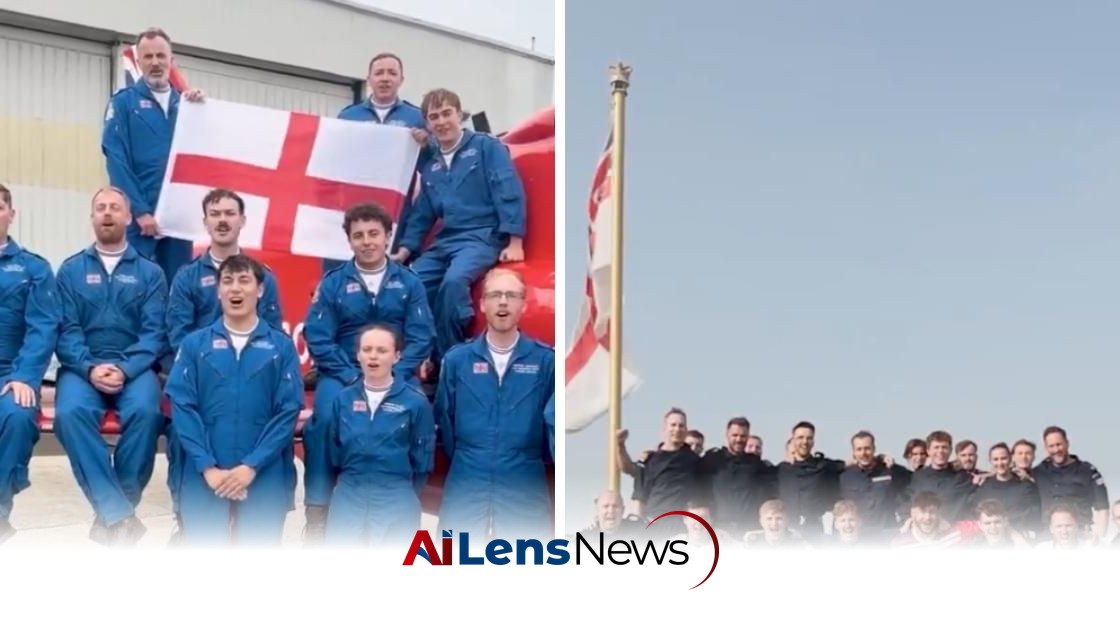


The Ministry of Defence faces backlash for sharing a video supporting England during the World Cup, prompting criticism from Scots and pro-independence voices.
London, United Kingdom Jul 12, 2026 ALN: The recent video released by the Ministry of Defence (MOD) in support of the England football team has sparked significant controversy, with many accusing the MOD of engaging in what they perceive as England-centric propaganda during a pivotal moment in the World Cup campaign. This incident highlights the ongoing tensions surrounding national identity and representation within the United Kingdom, particularly in relation to Scotland and Wales.
The video in question was shared just before England's highly anticipated quarterfinal match against Norway. It featured various members of the UK armed forces expressing their support for the national football team, which has been managed by Thomas Tuchel during the tournament. The content of the video included humorous segments, such as a sailor scanning for a "football-related threat" from the Norwegian team, which was playfully depicted as "doing the row." The comedic tone continued with a colleague advising him to "deploy countermeasures," a nod to military jargon that was juxtaposed with the light-hearted nature of football.
In addition to these humorous elements, the video showcased members of the Army, Navy, and Air Force singing lines from the chorus of Oasis's iconic song "Wonderwall," a track that has gained traction as an unofficial anthem for England during the World Cup. This choice of music reflects the cultural significance of the song within football fandom and its association with national pride. The use of a song that resonates deeply with many fans further underscores the MOD's intent to connect with the public through shared cultural references.
The MOD's accompanying tweet contained the message: "Norway may row. But England roars. Good luck tonight team, from our Armed Forces around the world!" While intended as a morale booster for the team, the tweet and video were met with swift backlash, particularly from Scottish users on social media. Critics argued that the MOD's public display of support for England over other nations within the UK was inappropriate and indicative of a broader issue regarding national unity and representation. This incident has reignited debates about how the UK presents itself on the international stage, especially in sporting contexts where national pride is at stake.
One notable response came from the pro-independence news outlet Bella Caledonia, which tweeted, "Wow. The 'Army'. Propaganda from the MOD. Some union, eh?" This comment encapsulated a sentiment shared by many who feel that the MOD's actions reinforce a narrative that prioritizes England, thus alienating other nations in the union. Another user, Blair Kaylor, expressed frustration, stating, "They call it a union, but if Scotland or Wales were in a World Cup quarterfinal tonight, then there’s absolutely no chance the MOD posts something like this, or anything at all." Such comments underscore the perception that the MOD's actions may not reflect the interests or sentiments of all constituents within the UK.
Further commentary on social media echoed these sentiments, with users pointing out that the armed forces are meant to represent the entirety of the UK, not just England. One user remarked, "They pretend it's a union, but every now and again the mask slips," while another added, "Erm, you do realize the armed forces are British, and not just ?" This backlash highlights the complexities of national identity within the UK, particularly in the context of sporting events that often evoke strong feelings of regional pride. The armed forces, as a symbol of national unity, are expected to embody the diversity of the UK, and the perceived favoritism towards England in this instance has raised serious concerns about inclusivity.
Interestingly, prior to the release of the controversial video, the Armed Forces Day account had shared a more inclusive message wishing both England and Scotland good luck in the tournament, suggesting that the MOD is capable of promoting unity among the nations of the UK. The contrast between the two messages raises questions about consistency in communication and the potential for perceived favoritism based on the success of different national teams. This inconsistency can be particularly damaging in a time when national identities are already being scrutinized and debated.
In terms of the tournament itself, England's victory over Norway, which saw them advance to the semi-finals with a score of 2-1 after extra time, has been celebrated by fans. The goals, both scored by Jude Bellingham, have further solidified his status as a rising star in football. England's next challenge will be against Argentina, who defeated Switzerland 3-1 in their quarterfinal match. This upcoming semi-final is set to be a highly competitive affair, with both teams boasting rich footballing histories and passionate fan bases. The anticipation surrounding this match is palpable, as both nations seek to assert their dominance on the world stage.
The controversy surrounding the MOD's video also comes amid political discussions about national identity and representation within the UK. Labour leader Keir Starmer has hinted at the possibility of an extra bank holiday for England should the team win the World Cup for the second time, which would further fuel discussions about national pride and the implications of such a holiday for the other nations of the UK. The potential for an additional holiday raises questions about inclusivity and whether such celebrations would extend to Scotland, Wales, and Northern Ireland, especially in light of the recent backlash against perceived favoritism. The prospect of a holiday solely for England could exacerbate feelings of alienation among the other nations, highlighting the need for a more unified approach to national celebrations.
In the broader context of the tournament, the semi-finals will also feature a match between France and Spain, both of which are footballing powerhouses with their own rich histories and passionate supporters. The outcomes of these matches will not only determine which teams advance to the finals but also shape the narratives surrounding national pride and identity in the context of international sport. As these teams vie for glory, the implications of their victories or defeats will resonate beyond the pitch, influencing national conversations about identity and representation.
As the World Cup progresses, the interplay between national identity, representation, and the role of institutions such as the MOD will likely continue to be a topic of discussion. The reactions to the MOD's video serve as a reminder of the complexities involved in representing a union of nations, each with its own distinct identity and historical grievances. The ongoing dialogue surrounding this controversy will be crucial in understanding how sports can both unite and divide, particularly in a politically charged environment like that of the UK. The MOD's actions, whether intended as a show of support or perceived as a slight, underscore the delicate balance that must be maintained to foster a sense of unity while respecting the diverse identities that exist within the UK. As the tournament continues, it remains to be seen how these dynamics will evolve and what impact they will have on the future of national identity in the UK.
To learn more about the latest developments in Politics, stay updated with our exclusive reports and analyses on AiLensNews.

